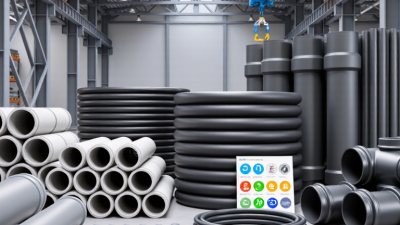
Who Are the Best Sewer Line Pipe Manufacturers in China?
Choosing among China’s sewer line pipe manufacturers takes more than comparing prices or polished catalogues. Buyers need to examine what sits behind each product: material consistency, wall thickness, joint design, pressure or stiffness test reports, and traceable production records. A sample pipe section can reveal surface finish and dimensional accuracy, but it cannot prove long-term performance by itself. Details matter.
Pipeline researcher Steven R. Folkman’s published work on buried pipeline infrastructure supports a practical takeaway. This wording is an editorial paraphrase, not a verbatim quotation: “A pipe’s service life depends on sound materials, installation, and ongoing care—not its price alone.” That perspective helps frame this guide. It considers manufacturers’ technical documentation, quality-control processes, product range, export experience, and ability to answer specific engineering questions. A supplier should explain which standards its products meet and provide evidence, not just make broad claims.
The right choice depends on the project. A municipal gravity sewer, an industrial drainage system, and a replacement line may require different pipe materials, diameters, and connection methods. Ask for recent test records and comparable project references. Check how the manufacturer handles defects and keeps batches identifiable. Not just price.
This review is intended to help buyers compare suppliers with care, not declare one factory best for every job. Factory visits and independent checks can strengthen the assessment, though they take time. That takes diligence. A well-chosen sewer line pipe can support reliable service for years; a rushed decision may leave important questions unanswered.
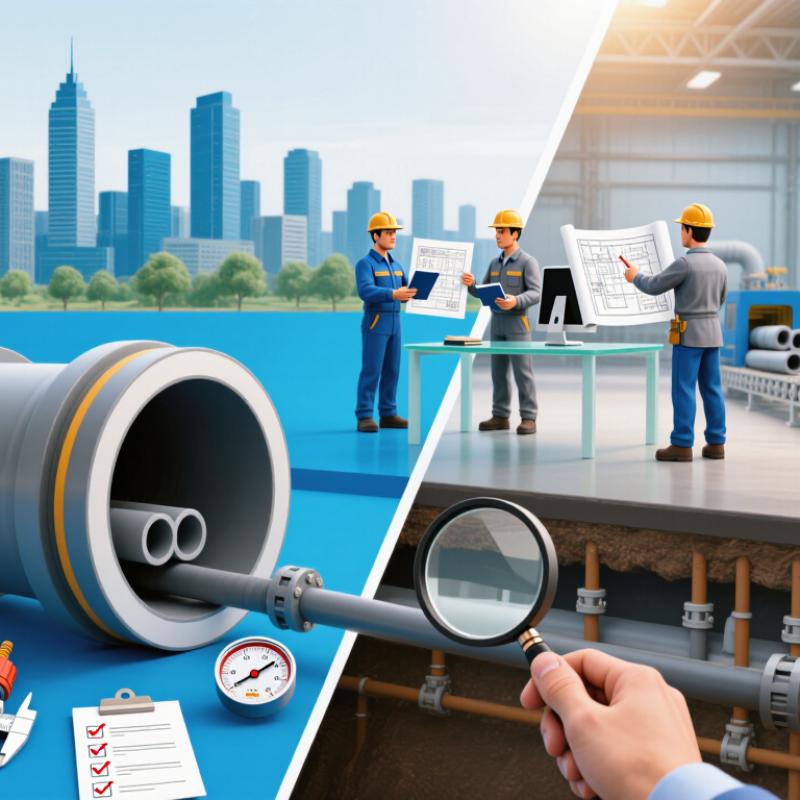
What Sewer Line Pipes Are and Where They Are Used
Sewer line pipes carry wastewater from buildings to treatment plants, through gravity networks or pressurized force mains. Beneath streets, service laterals connect properties to collector sewers; larger trunk lines move flow across districts. Storm drains may share the same corridor, but carry runoff, not sanitary sewage.
Small details matter. UN-Water’s 2024 wastewater-treatment progress report estimates that 42% of domestic wastewater generated worldwide in 2022 was not safely treated. Reliable collection is essential, alongside adequate treatment capacity.
Pipe choice depends on burial depth, soil movement, flow, corrosion exposure, and installation method. PVC and HDPE are widely used in smaller gravity lines and pressure mains. Ductile iron can suit demanding pressure sections, while reinforced concrete is used for large trunk sewers. Vitrified clay resists many chemical exposures, but careful handling and joint installation are important. Municipal networks, industrial sites, housing developments, and road projects all use sewer pipes, with distinct loading and inspection needs. Not just diameter. A catalog choice can overlook groundwater infiltration, joint performance, or access for cleaning. Designers should check hydraulic capacity, project conditions, and applicable standards; even a durable pipe can underperform when its connections or installation are poorly matched.
How Sewer Pipe Manufacturers in China Are Evaluated
The evaluation of sewer pipe manufacturers in China should start with product fit, not catalog size. Confirm whether each pipe is intended for gravity drainage or pressure service. Ask for material specifications, dimensional tolerances, ring-stiffness results, and joint-leakage test records. Reports should identify the tested product and date. A certificate without traceable details tells little.
Factory capability matters too. Review production controls, calibration logs, batch marking, and how rejected pipes are handled. Request samples from normal production, not a specially prepared display piece. Check socket depth, wall thickness at several points, and whether seals seat evenly. For a real project, compare drawings with soil conditions, burial depth, traffic loads, and installation methods. Site conditions matter. A technically sound pipe can still fail when its joints or bedding are mismatched. Even a careful review may overlook storage exposure or rough handling.
Tips: Ask for a recent batch record, a test report, and a written response to a realistic defect scenario. Compare answers, not just prices. No checklist is perfect.
Leading Sewer Line Pipe Manufacturers in China
Leading sewer line pipe manufacturers in China serve municipal, residential, and industrial projects with products suited to different ground conditions. Common options include PVC-U and HDPE pipes, while larger infrastructure projects may require other materials. A capable manufacturer can explain how pipe stiffness, diameter, wall thickness, and joint design match the project’s load and installation method. Local soil and groundwater matter too.
Production capacity alone tells little. Ask how each batch is inspected, how dimensions are measured, and whether test records can be linked to delivered pipe. Review samples for clean cut ends, consistent walls, and undamaged sockets. Request technical data sheets and confirm that stated performance aligns with the project specification. A polished brochure is not proof of consistent quality. Even a strong factory can have weak communication; check response times before ordering.
Tips: Compare test reports, sample quality, delivery plans, and after-sales support—not price alone. Clarify packaging and storage requirements to reduce handling damage. Record any unanswered technical questions. That small step can prevent a costly assumption later.
Evaluating Sewer-Line Pipe Manufacturers in China: Material Performance Reference
Typical Manning’s roughness coefficient ranges for common sewer pipe materials. Lower values indicate a smoother interior surface; actual performance depends on pipe condition, installation, and design.
These are general engineering reference ranges, not manufacturer-specific ratings or a ranking. Confirm project requirements and applicable standards when comparing suppliers.
Comparing Pipe Materials, Standards, and Production Capabilities
Comparing sewer pipe manufacturers in China means looking beyond catalog prices. PVC-U is common for gravity drainage because it is light and has smooth internal walls. HDPE can suit projects needing flexible pipe and fused joints, while concrete may be considered for larger diameters or demanding burial conditions. No material is best everywhere. Soil movement, wastewater characteristics, installation method, and design life all matter.
Check whether the offered pipe standard matches its material and intended use. Ask for the exact standard and edition, plus test reports for dimensions, ring stiffness, impact resistance, and joint leakage. Useful evidence comes from traceable production batches, not a certificate image alone. Small details matter. Review how the factory controls extrusion or winding, calibrates equipment, and inspects finished pipe. A large production line sounds reassuring, but capacity does not prove consistent quality. I would also compare sample socket fit and gasket seating; a minor mismatch can slow installation. Some buyers overlook this. Ask how defects are recorded and corrected, and whether routine test results are available for review. A clear, specific answer is more useful than a broad quality promise.
How to Choose a Manufacturer for a Sewer Project
Choosing a sewer pipe manufacturer means checking more than price and catalog range. The U.S. EPA’s 2022 Clean Watersheds Needs Survey estimated $630.1 billion in wastewater infrastructure needs over 20 years. This is a U.S. estimate, not a measure of China’s market, but it highlights why pipe failures and replacement costs matter. Match the proposed pipe material, diameter, stiffness class, and joint design to the project drawings, soil conditions, groundwater level, and installation method. Small details matter. A joint that looks sound in a sample may behave differently after repeated handling.
Request test reports for the exact pipe type and size, plus traceable production-batch records. Confirm that testing covers relevant dimensions, ring stiffness, impact resistance, and joint watertightness. Check which current GB/T standards and project specifications apply; a general certificate alone may not prove that the supplied product fits your design. Review factory quality procedures and delivery controls, too. I would not treat a polished audit visit as proof of consistent production—documents and batch checks should support it.
Tips: Ask for a sample joint and inspect its fit, finish, and sealing components. Confirm lead times in writing, including how damaged or nonconforming pipes will be handled.
Who Are the Best Sewer Line Pipe Manufacturers in China? - How to Choose a Manufacturer for a Sewer Project
| Evaluation Dimension | What to Check | Useful Evidence to Request | Why It Matters to a Sewer Project |
|---|---|---|---|
| Pipe material suitability | Confirm that the proposed material matches the design, wastewater conditions, installation method, and local requirements. Common options include PVC-U, PE or PP structured-wall pipe, reinforced concrete, and glass-fibre-reinforced plastic (GRP). | Product datasheets, material declarations, design documentation, and a written statement of the intended application. | Different materials have different jointing methods, structural characteristics, chemical resistance, and installation requirements. |
| Applicable standards | Check the exact standard and edition specified by the project. Examples include ISO 4435 for PVC-U non-pressure underground drainage and sewerage systems, ISO 21138 for structured-wall thermoplastics piping systems, and EN 1916 for concrete pipes and fittings. | Product markings, test reports, declarations of conformity, and confirmation that the cited standard covers the pipe type and application being offered. | A standard reference is meaningful only when it applies to the product, intended use, and project specification. The contract documents and local regulations take precedence. |
| Diameter and hydraulic design | Verify the required nominal diameter, internal diameter, wall or profile dimensions, connection details, and design flow conditions. | Dimension tables, drawings, hydraulic calculations, and documented dimensional inspection results. | Nominal size alone may not establish the actual internal flow area or compatibility with adjoining pipes and manholes. |
| Structural performance | Match the pipe’s stiffness or strength class to burial depth, soil conditions, groundwater, traffic loading, bedding, and installation design. | Relevant stiffness or load test reports, product classification, design guidance, and installation instructions. | Buried-pipe performance depends on both the pipe and the installed system, including soil support and workmanship. |
| Joint integrity and leakage control | Check the joint type, gasket material where applicable, allowable joint deflection, and the specified leakage or watertightness test method. | Joint drawings, gasket specifications, joint test reports, and assembly instructions. | Joint compatibility and correct installation help reduce infiltration, exfiltration, and avoidable maintenance. |
| Quality control and traceability | Review how incoming materials, production batches, dimensions, and finished products are inspected and recorded. | Sample inspection records, batch or lot coding details, quality-control procedures, and relevant third-party audit documentation. | Traceable records make it easier to verify supplied products and investigate nonconformities during delivery or installation. |
| Testing and certification | Confirm that test reports identify the product, test method, sample, results, and issuing laboratory. Check that any certification is valid and covers the offered product. | Complete reports from a competent laboratory, certificate scope and validity details, and permission to verify documents with the issuer. | A certificate or test summary should not be assumed to cover every size, material, or product configuration. |
| Manufacturing capacity and delivery | Assess whether the proposed production schedule, quantity, packaging, and transport plan fit the project programme. | Written production schedule, capacity information for the required product range, packaging plan, and delivery terms. | Long-distance supply can involve production, transport, handling, and customs lead times that affect site sequencing. |
| Installation and technical support | Ask what guidance is available for storage, handling, bedding, joint assembly, backfilling, and inspection. | Installation manuals, handling instructions, project-specific technical responses, and details of available support. | Correct handling and installation are important to achieving the performance intended by the design. |
| Commercial and project risk | Compare the full delivered scope, payment terms, warranty conditions, spare or replacement arrangements, and responsibility for nonconforming goods. | Itemized quotation, draft contract terms, warranty document, inspection plan, and agreed procedure for claims. | A low unit price may not reflect total project cost, delivery risk, inspection requirements, or after-sales obligations. |
Related Posts
-
China Top 10 Sewer Line Pipe Manufacturers for Global Buyers
-
China Top 10 Sewer Line Manufacturers for Global Buyers
-
2026 How to Choose the Right Sewer Line Pipe for Your Needs?
-
How to Choose the Right Sewer Pipe Sleeve for Your Plumbing Needs
-
10 Best Pipe Sleeve Manufacturers for Global Buyers?
-
What is No Dig Sewer Line Repair and How Does it Work?