Submit Inquiry
27 West Beaver Creek Road Unit #2
Richmond Hill, ON, CANADA L4B 1M8

International:

1-905-886-0335

US & Canada:

1-800-265-5696

10 Best Pipe Sleeve Manufacturers for Global Buyers?

Choosing the right pipe sleeve manufacturer is not a simple catalogue exercise. Global buyers must examine materials, tolerances, testing, installation support, and long-term performance. A sleeve may look robust on a product page, yet fail when exposed to heat, moisture, chemicals, vibration, or uneven movement.

Dr. George A. Antaki, P.E., a respected piping engineer and author, has emphasized, “Piping components must be judged within the system they serve.” That principle matters here. A reliable pipe sleeve should match the pipe material, operating temperature, pressure conditions, insulation design, and surrounding structure. It should also support practical installation, not create another site problem. Small details matter. Think of clean edges, accurate internal diameter, sealed joints, and clear technical drawings.

This guide reviews ten pipe sleeve manufacturers serving international buyers. The comparison considers manufacturing capability, product range, customization, quality control, certifications, export experience, and after-sales communication. It also looks beyond polished marketing claims. Can the supplier provide traceable test records? Are dimensions consistent across batches? Does the team understand local project requirements?

No ranking is flawless. Buyer priorities differ. A contractor may value delivery speed, while an engineering consultant may focus on fire resistance or corrosion protection. Price can mislead. Cheap sleeves may increase labour, replacement, and maintenance costs later. The strongest manufacturers combine dependable materials with responsive technical support. That combination is not always obvious, and this review may still leave room for careful verification.
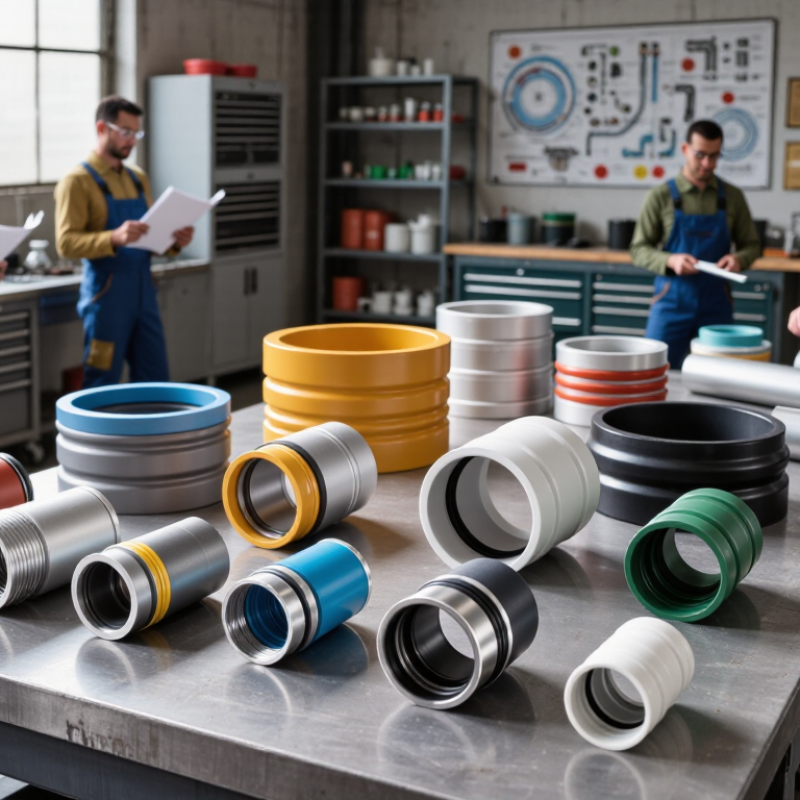
10 Best Pipe Sleeve Manufacturers for Global Buyers?

What Are Pipe Sleeves and Why Do Global Buyers Need Them?

Pipe sleeves are short, larger-diameter sections installed around pipes where they pass through concrete, masonry, floors, or walls. They create a controlled opening and reduce damage from movement, vibration, moisture, and abrasion. A sleeve is not a complete seal. Waterproofing, firestopping, or gas protection usually requires a separately tested sealing system.

Global buyers need them because infrastructure conditions vary sharply. The WHO and UNICEF Joint Monitoring Programme reported that 2.2 billion people lacked safely managed drinking water in 2022.

Meanwhile, the UNESCO World Water Development Report 2023 estimated global water demand could rise by 20% to 30% by 2050.

More pipelines mean more penetrations through structures, including treatment plants, tunnels, ports, and high-rise buildings. Small installation errors can become expensive leaks.

Selection should begin with the pipe’s outside diameter, movement allowance, wall thickness, temperature, and surrounding soil or concrete chemistry. Steel sleeves suit heavy structural loads. HDPE and PVC can offer corrosion resistance and easier handling. Check the annular space carefully. Too little space restricts movement; too much space complicates sealing.

Standards and project specifications must also be reviewed, not assumed. The Global Infrastructure Hub has projected a multi-trillion-dollar infrastructure investment gap through 2040, increasing pressure for durable components. Yet sleeve quality is sometimes judged only by price. That is a weak shortcut. Field experience suggests alignment, end protection, and compatible seals matter just as much as the sleeve material.

How to Evaluate Pipe Sleeve Manufacturers for International Projects

Choosing among pipe sleeve manufacturers for an international project requires more than comparing unit prices. Start with the sleeve’s actual duty: fire stopping, waterproofing, corrosion protection, or movement control. Ask manufacturers for material certificates, dimensional tolerances, pressure data, and test reports from recognized laboratories. Check whether those documents match the supplied product, not merely a similar model.

Experience matters on site. Request samples with the proposed gasket, coating, or sealant, then inspect installation around a real pipe section. A sleeve that fits neatly in a workshop may fail when concrete is uneven or temperatures change. Review production capacity, inspection stages, packaging, and traceability. Lot numbers should remain visible after export. Clear technical drawings help.

Communication reveals reliability. Can the manufacturer answer questions in precise English? Do they confirm drawing revisions, shipping terms, and replacement procedures in writing? Check references from projects with similar climate, pipe materials, and delivery distances. A strong supplier should explain limitations instead of promising everything. That matters.

Do not ignore after-sales support. International repairs can cost more than the original order. Evaluate response times, spare-part access, and installation guidance. I would also compare lead times against the construction schedule, allowing space for port delays and reinspection. A weakness remains: factory visits are not always practical for smaller buyers. In that case, independent inspection may be worth the expense. Cheap products can become expensive when documentation, fit, or technical support is missing.

10 Leading Pipe Sleeve Manufacturers and Their Product Strengths

10 Best Pipe Sleeve Manufacturers for Global Buyers?

The ten strongest pipe sleeve manufacturers usually specialize in different performance needs. Polyethylene sleeve producers offer light weight and strong chemical resistance. PVC specialists compete on cost and easy installation. EPDM manufacturers provide flexibility around moving pipes. Rubber sleeve makers reduce vibration and impact noise. Stainless-steel fabricators serve high-temperature and hygienic environments. Galvanized-steel suppliers focus on mechanical protection. Fiberglass producers resist corrosion in wet facilities. Composite manufacturers combine barrier layers with low weight. Mineral-based specialists support tested fire-stop assemblies. Custom molding companies solve unusual dimensions and tolerances.

Market evidence supports this specialization. Grand View Research projects continued growth in the global plastic pipes market through 2030, driven by water infrastructure and construction renewal. MarketsandMarkets also identifies corrosion control as a major factor in pipe-coating demand. These trends affect sleeves directly, because buyers increasingly compare service life, installation labor, and maintenance exposure. In field inspections, a sleeve with a precise inner diameter usually performs better than a cheaper oversized part. Small gaps invite movement and moisture.

Material selection still needs restraint. A corrosion-resistant sleeve can fail when its sealant is incompatible with the pipe coating. Fire-rated products also require tested assemblies, not just attractive certificates. I would request test reports, dimensional tolerances, temperature ranges, and traceable batch records. Some suppliers publish impressive tensile values but omit compression behavior. That omission matters. A reliable manufacturer explains installation limits, replacement intervals, and failure conditions clearly. No supplier should be judged by price alone.

10 Best Pipe Sleeve Manufacturers for Global Buyers? - 10 Leading Pipe Sleeve Manufacturers and Their Product Strengths
Rank Anonymized Manufacturer Profile Primary Pipe Sleeve Products Common Materials Typical Size Coverage Relevant Standards Key Product Strength Typical Applications Global Buyer Advantages
01 Profile 01
Industrial fabricator
Wall sleeves, puddle flanges, cast-in sleeves, and fabricated penetration sleeves Carbon steel, stainless steel, ductile iron, and galvanized steel Custom-fabricated sizes based on pipe outside diameter and wall thickness ASME B16.5 flange dimensions; ASTM material specifications where applicable Strong customization for complex wall and floor penetrations Water treatment plants, process facilities, utility buildings, and infrastructure projects Engineering drawings, welding documentation, surface-treatment options, and project-based quotations
02 Profile 02
Rubber sealing specialist
Modular mechanical seals, link-type seals, end seals, and penetration sealing systems EPDM, NBR, neoprene, stainless steel, and zinc-plated hardware Selected according to pipe diameter, casing diameter, and annular gap ASTM, AWWA, and project-specific water- and gas-tightness requirements Reliable watertight and gastight sealing around service pipes Basements, tanks, tunnels, pump stations, and underground utility crossings Replaceable sealing components, clear sizing charts, and suitability for retrofit work
03 Profile 03
Firestop system producer
Fire-rated pipe sleeves, fire collars, firestop sleeves, and penetration accessories Galvanized steel, stainless steel, mineral fiber, intumescent materials, and elastomers Usually available for common plastic, metal, and insulated pipe diameters ASTM E814, UL 1479, EN 1366-3, and tested system classifications Designed for tested fire-resistance and smoke-control assemblies Commercial buildings, hospitals, data centers, high-rise projects, and industrial plants Test reports, installation details, fire-rating documentation, and specification support
04 Profile 04
Pre-insulated piping supplier
Insulated pipe sleeves, wall entry systems, casing components, and sealing ends HDPE, polyurethane foam, steel, stainless steel, and elastomeric sealing materials Produced to match district-energy, chilled-water, and industrial piping dimensions EN 253, EN 489, ASTM standards, and project-specific thermal requirements Low heat loss and coordinated compatibility with pre-insulated pipe systems District heating, cooling networks, buried process lines, and energy infrastructure Factory coordination, dimensional matching, insulation calculations, and installation guidance
05 Profile 05
Plastic sleeve manufacturer
PVC sleeves, HDPE sleeves, split sleeves, and non-corrosive pipe penetration liners PVC, HDPE, PP, and other project-approved thermoplastics Commonly supplied in standard nominal pipe sizes and custom cut lengths ASTM D1784, ASTM D3034, ISO 4427, and applicable regional plastic-pipe standards Excellent corrosion resistance and lightweight installation Water supply, drainage, chemical handling, marine construction, and wet environments Easy handling, low maintenance, custom lengths, and suitability for corrosive conditions
06 Profile 06
Oil and gas fabricator
Heavy-duty casing sleeves, pipe wall sleeves, wear sleeves, and welded penetration assemblies Carbon steel, alloy steel, stainless steel, and corrosion-resistant overlays Large-diameter and heavy-wall configurations made to engineering drawings API, ASME Section IX, ASTM, and project welding and inspection specifications High mechanical strength for demanding pressure and industrial environments Refineries, terminals, pipeline stations, petrochemical plants, and power facilities WPS/PQR support, NDE options, traceability records, and coating systems
07 Profile 07
Modular construction supplier
Cast-in sleeves, adjustable sleeves, slab penetration sleeves, and prefabricated inserts Polypropylene, HDPE, PVC, galvanized steel, and stainless steel Standard building-service sizes with adjustable and project-specific options ASTM, EN, and local building-code requirements for plumbing and MEP installations Fast installation and accurate coordination with building-service layouts Residential towers, commercial buildings, hotels, hospitals, and prefabricated modules BIM-compatible information, coordinated shop drawings, bulk packaging, and repeatability
08 Profile 08
Tunnel and infrastructure specialist
Segment penetration sleeves, tunnel pipe seals, casing systems, and flexible wall seals Steel, ductile iron, EPDM, neoprene, and reinforced composite materials Medium- to large-diameter systems for underground and civil-engineering projects EN, ASTM, AWWA, and project-specific tunnel waterproofing specifications Resilience against groundwater pressure, movement, and difficult installation conditions Tunnels, rail projects, bridges, flood-control works, and underground utilities Site support, custom geometry, movement accommodation, and replacement components
09 Profile 09
HVAC penetration supplier
Pipe sleeves for chilled water, heating, refrigerant, condensate, and HVAC service lines Galvanized steel, stainless steel, PVC, elastomeric insulation, and EPDM Common HVAC pipe diameters with insulation-clearance options ASHRAE guidance, SMACNA practices, ASTM standards, and local mechanical codes Good integration with thermal insulation and building-envelope details Office buildings, shopping centers, factories, data centers, and institutional facilities Pre-sized options, insulation compatibility, coordinated details, and efficient project delivery
10 Profile 10
Custom export manufacturer
Made-to-order sleeves, flanged sleeves, puddle collars, casing pipes, and sealing accessories Carbon steel, stainless steel, ductile iron, PVC, HDPE, EPDM, and NBR From small building-service penetrations to large infrastructure assemblies ISO 9001 quality systems, ASTM, EN, ASME, and buyer-specified standards Flexible production for mixed materials, custom dimensions, and export projects OEM supply, engineering procurement projects, municipal works, and industrial construction Multilingual documentation, export packaging, inspection coordination, and private-label-free supply
Note: Product availability, dimensions, materials, certifications, and performance ratings should be verified against the current technical datasheet, test report, and project specification before purchase.

Which Pipe Sleeve Materials and Designs Suit Different Applications?

Choosing the right pipe sleeve starts with the environment, not the price. In concrete walls and floors, galvanized steel sleeves provide strong support and resist jobsite impact. Stainless steel suits coastal facilities, food plants, and areas exposed to cleaning chemicals. For buried services, HDPE and PVC sleeves offer moisture resistance and smooth installation. However, plastic may deform near high heat or heavy structural loads.

Design matters just as much as material. A puddle flange helps block water through below-grade walls. Flanged sleeves also improve anchoring in thick concrete. Compression-seal sleeves work well where pipes cross waterproof barriers. Split sleeves can simplify repairs because workers install them around existing pipes. That convenience has limits. Poor alignment may damage seals and create hidden leakage paths.

Leave enough clearance for movement, insulation, and future maintenance. Thermal pipes need sleeves that tolerate expansion without transferring stress to the structure. Fire-rated penetrations require tested assemblies, not ordinary sleeves with extra sealant. I have seen projects specify a sleeve correctly but overlook the pipe’s operating temperature. That mistake can cause cracking, corrosion, or premature seal failure. Procurement teams should check wall thickness, coating quality, dimensional tolerances, and installation instructions. Site conditions often differ from drawings. A practical fit test before concrete placement can prevent expensive rework.

How Global Buyers Can Compare Quality, Pricing, and Export Services

10 Best Pipe Sleeve Manufacturers for Global Buyers

How Global Buyers Can Compare Quality, Pricing, and Export Services

A strong pipe sleeve shortlist should begin with measurable performance, not attractive catalog photos. The International Energy Agency reports that buildings consume about 30% of global final energy. Insulation quality affects operating costs. Ask for thermal conductivity, temperature range, water absorption, compression strength, and fire-test results. Check whether testing follows relevant ASTM, EN, or ISO methods. Factory experience matters here. Samples can reveal uneven thickness, brittle edges, or weak adhesive layers.

Pricing needs a wider view. Compare the sleeve price, tooling, packaging, freight, insurance, and replacement risk. Request quotations for identical sizes and quantities. A lower unit price may hide higher minimum orders. It may also exclude export-grade cartons. Use a landed-cost sheet. Include currency changes and port charges. I would not rank suppliers by price alone. That shortcut often fails.

Export service deserves equal weight. UNCTAD reports that over 80% of global trade volume moves by sea. Delays therefore affect real project schedules. Evaluate production lead time, container loading plans, inspection procedures, certificates of origin, and document accuracy. Ask for batch traceability and photos before shipment. Review references from similar climates and applications. A supplier with clear technical replies usually reduces installation disputes. Still, no comparison is perfect. Some factory data is self-declared, and independent verification adds cost. That imperfection should be recorded, not ignored.

How Global Buyers Can Compare Pipe Sleeve Manufacturers

This weighted comparison framework helps buyers evaluate up to 10 manufacturers without relying on brand names. The suggested scores prioritize product quality, dimensional consistency, material traceability, pricing transparency, export capability, and after-sales support.

Interpretation: Quality and compliance carry the highest combined weight because pipe sleeves must meet project specifications and installation requirements. Pricing, export services, lead time, documentation, and support help buyers assess total procurement value rather than unit price alone.

123