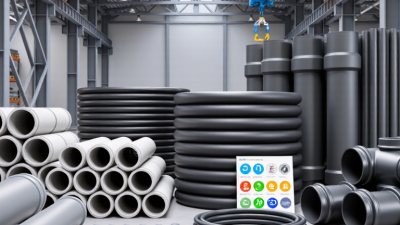
China Top 10 Sewer Line Manufacturers for Global Buyers
Sourcing a reliable sewer line from China requires more than comparing factory prices. Global buyers must examine material grades, dimensional control, hydraulic performance, and production consistency. This guide presents ten Chinese manufacturers serving international infrastructure projects. It focuses on evidence rather than polished catalog language. Samples matter.
A dependable evaluation considers pipe diameter, wall thickness, joint design, corrosion resistance, and expected soil conditions. Buyers should request test reports, quality certificates, inspection records, and clear production photographs. Factory audits can reveal details that brochures rarely show, such as storage conditions, extrusion equipment, and batch labeling. Practical experience also shows that installation support can affect project results as much as product quality. A strong manufacturer should explain transportation limits, connection methods, and suitable applications without hiding technical restrictions.
Standards differ across countries, so certifications must be checked against the buyer’s local requirements. ISO registration may support confidence, but it does not automatically prove every product performs well. Independent testing remains valuable. No ranking can replace due diligence. Some suppliers communicate professionally yet provide limited evidence of long-term field performance. Others may have excellent equipment but weaker export coordination. That distinction is easy to miss.
The manufacturers discussed here are assessed through practical factors, including product range, manufacturing capability, quality management, export experience, and responsiveness. The comparison is useful, but not perfect. Market conditions change, factory capabilities evolve, and public information can be incomplete. Buyers should verify current data before signing contracts, especially for municipal, industrial, or large-scale drainage projects. Reliable decisions come from combining documented evidence with careful technical judgment.
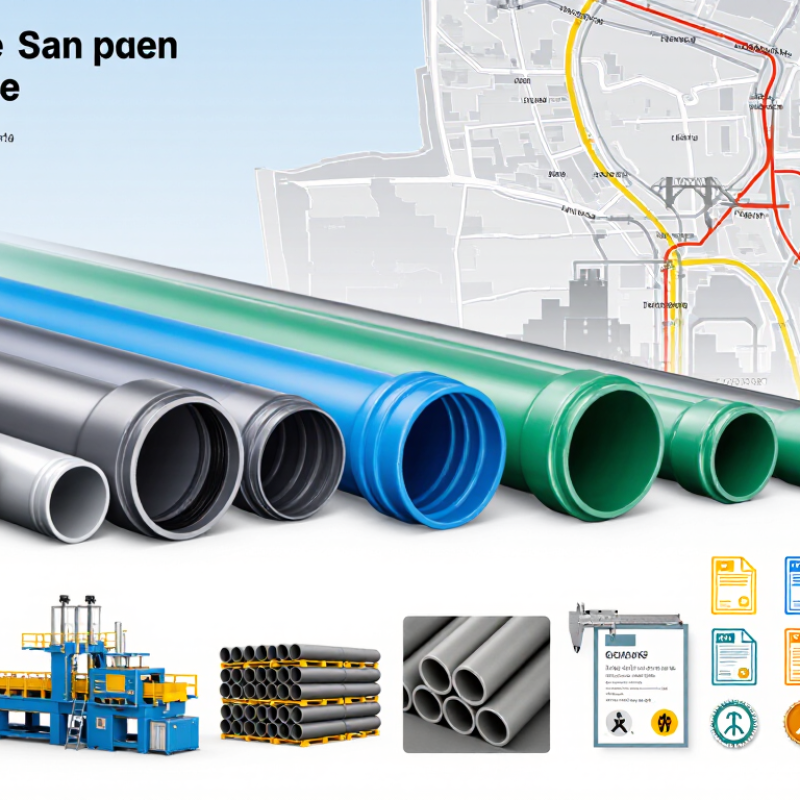
China’s Top 10 Sewer Line Manufacturers: Scope, Ranking, and Market Data
This review covers ten Chinese manufacturers producing sewer pipes, fittings, inspection chambers, and complete drainage systems. The scope includes PVC, HDPE, reinforced concrete, ductile iron, and lined steel products. Ranking uses five practical indicators: verified production capacity, export experience, laboratory testing, project references, and after-sales performance. Quality records received the highest weight.
Public trade data shows strong demand from Southeast Asia, Africa, the Middle East, and Latin America. Large producers often operate several extrusion or concrete-forming lines, with daily output measured in hundreds of tonnes or pipe sections. Export-oriented factories usually provide ISO-based quality systems, pressure testing, dimensional reports, and material traceability. These documents matter more than polished factory photography.
The ranking also examines lead times, mold flexibility, container loading, and resistance to chemical corrosion. A supplier with lower output may rank higher when testing is consistent and replacement support is reliable. Some factories disclose limited financial or capacity information, so comparisons are not perfectly equal. That weakness deserves attention. Buyer interviews, third-party inspections, and sample testing can reveal differences hidden in catalogues. Local standards also vary, making drainage design, wall thickness, joint sealing, and installation training essential parts of supplier evaluation.
Sewer Line Materials, DN 200–4000 mm Sizes, and Applicable Standards
China Top 10 Sewer Line Manufacturers for Global Buyers
Sewer line selection begins with material, not supplier ranking. PVC-U suits many DN 200–1000 mm gravity systems because it is light and corrosion-resistant. HDPE and PP offer flexible joints and strong chemical resistance. GRP performs well where low weight and hydraulic smoothness matter. Reinforced concrete remains practical for DN 1000–4000 mm installations, especially under heavy traffic loads. Ductile iron is useful where high external strength and controlled pressure performance are required.
Size alone does not define suitability. Buyers should check flow capacity, soil conditions, groundwater, burial depth, and joint movement. Standards must match both material and destination market. ISO 4435 commonly applies to PVC-U underground drainage pipes. EN 13476 covers structured-wall thermoplastic systems. ASTM F679 supports large-diameter PVC sewer pipe in relevant applications. Concrete products may follow EN 1916 or ASTM C76, while GRP and HDPE require their own product-specific standards. Local authority specifications still control acceptance.
Factory evidence matters. Request dimensional reports, ring-stiffness data, hydrostatic tests, impact results, and batch traceability. Inspect socket geometry and gasket placement, not only the pipe surface. A clean certificate can still hide poor installation control. This is where many projects weaken. DN 4000 mm pipes also need careful lifting plans and verified bedding support. The best material may fail when trench conditions are ignored. Specifications should remain open to review after soil reports and site trials are available.
| No. | Sewer Line Material / Product Type | Typical Nominal Size Range | Common Sewer Applications | Commonly Referenced Standards | Key Technical Characteristics | Buyer Verification Points |
|---|---|---|---|---|---|---|
| 1 | PVC-U Solid-Wall Sewer Pipe | DN 200–1000 | Gravity sanitary sewers, residential drainage, stormwater laterals and collectors | EN 1401-1; ISO 4435; ASTM D3034 for applicable nominal sizes | Low weight, smooth internal surface, good corrosion resistance and reliable gasketed joints | Check stiffness class, ring stiffness and joint type |
| 2 | PVC-U Large-Diameter Sewer Pipe | DN 1000–3000 | Large gravity sewer collectors, culverts and stormwater conveyance | ASTM F679; ISO 21138; EN 1401-1 where the product range applies | High hydraulic efficiency, resistance to biological corrosion and relatively fast installation | Confirm profile design and deflection limits |
| 3 | PP Structured-Wall Sewer Pipe | DN 200–4000 | Gravity sewage, industrial effluent and stormwater systems requiring high ring stiffness | EN 13476; ISO 21138; EN 1610 for installation practices | High impact resistance, low roughness, strong chemical resistance and flexible jointing options | Review SN class, weld design and temperature rating |
| 4 | PE100 Solid-Wall Pipe | DN 200–1600 | Rising mains, pressure sewer networks, outfalls and difficult-ground installations | ISO 4427; EN 12201; ASTM F714 for applicable pressure-pipe dimensions | Excellent flexibility, fusion-welded leak-resistant joints and strong resistance to ground movement | Specify SDR, PE grade, pressure class and fusion procedure |
| 5 | PE Profile-Wall Sewer Pipe | DN 800–4000 | Large-diameter gravity sewers, stormwater tunnels and low-pressure drainage lines | ASTM F894; ISO 21138; EN 13476 where applicable | Reduced structural weight compared with solid-wall pipe and good resistance to aggressive wastewater | Verify buckling calculations and installation embedment |
| 6 | Glass-Reinforced Plastic (GRP) Sewer Pipe | DN 300–4000 | Large gravity sewers, treated-effluent lines, marine outfalls and corrosive environments | EN 14364; ISO 25780; ASTM D3262 for applicable fiberglass sewer pipe products | High strength-to-weight ratio, corrosion resistance and low hydraulic roughness | Confirm stiffness class, resin system and laminate design |
| 7 | Reinforced Concrete Sewer Pipe | DN 300–4000 | Deep-buried gravity sewers, stormwater culverts and high-load infrastructure projects | EN 1916; ISO 25780 is not applicable to concrete; ASTM C76 for reinforced concrete pipe | High compressive strength, strong load-bearing capability and suitability for large burial depths | Check concrete class, reinforcement, cover and sulphate resistance |
| 8 | Vitrified Clay Sewer Pipe | DN 200–1200 | Gravity sanitary sewers, chemically aggressive wastewater and long-life municipal networks | EN 295-1; ASTM C700 for applicable vitrified clay pipe products | Excellent chemical resistance, strong abrasion resistance and long service life under suitable conditions | Review joint system, bedding requirements and impact handling |
| 9 | Ductile Iron Sewer Pipe | DN 200–2600 | Pressure sewer mains, pumping-station discharge lines and high-load crossings | EN 598; ISO 7186; ISO 2531 for applicable ductile iron pressure pipes | High mechanical strength, strong impact resistance and suitability for pressurized wastewater service | Specify internal lining, external coating and corrosion protection |
| 10 | Steel Sewer Pipe with Protective Lining | DN 500–4000 | Large pressure outfalls, crossings, siphons and special-engineered sewer sections | ISO 3183 for applicable steel pipe requirements; EN 10224 for water and wastewater steel pipe applications | High structural strength, custom fabrication capability and suitability for high external or internal loads | Confirm lining, coating, weld qualification and cathodic protection |
Manufacturer Profiles: Capacity, Certifications, Export Markets, and Lead Times
China Top 10 Sewer Line Manufacturers for Global Buyers
A credible top-10 list should compare factories, not only product photos. The WHO and UNICEF Joint Monitoring Programme reported that 3.5 billion people lacked safely managed sanitation in 2022. This demand makes production evidence important. Each manufacturer profile should state annual pipe capacity, diameter range, material grades, and testing equipment. A factory producing 80,000 tonnes yearly is not automatically suitable for a 900-millimeter municipal project. Confirm actual availability.
Certifications also need careful checking. ISO 9001 supports process control, while ISO 14001 indicates environmental management. Project approvals may require EN, ASTM, or local water authority standards. Export markets reveal practical experience. UN Comtrade data can help verify whether a supplier regularly ships to Europe, Africa, Southeast Asia, or the Middle East. Ask for recent shipment records, not vague claims. Lead times should include mold preparation, testing, packing, and ocean scheduling. In many cases, 20–45 days may be realistic for standard orders, but custom fittings can extend delivery. Small details matter.
Tips: Request a capacity certificate, current test report, certification scope, and two recent export references. Check whether the certificate covers the quoted product. It may not. Also compare wall thickness, pressure class, joint design, and warranty terms. A cheaper quotation can hide weaker testing or longer port handling. Factory audits remain useful, though they cannot replace independent inspection.
Comparing the Top 10: MOQ, Output, Testing Data, and Price Factors
China’s top ten sewer line manufacturers should be compared through measurable procurement data, not factory size alone. Grand View Research valued the global plastic pipes market at about USD 44 billion in 2023. This demand increases pressure on suppliers to prove capacity, consistency, and delivery control.
MOQ often varies from one container to several thousand meters, depending on diameter, resin grade, and tooling. A practical comparison should record monthly output, extrusion lines, and lead time for repeat orders. Some factories report over 10,000 tonnes annually, but buyers should request production records and recent shipment evidence. Numbers can look impressive.
Testing data deserves greater attention. For gravity sewer pipes, buyers commonly review dimensional checks, ring stiffness, impact resistance, joint tightness, and hydrostatic performance where applicable. Relevant references include EN 1401, ASTM D3034, and ISO 9969. Independent laboratory reports are more reliable than factory summaries. Ask for batch numbers, test dates, and actual readings, not only pass certificates.
Price depends on resin costs, wall thickness, diameter, packaging, tooling, freight, and payment terms. A lower quotation may hide thinner walls or weaker joint control. I would compare landed cost per meter, not unit price. One overlooked factor is re-testing after production changes. It adds time, yet it can expose quality drift before installation. Procurement teams should also inspect samples, audit calibration records, and reserve a small trial order before scaling.
Global Buyer Due Diligence: ISO 9001, ASTM/EN Compliance, and Logistics
Selecting among China’s top 10 sewer line manufacturers requires more than comparing catalog prices. Global buyers should request a current ISO 9001 certificate and verify its scope, issuing body, and validity. The certificate should cover the actual factory and relevant pipe production, not only a trading office. Ask for batch records, inspection plans, and corrective-action reports. Small details matter.
ASTM or EN compliance must match the project specification. Check pipe diameter, wall thickness, stiffness class, joint design, chemical resistance, and test temperature. Request recent laboratory reports, not generic brochures. Independent sampling can confirm ring stiffness, leakage resistance, and dimensional accuracy. Some documents look complete but lack traceable batch numbers. That weakness deserves written clarification.
Logistics can quietly damage a good purchase decision. Confirm Incoterms, container loading photos, pallet protection, moisture control, and port handling responsibilities. A practical supplier should provide a packing list, commercial invoice, certificate of origin, and inspection records before shipment. Calculate container utilization carefully; uneven loading may increase breakage and freight cost. Factory audits are useful, although one visit cannot prove every production cycle. Buyers should keep approval samples and define remedies for shortages, nonconforming goods, or delayed delivery. Mistakes still happen. Clear evidence makes them manageable.
Related Posts
-
China Top 10 Sewer Line Pipe Manufacturers for Global Buyers
-
2026 How to Choose the Right Sewer Line Pipe for Your Needs?
-
How to Choose the Right Sewer Pipe Sleeve for Your Plumbing Needs
-
2026 Best Pipe Fixers for Global Buyers to Consider?
-
Why is Internal Sewer Pipe Repair Essential for Homeowners?
-
2026 Best Well Casing Options for Your Drilling Projects?