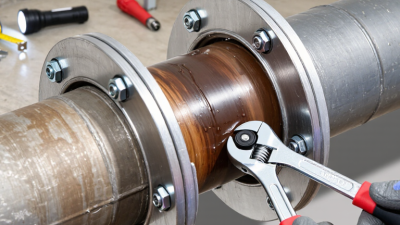
China Top 10 Internal Pipe Repair Sleeve Manufacturers
Choosing a dependable pipe-repair supplier takes more than comparing product photos or advertised prices. An internal pipe repair sleeve must match the pipe material, diameter, defect location, and operating conditions. A sleeve that looks suitable on a catalog page may not fit a real pipe. Details matter.
This guide introduces ten manufacturers in China and considers the practical factors buyers can verify. These include product range, material information, dimensional tolerances, installation guidance, quality-control practices, and support for project-specific requirements. For example, a maintenance team may need to confirm that a sleeve can pass through a narrow access point before planning a repair. That detail can change the whole job.
Manufacturer lists are useful starting points, not guarantees of performance. Company capabilities and product specifications can change, and available public information may not answer every technical question. Ask for current drawings, test documentation, and clear installation instructions. Compare these with the actual pipe conditions, rather than relying on broad claims. A supplier’s response to detailed questions can also reveal how well it understands the application. Still, even careful research has limits. The final choice should be checked by qualified project personnel against site conditions and applicable engineering requirements. This article aims to support that evaluation, not replace it.

Internal Pipe Repair Sleeves: Types, Materials, and Typical Service Conditions
Internal pipe repair sleeves are used for localized cracks, leaking joints, and corrosion without replacing the full pipe run. Common options include stainless-steel mechanical sleeves, resin-impregnated cured-in-place sleeves, and glass-fiber composite systems. Stainless steel provides a rigid mechanical seal; resin systems conform to irregular pipe walls and cure in place. Material choice depends on pipe diameter, defect length, pressure, temperature, and chemical exposure. Fit matters. A sewer lateral carrying wastewater has different service demands from a pressurized water main. ASCE’s 2021 Report Card for America’s Infrastructure estimates that the United States has about 2.2 million miles of drinking-water pipe, with an average age of roughly 45 years. This aging network helps explain demand for targeted rehabilitation, but it does not make every sleeve suitable for every pipe.
For gravity sewers, short internal sleeves commonly address isolated leaks or cracks, provided the surrounding pipe remains stable. In pressurized lines, designers must verify sleeve restraint, pressure rating, and sealing performance under operating and surge conditions. Stainless systems may suit accessible, defined defects; resin and composite sleeves can cover longer or uneven sections, but require controlled curing and careful surface preparation. Not every defect. Heavy deformation, active movement, or widespread structural failure may call for a different repair strategy. Check chemical compatibility and potable-water approvals where relevant, and confirm installation limits against project specifications and applicable standards. A sleeve can stop leakage without restoring a badly ovalized host pipe; that distinction is easy to overlook during selection.
Internal Pipe Repair Sleeve Materials: Thermal Conductivity
Representative values near 20°C, in watts per meter-kelvin (W/m·K).
Metallic sleeves conduct heat much more readily than resin-based materials. These are approximate material-property values, not sleeve performance ratings; actual values depend on grade, formulation, and temperature. Repair suitability also depends on the pipe, fluid, pressure, temperature, and installation method.
Key Selection Data: Pipe Diameter, Pressure, Defect Size, and Chemical Exposure
Choosing an internal pipe repair sleeve starts with dimensions, not catalog photos. Measure the actual inside diameter at several points, since corrosion and deposits can make a pipe oval. Record the pipe material, wall condition, and access limits; a sleeve that fits on paper may snag at a joint. Good measurements matter. Also note temperature and normal operating pressure, including short pressure spikes. Check these conditions against the sleeve system’s documented limits, rather than relying on the pipe’s original rating. If operating records are incomplete, verify conditions before installation. Field measurements are not always neat.
Map the defect’s length, width, and position, including damage near joints. A pinhole and a long axial split need different coverage. Check whether the surrounding wall is sound, and confirm the required sleeve overlap with a qualified design professional. This detail is easy to underestimate. List the conveyed fluid and cleaning chemicals, with their concentrations and temperatures. Compatibility depends on the complete exposure, not a broad label such as “water service.” Request documented material compatibility and pressure data, then compare them with site conditions. Check twice. If important details remain uncertain, pause for a technical review instead of forcing a convenient fit.
CIPP Benchmarks: ASTM F1216, ISO 11296-4, and EN 13566-4
ASTM F1216, ISO 11296-4, and EN 13566-4 are useful benchmarks when evaluating cured-in-place pipe systems. ASTM F1216 addresses the rehabilitation process, including design, installation, and testing. ISO 11296-4 and EN 13566-4 focus on CIPP renovation for underground, non-pressure drainage and sewerage networks. Their scopes overlap, but they are not interchangeable labels. Check which standard applies to the project and market.
A manufacturer’s technical file should connect test results to the actual liner and resin system offered. Review declared dimensions, mechanical properties, installation guidance, and quality-control records. Ask how curing is monitored, especially in long runs or changing pipe diameters. Temperature logs matter. A clean sample coupon is useful, but it cannot show whether installation conditions were controlled along the full pipe. Compare documentation with project specifications, not just a catalogue claim.
Standards set a framework; they do not remove site variables. A sharp bend, groundwater ingress, or an uneven host pipe can affect the finished lining. Small details count. Request traceable test reports and clear acceptance criteria before procurement. Some records may still leave questions, and that is worth noting rather than overlooking. A careful review should consider both factory-tested materials and field installation evidence.
| No. | Benchmark Dimension | ASTM F1216 | ISO 11296-4 | EN 13566-4 | Practical Verification Point |
|---|---|---|---|---|---|
| 01 | Primary scope | Practice for rehabilitation of existing pipelines and conduits using an inverted, resin-impregnated tube that is cured in place. | Requirements and test methods for CIPP systems used to renovate underground non-pressure drainage and sewerage networks. | Requirements and test methods for CIPP lining systems used in renovation of underground non-pressure drainage and sewerage networks. | Confirm the application, pipe type, and operating conditions fall within the scope of the selected standard. |
| 02 | Document type | Installation and design practice; it is not a manufacturer ranking or a standalone product certification. | Product/system requirements and associated test methods. | Product/system requirements and associated test methods. | Review design documents, product declarations, test reports, and installation procedures as separate evidence. |
| 03 | Installation concept | Addresses tube inversion into an existing conduit followed by curing of the resin-impregnated tube. | Addresses cured-in-place pipe lining systems; the applicable installation details depend on the system and project specification. | Addresses cured-in-place pipe lining systems; the applicable installation details depend on the system and project specification. | Check that the proposed installation method and curing process are supported by the system documentation. |
| 04 | Structural design | Provides design procedures for CIPP rehabilitation, including consideration of the existing pipe and design conditions. | Sets system requirements and test methods; project structural design must be established using the applicable design basis. | Sets system requirements and test methods; project structural design must be established using the applicable design basis. | Request project-specific calculations, design assumptions, and the stated condition of the host pipe. |
| 05 | Material and cured liner | Applies to a resin-impregnated tube that forms a cured liner inside the existing conduit. | Applies to CIPP products and systems; material and performance verification follows the relevant standard requirements. | Applies to CIPP products and systems; material and performance verification follows the relevant standard requirements. | Verify the tube, resin, and cured-liner specifications correspond to the tested and supplied system. |
| 06 | Mechanical performance | Design and installation practice; project design values should be supported by appropriate material test data. | Mechanical properties are assessed through applicable requirements and test methods for the declared system. | Mechanical properties are assessed through applicable requirements and test methods for the declared system. | Check test reports for the relevant cured-liner properties, test method, specimen details, and reported results. |
| 07 | Wall thickness and design inputs | Wall thickness is determined through the project design and installation requirements, rather than a universal value for every liner. | System requirements apply; the required liner dimensions depend on product details and project design. | System requirements apply; the required liner dimensions depend on product details and project design. | Compare the designed thickness with the product data and the thickness measurements recorded after installation. |
| 08 | Quality and conformity evidence | Provides practice-related requirements and guidance for carrying out CIPP rehabilitation work. | Provides a framework of product/system requirements and test methods for conformity assessment. | Provides a framework of product/system requirements and test methods for conformity assessment. | Request traceable product identification, applicable test reports, installation records, and inspection results. |
| 09 | Site installation records | Relevant to documenting the inversion, curing, and installation process in accordance with the project specification. | System conformity does not replace project-specific installation documentation and inspection. | System conformity does not replace project-specific installation documentation and inspection. | Record installation conditions, curing data, site observations, and any deviations from the approved procedure. |
| 10 | Acceptance and project specification | Use the applicable edition together with the contract documents and project requirements for installation and acceptance. | Use the applicable edition and national adoption together with the project specification. | Use the applicable edition and national adoption together with the project specification. | Define acceptance criteria before installation; verify the current standard edition and applicable local requirements. |
Note: ASTM F1216, ISO 11296-4, and EN 13566-4 have different scopes and should not be treated as automatically interchangeable. This table summarizes benchmark topics and does not state universal pass/fail values; confirm requirements against the applicable standard edition, product documentation, and project specification.
China’s Top 10 Internal Pipe Repair Sleeve Manufacturers: Products and Markets
China’s internal pipe repair sleeve manufacturers serve municipal, commercial, and industrial maintenance projects. Their products commonly include resin-impregnated sleeves, felt or fiberglass liners, and accessories for installation and curing. Sleeve dimensions, material compatibility, and curing methods vary, so buyers should compare technical specifications rather than rely on product names alone. Details matter.
Municipal utilities often need solutions for cracked drains and leaking joints, while industrial users may require materials suited to specific operating conditions. Market demand is shaped by aging pipelines, limited excavation access, and the need to reduce service interruptions. Manufacturers may offer custom diameters and lengths, but availability and production tolerances should be confirmed for each order.
A practical supplier review can examine test documentation, installation guidance, quality controls, and experience with similar pipe systems. Ask how the sleeve performs under the intended temperature, pressure, and chemical exposure. Claims are not interchangeable. The comparison is not perfectly neat: product data may use different test methods, and field conditions can differ from laboratory results. Clear records and realistic project references help buyers assess fit without assuming every sleeve suits every pipeline.
How to Verify Suppliers: Design Life, QA Tests, Certifications, and Installation Records
China Top 10 Internal Pipe Repair Sleeve Manufacturers
When comparing internal pipe repair sleeve manufacturers in China, verify the stated design life against actual service conditions. Ask for the engineering basis: temperature range, pressure cycles, wastewater chemistry, and expected movement. A “50-year” claim means little without documented assumptions. Request calculations, material data, and system limits.
Review QA records tied to production batches, not just a polished brochure. Useful evidence may include dimensional checks, material batch traceability, cure monitoring, and representative tensile or adhesion tests. Check test methods, acceptance limits, dates, and report signatories. Look closely. Certifications should identify the product scope and issuing body; a company-level certificate does not automatically validate every sleeve. Confirm that certificates are current and independently verifiable.
Installation records show whether laboratory claims hold up in real pipes. Request anonymized job sheets listing pipe diameter, defect type, preparation method, ambient temperature, curing time, inspection results, and repairs. Compare records from similar pipe materials and operating environments where possible. A gap may be ordinary. Treat missing data as a question, not proof of poor quality, and ask the supplier to explain it in writing.
Related Posts
-
How to Repair a Pipe with a Repair Sleeve
-
2026 Best Sewer Pipe Sleeve for Global Buyers?
-
Ultimate Guide to Effective Pipe Sleeve Repair Solutions for Global Procurement
-
What is an internal pipe repair sleeve and how does it work?
-
How to Repair a Pipe Sleeve in 2026?
-
Top 10 Internal Pipe Repair Sleeve Manufacturers Worldwide