Submit Inquiry
27 West Beaver Creek Road Unit #2
Richmond Hill, ON, CANADA L4B 1M8

International:

1-905-886-0335

US & Canada:

1-800-265-5696

Top 10 Internal Pipe Repair Sleeve Manufacturers Worldwide

Aging pipelines are creating urgent demand for precise, minimally disruptive rehabilitation. The U.S. Environmental Protection Agency’s 2022 Clean Watersheds Needs Survey identified approximately $630 billion in wastewater infrastructure needs over twenty years. Its 2023 Drinking Water Infrastructure Needs Survey estimated another $625 billion requirement. These figures show the scale of replacement and repair challenges. However, they do not measure the internal pipe repair sleeve market directly.

An internal pipe repair sleeve can restore localized damage without excavating an entire pipeline. It may address cracks, joint separation, corrosion, or small leaks inside difficult-to-access systems. Selection depends on pipe diameter, operating pressure, temperature, fluid type, installation access, and expected service life. Field experience matters. A technically impressive product can still fail when surface preparation is poor.

Dr. Mohammed Najafi, a recognized trenchless-technology researcher, has stated, “Trenchless technology is a means, not an end.” That principle applies directly to sleeve selection. Repair quality should remain more important than marketing claims. Manufacturer testing, installation records, material traceability, and independent certifications deserve careful review. Reports from ASCE, EPA, and specialist infrastructure research firms provide useful context, but their categories are not always directly comparable. That limitation should be acknowledged.

This Top 10 list examines worldwide internal pipe repair sleeve manufacturers through practical criteria. These include product design, installation reliability, technical support, documented performance, and suitability for demanding networks. No ranking captures every field condition. Actual performance may vary. That is the point worth remembering.
Top 10 Internal Pipe Repair Sleeve Manufacturers Worldwide

What Internal Pipe Repair Sleeves Are and How They Work

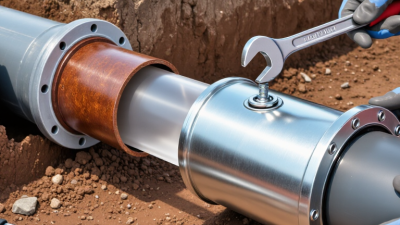
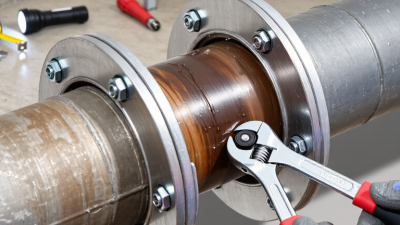
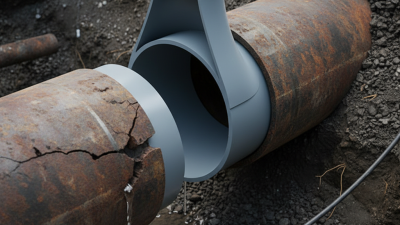
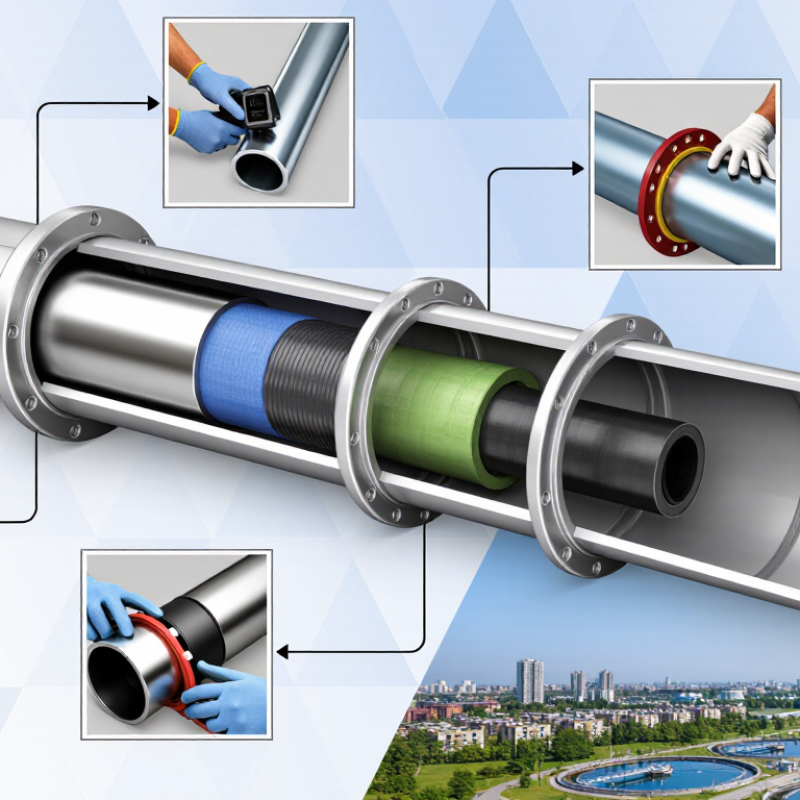
Internal pipe repair sleeves are fitted liners that restore a damaged section from inside the pipe. They usually contain a strong metal or composite shell, sealing material, and an installation system. The sleeve bridges cracks, pinholes, corroded walls, and leaking joints. It creates a new pressure boundary without replacing the entire pipe.

The process begins with inspection and accurate measurement. Technicians clean the internal surface, remove loose corrosion, and check the remaining wall thickness. They then position the sleeve over the defect and expand it mechanically or hydraulically. Some designs use a resin or elastomer seal to close small gaps. Once secured, the sleeve transfers pressure around the damaged area and limits further leakage.

Fit matters greatly. A sleeve that is too small may leave a leak path. One that is oversized can deform the pipe or damage its coating. In field work, poor surface preparation causes many failures, even when the sleeve itself is well manufactured. That detail is easy to underestimate. Manufacturers therefore test pressure resistance, dimensional accuracy, corrosion behavior, and sealing performance under realistic conditions. Engineers should also consider fluid temperature, chemical exposure, pipe movement, and future inspection access. Internal sleeves can extend service life, but they cannot correct every structural problem. Deep distortion, unstable foundations, or widespread wall loss may require a different repair method.

Key Criteria for Evaluating Global Sleeve Manufacturers

When comparing the top 10 internal pipe repair sleeve manufacturers worldwide, technical evidence should outweigh sales claims. The U.S. Environmental Protection Agency reports roughly 240,000 water-main breaks annually. That figure shows why reliable rehabilitation matters.

Evaluate sleeve pressure ratings, temperature limits, chemical resistance, and compatibility with pipe materials. Ask for independent test results, not only laboratory brochures. ASTM F1216 and ISO 11296-4 provide useful benchmarks for cured-in-place repair systems.

Manufacturing consistency is equally important. Check resin batch tracking, sleeve thickness, dimensional tolerances, and curing records. A strong supplier should explain how workers inspect wrinkles, voids, and incomplete bonding inside the pipe.

The 2023 American Water Works Association State of the Water Industry report identifies aging infrastructure and workforce shortages as major utility concerns. Therefore, global manufacturers should provide clear installation training, multilingual manuals, and responsive field support.

A long warranty means little without documented service procedures. I would not judge quality from price alone. That approach is tempting, but incomplete.

Tips:

Request a sample quality dossier before shortlisting suppliers. It should include test certificates, inspection photographs, failure limits, and references for similar diameters.

Compare total installed cost, including preparation, curing, traffic control, and future inspection.

Also verify whether the sleeve works in wet, irregular, or pressurized conditions.

Some evaluations remain subjective. Record every assumption, because small omissions can become expensive repairs.

Profiles of the Top 10 Internal Pipe Repair Sleeve Manufacturers

The Top 10 internal pipe repair sleeve manufacturers are profiled through practical engineering criteria, not catalogue size.

Each profile examines sleeve materials, host-pipe compatibility, pressure resistance, installation access, and documented testing. Stainless steel, epoxy, and composite systems appear frequently, but their performance depends heavily on temperature, flow, and surface preparation.

The U.S. Environmental Protection Agency’s 2023 Drinking Water Infrastructure Needs Survey estimates

$625 billion

in required investment over 20 years.

That pressure encourages utilities to choose localized repairs instead of disruptive excavation. The profiles therefore assess curing records, dimensional tolerances, field training, and traceability.

ISO 11296-4 and relevant ASTM procedures offer useful reference points, although one standard cannot cover every sleeve design.

Field experience exposes the gaps.

Some manufacturers provide clear pull-out data and chemical-resistance tables. Others describe “high strength” without publishing test conditions. That deserves scrutiny.

A sleeve installed through a 450-millimeter access chamber faces different risks than one installed in an open trench.

The review also considers inspection cameras, resin handling, and repair records after installation.

The American Society of Civil Engineers gave U.S. drinking water infrastructure a C-minus grade in its 2021 report, reinforcing the need for measurable rehabilitation results. Specifications still need independent checking.

Comparison of Manufacturing Capabilities and Product Features

Top 10 Internal Pipe Repair Sleeve Manufacturers Worldwide: Comparison of Manufacturing Capabilities and Product Features

The leading ten manufacturers differ more in engineering depth than in catalog size. According to Grand View Research, the global trenchless technology market reached about USD 5.8 billion in 2023. This growth increases demand for reliable internal repair systems. Strong manufacturers typically operate automated forming lines, controlled resin systems, and non-destructive inspection equipment. Their sleeves should maintain consistent thickness, roundness, and bonding strength.

Material selection remains critical. Stainless steel sleeves suit high-pressure and chemically aggressive pipelines. Glass-reinforced polymer systems offer low weight and fast installation. Some manufacturers provide epoxy or polyurethane sealing layers for irregular pipe surfaces. Product comparisons should examine pressure ratings, temperature limits, curing time, and compatibility with wastewater, gas, or industrial fluids. Small details matter, especially sleeve-end transitions and installation tolerances.

Field experience exposes weaknesses.

A manufacturer may publish impressive tensile data, yet provide limited evidence from buried networks. The NACE IMPACT study estimated global corrosion costs at approximately USD 2.5 trillion annually, equal to about 3.4% of global GDP. That figure supports stronger inspection and lifecycle planning. However, laboratory strength does not guarantee long-term performance under vibration, ground movement, or repeated pressure changes. Buyers should request third-party test reports, installation records, batch traceability, and repair-cycle data. ISO 9001 certification is useful, but it does not replace product-specific validation. A practical scorecard should weigh manufacturing repeatability, installer training, technical support, and documented service life—not marketing language.

How to Choose the Right Manufacturer for Your Project

Choosing among the top ten internal pipe repair sleeve manufacturers requires more than comparing prices. The sleeve must match pipe material, diameter, pressure, temperature, and service fluid. A 2023 U.S. EPA Drinking Water Infrastructure Needs Survey estimates $625 billion in required investment over 20 years. That figure shows why durable repairs and documented performance matter.

Ask each manufacturer for pressure-test results, installation records, material traceability, and failure data. For potable-water projects, verify compliance with NSF/ANSI/CAN 61 or the applicable national standard. ISO 9001 certification can indicate controlled production, but it does not prove field performance. Review independent testing, not only product brochures. A manufacturer should also explain curing time, surface preparation, access limits, and emergency procedures.

Fit matters greatly.

Experienced contractors inspect previous projects with similar pipe sizes and operating pressures. They also check whether technical support reaches the jobsite quickly. The Water Infrastructure Institute’s 2024 industry outlook identifies aging assets and skilled-labor shortages as continuing project risks. Therefore, simple installation procedures can be valuable. Still, simplicity may hide limitations. I would request a sample sleeve, installation method statement, warranty terms, and references from comparable facilities. A perfect datasheet is not enough. The strongest choice usually combines verified testing, transparent records, responsive support, and realistic limits rather than impressive claims.

Top 10 Internal Pipe Repair Sleeve Manufacturers Worldwide

How to Choose the Right Manufacturer for Your Project

The chart presents a manufacturer-neutral procurement weighting for internal pipe repair sleeve projects. Structural performance, chemical compatibility, operating limits, installation requirements, and applicable approvals should normally receive the greatest attention. These percentages are evaluation guidelines, not company rankings or market-share data.

123