Top 10 Pipe Fixer Types for Global Buyers?
Choosing the right pipe fixer is rarely a simple purchasing decision. Global buyers must consider pipe material, diameter, pressure, temperature, and installation conditions. A clamp suitable for a cold-water line may fail on a hot industrial system. Small details matter.
This guide examines ten common pipe fixer types used across plumbing, construction, irrigation, and industrial maintenance. It covers repair clamps, pipe couplings, split sleeves, saddle clamps, compression fittings, flange adaptors, and other practical solutions. Each type serves a different purpose. Some provide quick emergency support, while others suit permanent installations with tested pressure performance.
Real projects are less tidy.
Product selection should follow manufacturer data, recognized testing, and local installation requirements. Buyers should verify dimensions carefully, especially when metric and imperial measurements overlap. Stainless steel may resist corrosion, but it is not automatically suitable for every chemical environment. Rubber seals also need proper temperature and fluid compatibility. These points are easy to overlook during urgent purchasing.
A reliable supplier should provide material specifications, pressure ratings, seal information, installation guidance, and traceable quality documents. Clear photographs help, but they cannot replace technical drawings or sample checks. Pricing matters, yet an inexpensive pipe fixer can become costly after leakage, downtime, or repeated replacement. The best choice balances performance, service life, availability, and installation skill. This list is useful, but it is not a substitute for project-specific engineering review. Mistakes happen, even in experienced teams. The goal is to reduce them with careful comparison.
Pipe Fixer Basics: Functions, Materials, and Common Applications
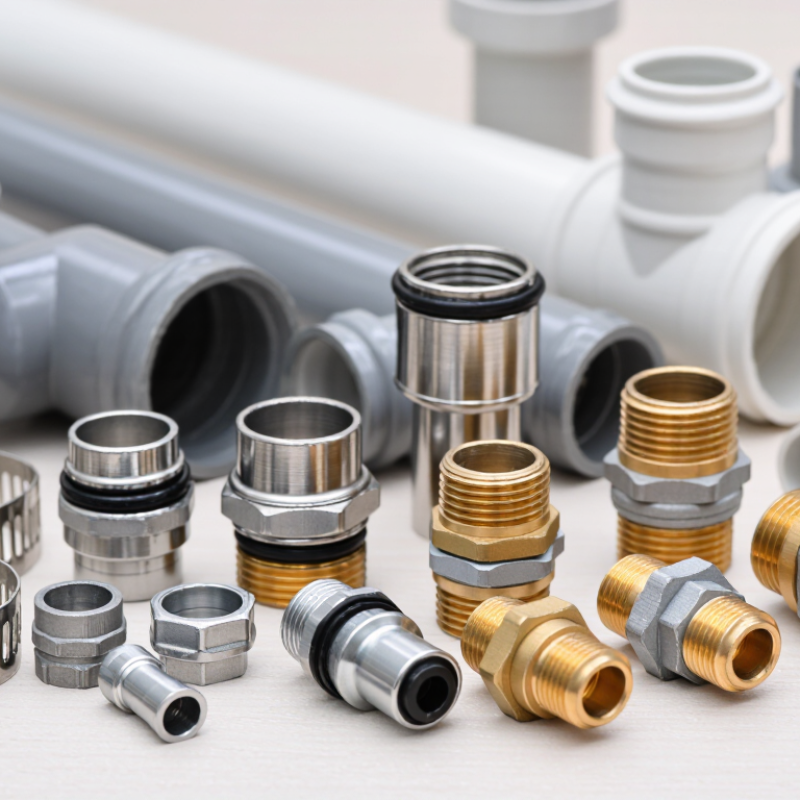
Pipe fixers are practical components for joining, supporting, sealing, or repairing pipelines. The ten common types include repair clamps, pipe couplings, union fittings, flange adapters, pipe saddles, U-bolts, split clamps, pipe hangers, anchor brackets, and stainless-steel band clamps. Each type solves a different problem. A repair clamp seals a small leak, while a coupling connects two pipe sections. Saddles support branch connections, and hangers control movement above ceilings or inside service tunnels.
Material choice affects service life. Stainless steel resists corrosion in humid plants and water systems. Ductile iron provides strength for buried mains. Carbon steel suits demanding industrial lines, but it needs protective coating. Plastic fixers work well with lightweight PVC, PE, and PP piping. Sealing elements often use EPDM, NBR, or PTFE, depending on temperature and fluid compatibility. The ASME B31.3 process piping standard stresses material suitability, pressure control, and inspection. Installation errors still happen. A strong clamp cannot correct poor alignment.
Applications vary from municipal water networks to fire protection, irrigation, HVAC, and compressed-air systems. The UN World Water Development Report 2023 states that about two billion people lacked safely managed drinking water in 2022, increasing pressure on dependable network repairs. The U.S. Department of Energy also reports that compressed-air leaks can waste 20–30% of compressor output in poorly maintained systems. Small details matter: clean pipe surfaces, correct bolt torque, visible corrosion checks, and enough clearance for thermal expansion. A perfect fit is not always possible. Field conditions demand careful measurement and honest rechecking.
Top 10 Pipe Fixer Types for Global Buyers
Pipe fixers support, suspend, align, join, or protect piping systems. The chart compares their typical suitability across common industrial and building-service requirements using a normalized 1–5 engineering index.
Higher values indicate broader suitability for load support, installation flexibility, vibration control, and maintenance access. Actual selection depends on pipe material, diameter, operating temperature, pressure, corrosion exposure, movement, and applicable local standards.
Top 10 Pipe Fixer Types by Design and Installation Method
Top 10 Pipe Fixer Types by Design and Installation Method
Pipe fixers vary by pipe weight, movement, surface, and installation method.
Saddle clamps
Saddle clamps support horizontal pipes with broad contact.
U-bolt clamps
U-bolt clamps hold pipes tightly against beams or brackets.
Split-ring clamps
Split-ring clamps allow fast installation around existing pipework.
Two-bolt clamps
Two-bolt clamps suit walls, frames, and light industrial lines.
Riser clamps
Riser clamps transfer vertical pipe loads to structural floors. They need accurate positioning.
Flange supports
Flange supports carry heavy pipe sections near valves or joints.
Wall brackets
Wall brackets secure short runs against concrete or masonry surfaces.
Ceiling trapeze supports
Ceiling trapeze supports hold several pipes on one frame.
Spring hangers
Spring hangers manage vertical movement caused by temperature changes.
Expansion-guided clamps
Expansion-guided clamps control sideways travel while allowing planned expansion.
Good selection starts with pipe diameter, load, insulation thickness, and operating temperature.
Installation Quality
Installation quality matters as much as fixer design. Check anchor depth, bolt torque, spacing, and corrosion resistance on every project. Avoid crushing insulated pipes. Leave enough clearance for thermal movement and maintenance tools.
In wet areas, poorly protected steel can fail earlier than expected. I have seen neat installations loosen because the supporting structure was overlooked. That mistake is easy to repeat.
Buyers should request load data, material details, and installation guidance before approval. Local climate and building conditions still deserve careful review.
How to Match Pipe Fixers with Materials, Sizes, and Environments
Top 10 Pipe Fixer Types for Global Buyers: Matching materials, sizes, and environments requires more than a catalog check. Common options include repair clamps, split sleeves, full-circle bands, compression couplings, flange adapters, tapping saddles, restrained couplings, dielectric connectors, bell-joint restraints, and emergency wrap systems. Each solves a different failure pattern. A stainless clamp may suit steel or ductile iron, but its gasket must tolerate the conveyed fluid. For PVC and HDPE, use flexible designs that avoid excessive point loading. Fit is not enough.
Start with outside diameter, wall thickness, pressure, temperature, and movement. Nominal diameter alone can mislead. ASME PCC-2 guidance emphasizes engineered repair procedures, inspection, and pressure verification. For buried water lines, restrained couplings help resist axial pullout. For chemical service, confirm gasket compatibility using documented resistance data. In cold regions, freeze-thaw movement and trapped water deserve attention. Coastal exposure can accelerate corrosion. The NACE IMPACT study estimated global corrosion costs at US$2.5 trillion annually, showing why surface preparation matters.
Field experience adds an uncomfortable lesson: a correctly sized fixer can still fail when pipe ovality is ignored. I have seen leakage return after rushed cleaning. Measure twice. Buyers should request test certificates, installation torque ranges, pressure ratings, temperature limits, and comparable project records. The WHO/UNICEF Joint Monitoring Programme reported that 2.2 billion people lacked safely managed drinking water in 2022. Dependable repairs affect public health, not only maintenance budgets. Reports guide decisions, but site data must overrule assumptions.
Global Buying Factors: Standards, Durability, Cost, and Supply
Top 10 Pipe Fixer Types for Global Buyers
Global buyers often compare ten practical pipe fixer types: pipe clamps, repair clamps, saddle clamps, U-bolts, split-ring hangers, clevis hangers, cushioned clamps, pipe brackets, flange supports, and seismic restraints. Each type serves a different load, movement, and installation condition. A repair clamp suits urgent maintenance, while a cushioned clamp protects plastic or coated pipes. Selection should begin with pipe diameter, wall material, pressure, temperature, and vibration.
Standards must match the destination market and project specification. Buyers commonly review ISO, ASTM, EN, or regional requirements, depending on the application. Ask suppliers for material certificates, dimensional drawings, load data, and corrosion test records. Stainless steel may perform well in humid areas, but its grade still matters. Protective coatings can reduce rust, yet poor surface preparation shortens service life. Field inspection is essential. Catalog claims are not enough.
Cost includes more than the unit price. Compare tooling, packaging, freight, duties, installation time, replacement parts, and failure risks. A low quote can look attractive. It may hide inconsistent dimensions or unstable supply. Check production capacity, batch traceability, quality inspection, and realistic lead times. Keep common sizes available near the installation site. This reduces downtime. No choice is perfect. A spreadsheet can still miss awkward access, damaged threads, or a missing washer during installation.