Submit Inquiry
27 West Beaver Creek Road Unit #2
Richmond Hill, ON, CANADA L4B 1M8

International:

1-905-886-0335

US & Canada:

1-800-265-5696

Top 10 Sewer Pipe Repair Solutions for Global Buyers

Sewer failures rarely appear at a convenient time. A damp patch near a manhole, recurring blockages, or a sudden drop in flow can point to damage below ground. For municipalities, contractors, and property owners, choosing a repair method means weighing pipe condition, access, soil, budget, and service disruption. The best sewer pipe repair option depends on what inspection reveals, not simply on the lowest quoted price. Small defects may call for localized work, while long cracks or collapsed sections can require a broader intervention. There is no universal fix. That matters.

This guide compares ten sewer pipe repair solutions for global buyers, from trenchless lining and pipe bursting to targeted repairs and conventional excavation. It considers practical details such as required access, equipment, installation conditions, and the information suppliers should provide. A product sheet may look convincing, yet leave important questions unanswered: Is the system suitable for the existing pipe material? What preparation does installation require? How are quality checks documented? These details deserve attention before procurement. The comparison is a starting point, not a substitute for a qualified site assessment. Conditions vary, and even a well-chosen method can disappoint when inspection data is incomplete. Buyers can use the overview to frame better questions, compare proposals more consistently, and identify where technical advice is still needed.
Top 10 Sewer Pipe Repair Solutions for Global Buyers

Classify Sewer Defects Using EN 13508-2 Before Choosing a Repair

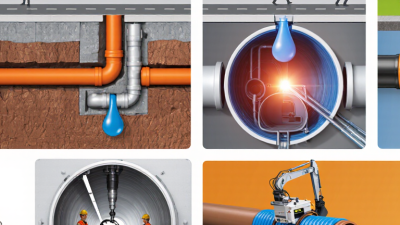
Before comparing sewer pipe repair solutions, classify the observed defects using EN 13508-2. This European coding standard helps inspectors record what a CCTV survey shows, where it occurs, and how extensive it appears. A crack, displaced joint, deformation, infiltration, and root ingress are different observations. They should not be grouped under a vague label such as “pipe damage.”

Record the defect’s location, clock position, length, and relevant code alongside clear footage. Small details matter. A joint gap at the crown may present a different risk from water entering through the invert. Deposits can also hide defects, so note when visibility is poor and consider whether cleaning or another inspection is needed. A code is not a diagnosis by itself.

Use the coded survey to guide further assessment, not to select a repair automatically. Check pipe material, flow conditions, groundwater, access, and the consequence of failure before comparing lining, localized repair, or replacement. Field footage can still mislead; camera angle and poor lighting sometimes make a defect appear worse or smaller. Document uncertainty rather than forcing a confident conclusion. This gives buyers a more dependable basis for comparing proposals and asking contractors how each recommended method addresses the recorded defect.

Compare 10 Repair Methods by Pipe Diameter, Access, and Flow Disruption

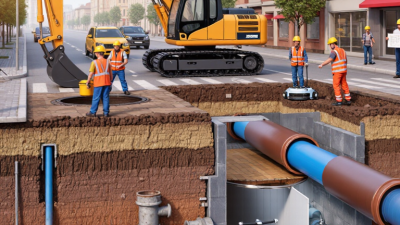
Pipe diameter sets the first boundary, but access often decides what is practical. Robotic spot repairs and sectional cured-in-place liners can address isolated defects through a manhole, with limited surface disturbance. They suit many small and medium pipes, provided equipment can reach the damaged section. Full-length cured-in-place lining works across a broader range of diameters, but needs room for liner handling and curing. Small access matters. Spiral-wound lining can be installed through restricted entry points, while spray-applied coatings need a suitable pipe surface and careful thickness checks.

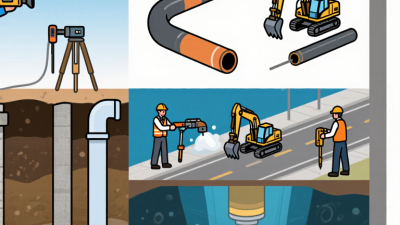
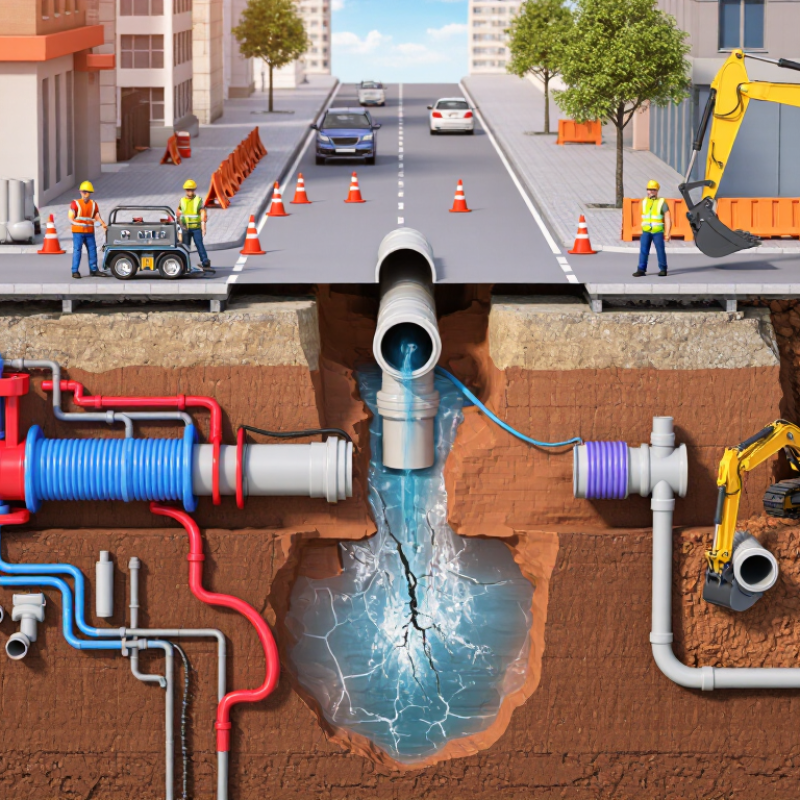
Sliplining inserts a smaller pipe inside the existing one, reducing its internal diameter. Pipe bursting replaces the old pipe along its route and usually needs access pits, so yards or pavement may be disturbed. Open-cut replacement offers direct access for badly deformed or collapsed pipes, but excavation can interrupt traffic and nearby services. Joint sealing or injection may target leaks at specific connections; it is not a cure for every structural failure. A clean chart can mislead.

Flow disruption varies as much as access. Some lining work requires temporary bypass pumping, while excavation may keep a section offline longer. Robotic patching can limit the affected length, yet several defects may make repeated repairs inefficient. No method wins everywhere. A camera inspection, measured diameter, defect map, and flow estimate help narrow the choices. Site conditions can still change the plan, and that uncertainty deserves a place in the comparison.

Top 10 Sewer Pipe Repair Solutions for Global Buyers

Compare typical access requirements and flow disruption across common repair methods. Diameter ranges are indicative; suitability depends on the pipe, site conditions, and system design.

Planning scale: 1 = low, 5 = high. Access demand indicates the typical need for excavation beyond existing access points; flow disruption indicates the likely need for flow control or bypass during work. Diameter bands are approximate and vary by system and project.

Assess CIPP, Close-Fit, and Spiral-Wound Liners Under ISO 11296

ISO 11296 provides a framework for renovating underground, non-pressure drainage and sewer networks. Its separate parts address close-fit lining, cured-in-place pipe (CIPP), and spirally wound pipes. Buyers should check the applicable part and edition against the project specification. The standard helps structure evaluation; it does not guarantee a suitable design or installation.

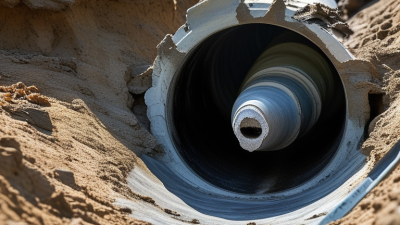
CIPP forms a liner inside the host pipe, making it useful where excavation is disruptive. Review resin and liner records, curing controls, and installation conditions. Cold weather, groundwater, and irregular pipe surfaces can affect results.

Close-fit liners are sized to fit tightly against the existing pipe, but bends, deformation, and reduced internal diameter need careful assessment. Measure the host accurately. Small errors matter.

Spiral-wound liners use a continuous profile formed within the pipe, which can suit restricted access or varied diameters. Their structural design, profile joints, and any annular-space grouting require project-specific review.

Compare all three options using CCTV inspection, hydraulic capacity, groundwater loading, access, and the required service life. Request documented testing and installation records, not just product data. A practical weakness in many comparisons is assuming the pipe is uniform; real sewers often are not.

Check CIPP Design Against ASTM F1216 and 50-Year Creep Data

For global buyers comparing sewer pipe repair solutions, CIPP design deserves close review. ASTM F1216 provides a recognized framework for designing and installing cured-in-place pipe liners. It is not a substitute for site-specific engineering. The design should reflect measured pipe shape, groundwater level, burial depth, and expected loads.

Ask for the assumptions behind the calculation, not just its final thickness. Check whether the design accounts for a fully deteriorated host pipe where appropriate, and whether ovality and groundwater were measured or estimated. A 50-year creep result can help assess long-term flexural performance, but it is not a 50-year field guarantee. Request the test method, raw data, extrapolation approach, and the long-term modulus used in the design. Small details matter.

Compare these inputs across proposals. Confirm that the liner’s tested properties match the material and curing conditions specified for the project. Also ask how installation temperature, resin saturation, and field quality checks will be documented. These details can be less tidy than the design tables suggest. If inspection data are incomplete, require the uncertainty to be stated and considered, rather than hidden behind a precise-looking calculation.

Top 10 Sewer Pipe Repair Solutions for Global Buyers — Check CIPP Design Against ASTM F1216 and 50-Year Creep Data

This comparison summarizes common rehabilitation approaches. Suitability depends on pipe condition, diameter, host-pipe support, groundwater, hydraulic requirements, access, and local regulations. Confirm the applicable standard and design basis for each project.

Solution Typical application Key advantages Important limitations Buyer checks
1. Inversion CIPP lining Rehabilitation of gravity sewers and other existing conduits using a resin-impregnated flexible tube installed by inversion and cured in place. Creates a continuous liner with few or no joints; can often be installed through existing access points. Service connections may need reinstatement. Installation and cure quality depend on site conditions, materials, and process control. ASTM F1216 covers rehabilitation by inversion and curing. Check the current edition, design inputs, liner thickness, resin and tube documentation, installation records, and independent test results.
2. UV-cured CIPP CIPP installations where a light-curable resin system and compatible tube are specified. Controlled curing can support monitored installation and documented cure parameters. Requires compatible materials, suitable access and geometry, and reliable control of the light train and curing conditions. Confirm the project’s governing specification, system-specific qualification, cure records, wall-thickness design, and post-installation inspection results.
3. Pull-in-place CIPP Rehabilitation of selected pipelines where a liner is pulled into position before inflation and curing. Can be useful where inversion is not practical or where installation access and layout favor pulling the liner. Wrinkles, resin distribution, and fit can be sensitive to pipe geometry and installation technique. Verify that the selected installation method is covered by the project specification and that design, material testing, and quality records match the installed system.
4. Localized CIPP patch Short, isolated defects such as localized cracks or joint leakage, where the surrounding pipe remains suitable. Repairs a limited section and may avoid lining the full reach. Does not address defects elsewhere in the pipe; accurate defect location and patch placement are essential. Check patch length and position, host-pipe condition, connection details, material compatibility, and inspection evidence after installation.
5. Pipe bursting Replacement of an existing pipe by fracturing or splitting it while pulling a new pipe into the resulting path. Can replace a deteriorated pipe without continuous open trenching; may allow a new pipe of similar or larger size, subject to site constraints. Requires assessment of nearby utilities, soil movement, access pits, and connections; unsuitable conditions can increase risk. Review geotechnical conditions, utility clearances, launch and reception pits, connection reinstatement, and the new pipe’s structural and hydraulic design.
6. Sliplining Installation of a smaller-diameter carrier pipe inside an existing sewer or conduit. Uses a new continuous pipe and can provide a straightforward replacement flow path within the host pipe. Reduces internal diameter; annular space and end connections need suitable design and execution. Compare post-rehabilitation hydraulic capacity, pipe fit, annular-space treatment, alignment, and connection details with project requirements.
7. Close-fit lining Renovation using a deformable or otherwise reduced-profile liner that is returned or expanded toward a close fit in the host pipe. Can reduce the diameter loss associated with conventional sliplining. Installation depends on liner type, host-pipe geometry, and the specified expansion or reforming process. Request product-specific design data, installation procedures, dimensional checks, and confirmation that the method suits bends, connections, and defects present.
8. Spiral-wound lining Rehabilitation of accessible pipelines using a continuous profiled strip formed into a liner within the host pipe. May be installed through access points; some systems can be installed while flow is maintained, subject to site and system requirements. Structural performance and water-tightness depend on the liner profile, interlock, grouting, and installation details. Verify structural calculations, strip and joint documentation, annular-space requirements, groundwater assumptions, and connection reinstatement.
9. Cement-mortar lining Protective internal lining for suitable water or wastewater pressure pipes, commonly where corrosion control is required. Provides a cementitious barrier between the conveyed fluid and the pipe wall when correctly specified and applied. Not a universal structural repair; suitability depends on pipe material, condition, fluid, operating pressure, and surface preparation. Confirm compatibility with the conveyed fluid and pipe, required surface preparation, lining thickness, curing, and potable-water requirements where applicable.
10. Epoxy coating Internal coating for selected pressure pipes or structures where a compatible protective barrier is specified. Can provide corrosion protection and a smooth coated surface when preparation and application are properly controlled. Coating alone does not restore structural capacity to a severely deteriorated pipe; performance depends strongly on adhesion and surface preparation. Check substrate preparation, coating compatibility, specified thickness, cure conditions, adhesion and holiday testing requirements, and any required fluid-contact approvals.

Screen Global Suppliers for QA Testing, Standards Compliance, and Lifecycle Cost

Global buyers comparing sewer pipe repair solutions should evaluate suppliers as carefully as methods. Cured-in-place liners, pipe bursting, and sectional patches address different access and flow problems. Request QA records tied to the exact product and installation process, not a generic company brochure. Small detail. Batch numbers, resin shelf-life logs, calibration records, and operator training files should be traceable to the project.

Testing claims need context. Request reports showing sample preparation, test conditions, measured values, and acceptance criteria. Check whether each cited standard applies to the material, repair method, and project specification. A certificate alone may not confirm field performance. When possible, review a completed installation, inspect CCTV footage before and after repair, and compare visible defects with the repair report. This takes time.

Screen suppliers on lifecycle cost, not just quoted price. Compare mobilization, traffic control, bypass pumping, curing time, expected service life, inspection intervals, and future access costs. Ask how estimates were calculated; they can be optimistic. Warranty terms matter, as do exclusions for damaged host pipes or difficult installation conditions. I would record unresolved questions beside each bid. It feels untidy, but it helps reveal uncertainty behind a polished proposal.

123