Submit Inquiry
27 West Beaver Creek Road Unit #2
Richmond Hill, ON, CANADA L4B 1M8

International:

1-905-886-0335

US & Canada:

1-800-265-5696

Why Do Global Buyers Choose Pipe Fixers?

Why Do Global Buyers Choose Pipe Fixers?

When a pipe leaks, the repair has to fit the line, not just the catalog photo. Buyers comparing pipe fixers often look for secure sealing, suitable materials, and clear product information. The right choice depends on pipe diameter, material, operating pressure, temperature, and the repair environment. A clamp suited to one line may be unsuitable for another. Fit comes first.

Experienced procurement teams also assess how a supplier supports the product. Helpful details include accurate drawings, material specifications, installation guidance, inspection records, and responsive technical assistance. Buyers may also consider production consistency, packaging, lead times, and the supplier’s ability to explain product limitations. These details matter when equipment crosses borders and must be checked by different teams. A polished catalog is not proof of quality. Ask for evidence that matches the intended use.

There is no single reason global buyers choose one manufacturer over another. Some prioritize dependable delivery; others need a particular size, material, or level of documentation. Price matters, but a low quote can become costly if dimensions are unclear or a seal fails prematurely. Even careful buyers can miss a detail. Reviewing requirements with a qualified technical professional can help reduce that risk. A useful comparison weighs performance, support, and verified information together, rather than relying on broad claims. That is a more practical starting point for understanding why pipe fixers earn trust across markets.
Why Do Global Buyers Choose Pipe Fixers?

What Pipe Fixers Are and the Problems They Address

Pipe fixers are mechanical devices used to seal leaks or reconnect damaged pipe sections. Common designs use a metal sleeve, a compressible gasket, and tightened bolts. The gasket presses against the pipe surface, helping contain water or other compatible fluids. Some units suit a small pinhole; others span a cracked or corroded section. Fit matters. Pipe material, diameter, operating pressure, temperature, and fluid compatibility all affect selection.

The need is substantial. The American Society of Civil Engineers’ 2021 Report Card estimates about 240,000 water-main breaks occur annually in the United States. The U.S. Environmental Protection Agency’s 2023 assessment estimates $625 billion in drinking-water infrastructure needs over 20 years. A repair clamp can reduce downtime and avoid replacing a longer pipe run, but it cannot restore weakened pipe walls or correct poor support. That distinction is easy to miss during a rushed repair. Inspect the damaged area, confirm the device’s pressure rating, and follow installation instructions; a poor seal may leak again under vibration or pressure changes.

Key Products and Their Roles in Pipe Repair

Why Do Global Buyers Choose Pipe Fixers?
Key Products and Their Roles in Pipe Repair

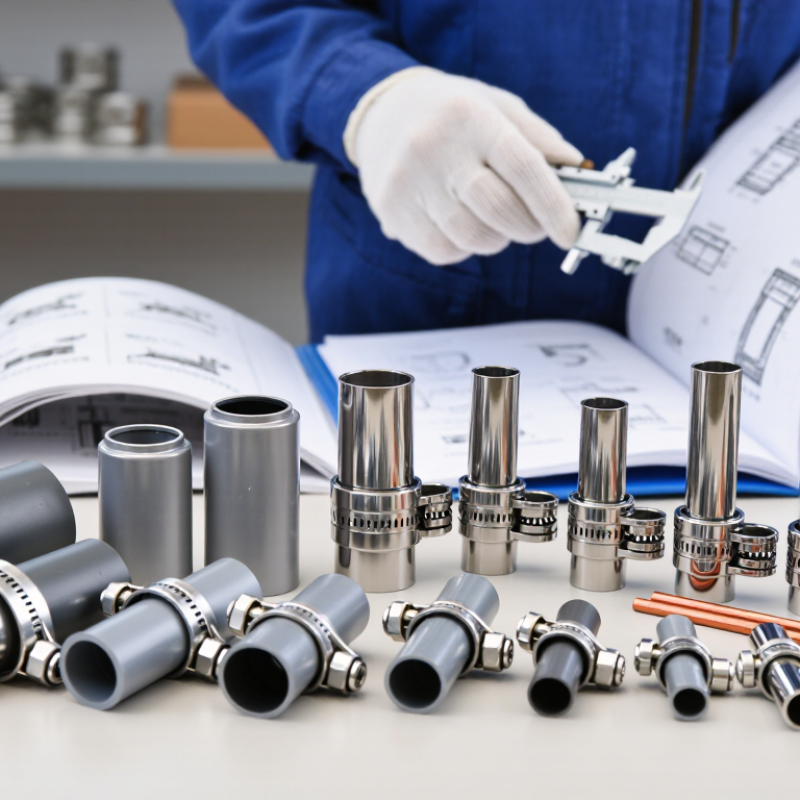
Global buyers look for pipe repair products that match the damage, pipe material, and working conditions. A stainless-steel repair clamp can cover a localized leak, while its gasket presses against the pipe to help form a seal. Small details matter. Buyers should check pipe diameter, pressure rating, temperature range, and gasket compatibility before choosing a clamp.

Repair couplings serve a different role. They connect pipe ends when a section is cracked, cut, or badly corroded. Flexible designs can accommodate slight alignment differences, but they cannot correct every installation problem. Clean pipe surfaces and evenly tightened bolts matter. A rushed fit may leak again.

For damaged joints or irregular surfaces, repair bands and approved sealing compounds may offer another option, depending on the product’s specifications. These products are not interchangeable, and a temporary repair should not be mistaken for a permanent solution. Even experienced teams can overlook corrosion beside the visible leak. That deserves a closer look. Buyers benefit from clear technical data, consistent dimensions, and installation guidance they can verify. A repair that looks neat may still be unsuitable for the line’s operating pressure. Safety depends on matching the product to the actual conditions, not simply choosing the fastest fix.

Why Do Global Buyers Choose Pipe Fixers?

Key Products and Their Roles in Pipe Repair

Bars count the typical application roles listed for each product type—not sales, market share, or a performance rating. Repair clamps seal localized leaks and reinforce damaged areas; repair couplings join pipe ends or replace a short damaged section; engineered wrap systems reinforce weakened pipe and may seal leaks; flange adapters connect plain-end pipe to flanged equipment. Suitability depends on pipe material, dimensions, pressure, and product specifications.

Quality Standards and Compatibility Across Markets

Global buyers often choose pipe fixers because dependable repairs must fit local systems, not just look robust. Across markets, pipe diameters, wall thicknesses, connection types, and operating conditions can vary. A clamp that fits a drawing may still fail on a corroded, uneven pipe. Fit matters.

Quality starts with measurable checks: material traceability, dimensional inspection, sealing performance, and documented pressure and temperature limits. These records help buyers compare products with project specifications and applicable local standards, rather than relying on vague claims. Compatibility also depends on the fluid, pipe material, outdoor exposure, and access available to installers. A stainless body, for example, does not automatically make every seal suitable for every service. Not always.

Suppliers who provide clear size ranges, installation guidance, and test documentation make evaluation easier across borders. Still, a certificate alone cannot confirm that a pipe fixer suits a specific pipe condition. Buyers should check measurements on site, verify the required rating, and confirm seal compatibility before installation. That takes time. Standards and field conditions do not always align; a worn pipe may need closer assessment, even when the product specifications appear suitable.

Why Do Global Buyers Choose Pipe Fixers? - Quality Standards and Compatibility Across Markets

Buyer consideration Relevant standard or convention Compatibility detail Why it matters to global buyers
Thread form and sealing ISO 7-1; ISO 228-1; ASME B1.20.1 ISO 7-1 covers pipe threads intended to make pressure-tight joints on the threads. ISO 228-1 covers parallel threads where the pressure-tight seal is not made on the threads. ASME B1.20.1 specifies NPT threads. Thread designation and sealing method should be confirmed before ordering. NPT and BSP thread forms are not generally interchangeable, even when their nominal sizes appear similar.
Nominal pipe size NPS and DN sizing conventions NPS and DN are nominal designations; they do not, by themselves, state the measured outside diameter or wall thickness. Actual dimensions depend on the applicable pipe standard and size series. Buyers should check the specified outside diameter, wall thickness, and fitting connection rather than relying on a nominal size label alone.
Steel pipe material and manufacture ASTM A53/A53M This specification covers black and hot-dipped, zinc-coated welded and seamless steel pipe. It is a pipe specification, not a thread-compatibility standard. Matching the pipe material and product specification helps ensure the fitting or repair component is selected for the intended piping system.
Butt-welding fittings ASME B16.9; EN 10253 series These standards address dimensions and requirements for butt-welding fittings within their respective scopes. The applicable edition, material specification, and dimensional series should be identified. A stated standard and edition make it easier to check dimensions and documentation against the project’s piping specification.
Stainless-steel fittings ASTM A403/A403M This specification covers wrought austenitic stainless-steel piping fittings. The specified grade and product form should be checked against the service requirements. Verifying material grade helps buyers assess whether a fitting is suitable for the system’s fluid, temperature, and operating environment.
Pressure and temperature suitability Applicable piping code, product standard, and design specification Allowable pressure depends on factors such as material, component dimensions, temperature, and connection type; a nominal size or thread designation alone does not establish a pressure rating. Buyers can compare products more reliably when pressure and temperature limits are documented for the intended service conditions.
Quality-management evidence ISO 9001 ISO 9001 specifies requirements for a quality management system. It is not, by itself, a product standard or proof that a particular fitting meets a specific technical requirement. Buyers should review product-level specifications, inspection records, and required conformity documents alongside any quality-management certification.

Note: Standards and editions can differ by project, jurisdiction, and application. Confirm the governing specification and connection details before selecting or installing pipe components.

How Global Buyers Evaluate Pipe Fixer Suppliers

Global buyers compare pipe fixer suppliers on more than price. They check whether the product suits the pipe material, diameter, working pressure, and site conditions. A clamp intended for a dry indoor line may not suit a damp, vibrating installation. Small mismatches can cause delays.

Ask for clear drawings, material specifications, pressure ratings, and inspection records. Reliable suppliers explain how dimensions are measured and what tolerances apply. They can also describe packaging, lead times, and how replacement parts are handled. Ask for proof. A detailed quotation helps, but buyers should compare the same specifications across suppliers. Otherwise, a lower price may reflect a different product.

Communication matters, too. Does the supplier answer technical questions directly, or avoid the difficult details? Request a sample or review a small order when the project allows. Check whether labels and documents match the delivered goods. Details matter. A polished quote can still hide a mismatch, and that is easy to overlook when schedules are tight. No checklist removes every risk, but careful questions make supplier comparisons more dependable.

Practical Benefits for Installation and Maintenance Teams

Pipe fixers can make routine pipe installation more manageable by holding sections steady while teams align joints and secure connections. That matters in tight plant rooms, where a small shift can turn a simple fit into repeated adjustments. A compact fitting is easier to position near walls or overhead runs. Less wrestling.

For maintenance crews, accessible fixings can shorten the time needed to inspect or replace a section. A technician can check for movement, corrosion, or leakage without disturbing more of the line than necessary. Still, the right choice depends on pipe diameter, material, operating temperature, and expected load. Check the specifications. A fixing that fits neatly may not suit every service condition, and matching the wrong materials can create problems over time.

Good preparation helps. Measure the pipe, confirm the support spacing, and follow the fitting instructions before tightening anything. On a busy repair, crews may rush this step; it happens. Yet uneven spacing can leave some sections carrying more strain than others. After installation, a practical check for alignment and movement can catch issues early. The work may not be perfect on the first attempt, especially in cramped spaces, but a clear inspection routine makes later maintenance more predictable.

123