Why Choose an Assembly Machine for Global Production?
Why Choose an Assembly Machine for Global Production?
Global production demands more than faster output. It requires repeatable quality, measurable performance, and controlled processes across different facilities. An Assembly Machine can standardize fastening, pressing, dispensing, testing, and inspection tasks. This consistency reduces operator variation and creates clearer production records.
Taiichi Ohno, the influential Toyota production engineer, stated, “Without standards, there can be no kaizen.” His principle remains highly relevant to modern assembly operations. A well-designed Assembly Machine turns critical work steps into documented standards. Engineers can monitor cycle time, torque values, reject rates, and changeover performance. These details support practical decisions, especially when factories operate across several countries.
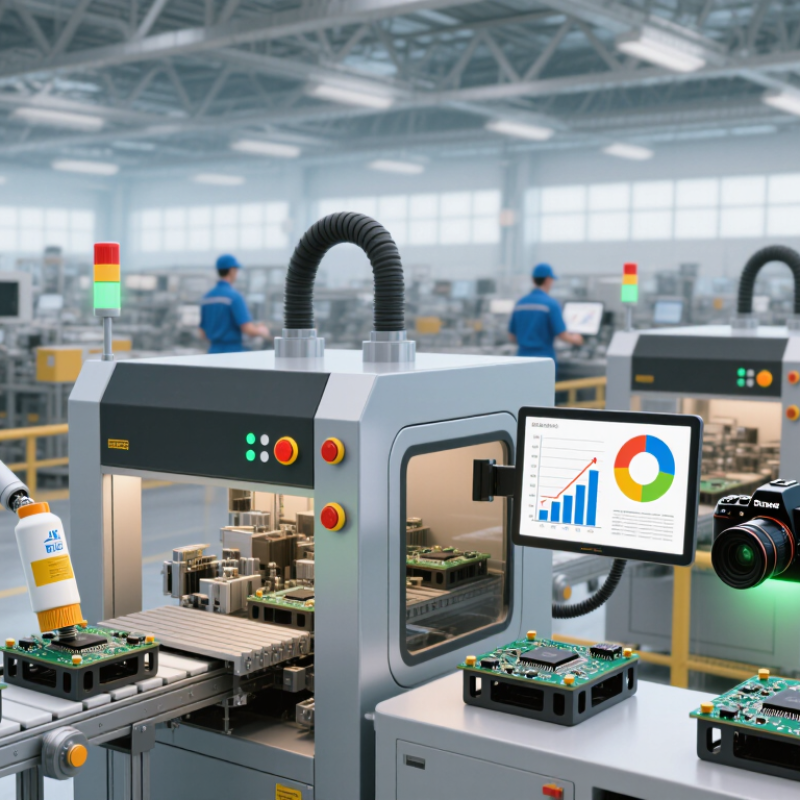
The benefits become visible on the factory floor. A sensor confirms component presence. A servo press records applied force. A vision camera checks alignment before the product moves forward. These controls can reduce rework and make training easier. They also help companies prepare for local safety, quality, and traceability requirements.
Still, automation is not automatically the best answer. Not every factory needs one. Poor product design, unstable materials, or weak maintenance planning can make a sophisticated machine expensive and frustrating. Teams should validate samples, review total ownership costs, and test the equipment under realistic conditions. A factory acceptance test may look successful, yet daily production can reveal unexpected problems.
That uncertainty deserves attention. Global expansion is rarely perfect. However, a carefully specified Assembly Machine can provide a dependable foundation for scalable production, provided people, processes, and equipment develop together.
Assembly Machines Defined: Functions, Architectures, and Production Scope
Why Choose an Assembly Machine for Global Production?
An assembly machine combines feeding, positioning, joining, testing, and traceability in one controlled workflow. Its architecture may be rotary, inline, robotic, modular, or hybrid. Each design suits a different production scope. A rotary system handles repeated high-volume cycles, while a modular cell supports frequent product changes. A robot-centered cell offers flexibility but often needs stronger programming and maintenance skills.
The machine’s functions become clearer on the factory floor. A feeder presents small parts in a fixed orientation. A servo actuator presses them together. Sensors check presence, force, and alignment. A vision station can reject a scratched housing before final packing. These details matter across sites with different operators, utilities, and quality systems. The International Federation of Robotics reported 541,302 industrial robots installed worldwide in 2023. That figure shows continued automation demand, but it does not prove every process needs a robot.
Production scope should guide the investment. A simple machine may assemble one component. A wider line can connect material loading, fastening, inspection, labeling, and data capture. Deloitte and The Manufacturing Institute projected nearly 3.8 million U.S. manufacturing jobs could be needed between 2024 and 2033, with 1.9 million potentially unfilled. Automation can reduce repetitive work, yet training remains essential. Reality is messier. Poor part tolerances can defeat an expensive machine. Global deployment also requires local service plans, documented safety procedures, and adaptable tooling. A fast cycle is not enough. Reliability must survive shifts, languages, and changing products.
Global Automation Signal: 541,302 Robots Installed in 2023 (IFR)
Why Choose an Assembly Machine for Global Production?
The global automation signal is clear: 541,302 industrial robots were installed in 2023, according to the International Federation of Robotics’ World Robotics 2024 report. This was the second-highest annual installation level recorded. The global operational stock also reached about 4.28 million units. These figures show that automated assembly is no longer limited to large factories. It is becoming practical for distributed production, especially where repeatable quality and stable cycle times matter.
An assembly machine can standardize fastening, pressing, feeding, inspection, and handling across several sites. Operators can monitor torque readings, reject counts, and cycle times from production records. That evidence supports better process decisions than visual checks alone. The International Federation of Robotics also reports strong automation demand in automotive, electronics, and metal industries. These sectors often require precise positioning and consistent output.
Automation is not effortless.
A poorly designed fixture can repeat the same mistake thousands of times. Engineers must study tolerances, product variation, maintenance access, and worker interaction before deployment. Energy use and spare-part availability also deserve attention across different regions. From practical factory experience, small pilot cells often reveal problems that computer models miss. Global production benefits when machines are adaptable, documented, and simple to service locally. Some processes still need skilled human judgment. That limitation should remain visible.
Production Proof: 4.28 Million Industrial Robots Operated in 2023 (IFR)
Why Choose an Assembly Machine for Global Production?
The International Federation of Robotics reported 4.28 million industrial robots operated worldwide in 2023. This installed base shows that automated assembly is no longer limited to experimental factories. It supports repeatable production across different regions, shifts, and workforce conditions. The signal is clear. Manufacturers need equipment that performs consistently near the customer.
An assembly machine can control torque, insertion depth, alignment, and inspection at precise intervals. For example, a sensor can detect a misaligned component before it reaches packaging. A digital record can then connect the fault with a time, station, and batch. These details support quality audits and faster process adjustments. They also reduce dependence on manual checking, especially during high-volume production.
However, automation is not a perfect answer. A poorly designed fixture can repeat the same mistake thousands of times. Operators still need training, safe access, maintenance plans, and practical recovery procedures. Energy use, spare parts, and local technical support also affect the real return. Production teams should test difficult components, not only ideal samples. A machine may look efficient during a demonstration, yet struggle with dust, variation, or frequent changeovers. Careful trials and documented results make global deployment more reliable.
Why Choose an Assembly Machine for Global Production?
Production Proof: Industrial Robot Adoption and Global Manufacturing Capacity
| Production Indicator | 2019 | 2020 | 2021 | 2022 | 2023 |
| Industrial robots operating worldwide | 2.72 million | 3.01 million | 3.48 million | 3.90 million | 4.28 million |
| Annual industrial robot installations | Approx. 373,000 | 390,757 | 526,144 | 553,052 | 541,302 |
| Annual change in operating stock | Baseline | +10.7% | +15.3% | +12.3% | +9.7% |
| Estimated operating-stock growth since 2019 | Baseline | +10.7% | +27.7% | +43.4% | +57.3% |
| Five-year compound annual growth rate | Calculated from the 2019 operating stock | Approx. 12.0% CAGR |
Source: International Federation of Robotics, World Robotics 2024 statistics. The 2023 figure represents approximately 4.28 million industrial robots operating worldwide, while 541,302 new industrial robots were installed during 2023. Historical figures are rounded where the source reports approximate values; calculated percentages are based on the reported operating-stock figures.
Business Value: Throughput, Quality, Labor Efficiency, and Repeatability
In global production, an assembly machine can turn a scattered workflow into a measured process. It feeds parts, positions components, and applies controlled force at repeatable speeds. From factory-floor trials, this consistency matters most during long shifts and product changes. Throughput becomes easier to monitor because cycle time is visible. Supervisors can compare hourly output with targets and correct material delays before they spread. Small gains add up.
Quality improves when critical steps no longer depend entirely on hand pressure, timing, or visual judgment. Sensors can detect missing parts, incorrect placement, and incomplete fastening before units leave the line. That reduces rework and protects customer confidence. Labor efficiency also improves. Operators spend less time repeating tiring motions and more time loading materials, checking results, and handling exceptions. The work becomes safer and more predictable, though training remains essential. Machines do not remove responsibility.
Repeatability is valuable for sites producing the same assembly across regions. Standard settings help teams maintain similar output, even when experience levels differ. However, automation is not automatically efficient. Poor fixtures, unstable materials, or unrealistic cycle targets can create expensive bottlenecks. We have seen plans fail when maintenance time was ignored. A reliable evaluation should include changeover minutes, inspection data, downtime, and operator feedback. The fastest machine is not always the best one. Reliable performance matters on ordinary days.