
Submit Inquiry
27 West Beaver Creek Road Unit #2
Richmond Hill, ON, CANADA L4B 1M8

International:

1-905-886-0335

US & Canada:

1-800-265-5696

Top 10 Wire Winder Types for Global Buyers

Choosing the right Wire Winder is not a simple matter of comparing speed, price, or catalogue photographs. Global buyers must examine wire diameter, coil geometry, tension control, winding accuracy, insulation requirements, and local service support. A compact bench winder may suit small transformer coils, while a programmable CNC model may handle repeated industrial production. The wrong choice can leave uneven layers, damaged enamel, excessive scrap, and delayed deliveries.

Dr. Slobodan Cuk, a recognized power-electronics researcher, offers a useful working principle: “Winding quality depends on controlled geometry, stable tension, and repeatable production.” That principle remains practical on the factory floor. A buyer should ask how the machine behaves during the final turns, not only how quickly it starts. Small details matter. A loose guide can shift the wire by a fraction of a millimeter. That small error may affect insulation clearance or coil performance.

This guide reviews ten Wire Winder types used by international manufacturers, distributors, repair shops, and contract producers. It considers manual, semi-automatic, automatic, toroidal, coil, transformer, CNC, and specialized winding systems. Each type has strengths, limits, and hidden operating costs. Some machines appear efficient but require highly trained operators. Others deliver excellent repeatability but offer less flexibility for unusual coil designs. No single machine fits every workshop. That is the uncomfortable part. Buyers must match equipment with actual wire sizes, production volume, quality targets, maintenance skills, and expected growth. The most expensive option is not always the safest investment. A careful comparison is better.
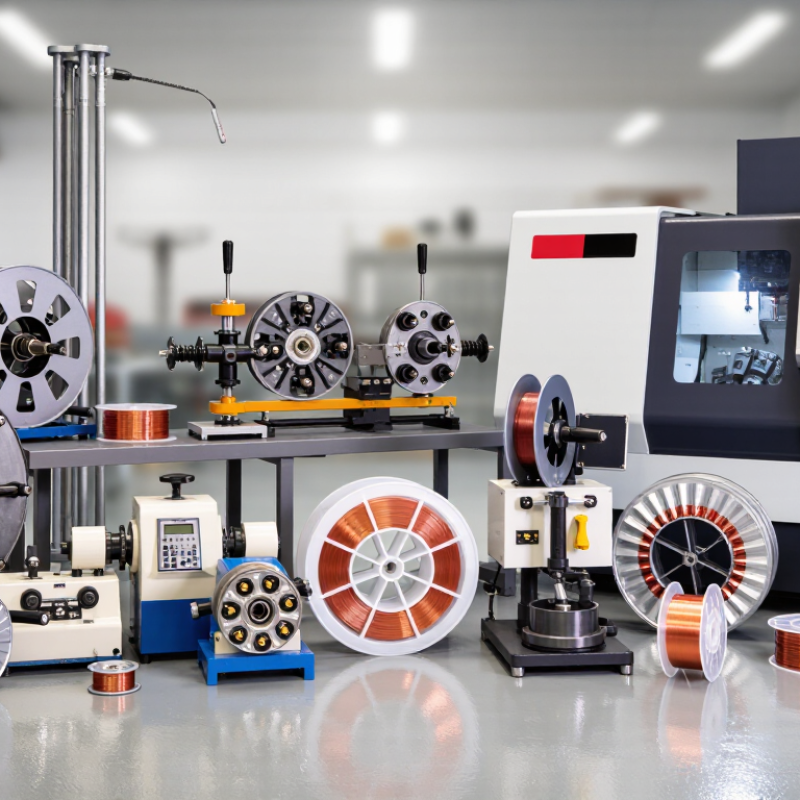
Top 10 Wire Winder Types for Global Buyers

What Is a Wire Winder and How Does It Work?

Top 10 Wire Winder Types for Global Buyers

What Is a Wire Winder and How Does It Work?

A wire winder is a machine that coils wire onto a spool, reel, or formed core. It controls speed, tension, and winding direction during operation.

The process begins with a payoff unit that feeds wire at a steady rate. A motor rotates the reel while a guide moves sideways across its width. This movement creates even layers instead of tangled loops.

Tension rollers keep the wire firm, but not stretched beyond its safe limit. Sensors can detect diameter changes, broken wire, or a full spool.

Different designs suit different production needs. Common types include single-spool winders, multi-spool winders, precision-layer winders, toroidal winders, take-up winders, and automatic coil winders. Buyers may also compare traverse, high-speed, compact, and custom-axis systems. Each type handles different wire sizes, materials, and packing patterns.

Small details matter. A poorly aligned guide can leave gaps along the reel edge. Excessive tension may weaken delicate wire, even when the surface looks normal.

In my view, this is where specifications often mislead buyers. Maximum speed is useful, but stable tension usually matters more.

Operators should test actual wire samples before selecting equipment. The result may not look perfect at first. That is valuable feedback. It reveals whether the machine suits the material, spool shape, and working environment.

How Wire Winder Types Are Classified

Top 10 Wire Winder Types for Global Buyers

How Wire Winder Types Are Classified

Wire winders are classified by movement, wire size, spool design, and control method. In production audits, I check these details before comparing prices. The ten common types include manual, semi-automatic, automatic, traversing, coil, spool, reel-to-reel, precision, high-speed, and multi-spindle winders. Each type fits a different process. A manual winder suits small batches and frequent wire changes. An automatic model supports stable, repeated production. A traversing winder guides wire evenly across a spool. Small differences matter.

Classification also depends on the wire material and finished shape. Coil winders handle compact circular coils. Precision winders control pitch, tension, and layer placement. High-speed machines favor output, but they may increase heat and wire stress. Multi-spindle designs process several wires together. Reel-to-reel systems reduce handling between unwinding and winding stages. For thin wire, tension control is critical. For rigid wire, motor torque deserves closer inspection. Do not trust labels alone.

Global buyers should compare wire diameter range, winding width, rotation speed, tension accuracy, and changeover time. Environmental conditions also influence selection. Dust, humidity, and unstable power can affect performance. I have seen a fast machine underperform because its tension sensor was poorly matched. That mistake was expensive. Specifications can be incomplete, and supplier claims need practical verification. Request sample winding, test records, spare-part details, and operator training terms before purchase. The “best” type is rarely universal.

Top 10 Wire Winder Types for Global Buyers

Global buyers can choose from ten practical wire winder types: spool winders, coil winders, drum winders, traverse winders, precision-layer winders, take-up winders, payoff winders, planetary winders, high-speed winders, and automatic winders. Each design suits different wire diameters, insulation layers, tension ranges, and production speeds. A small spool winder fits laboratory work, while a planetary system handles heavier cables with controlled bending. Precision-layer winders create uniform rows. That detail matters during transport and later unwinding.

Demand is becoming more technical. The International Energy Agency’s Global EV Outlook 2024 reported nearly 14 million electric car sales in 2023, representing about 18% of global car sales. Battery, motor, and charging equipment production all require consistent copper and aluminum winding. The IEA’s Electricity Grids and Secure Energy Transitions report also estimates annual grid investment must rise above 600 billion dollars by 2030. More grid equipment means more wire processing capacity. Not every buyer needs the fastest machine.

Selection should begin with measurable conditions: conductor diameter, reel width, line speed, winding tension, permitted ovality, and changeover time. A high-speed winder may reduce labor but increase vibration and scrap if tension control is weak. An automatic model can improve repeatability, yet its sensors require calibration and skilled maintenance. Ask for factory trial data, tension curves, and verified output samples. I may be oversimplifying the choice. Local power quality, operator training, and spare-part access can matter more than headline speed. European and international safety requirements should also be checked before purchase.

Key Features and Specifications to Compare

Top 10 Wire Winder Types for Global Buyers

Key Features and Specifications to Compare

Wire winders vary by production task, wire shape, and spool design. Common types include coil winders, bobbin winders, traverse winders, planetary winders, drum winders, take-up winders, payoff winders, precision winders, automatic winders, and customized line-integrated systems. Each type needs careful comparison before purchase.

Start with the compatible wire diameter range. A machine for 0.05 mm wire may not handle 3 mm cable reliably. Check winding speed, measured in meters per minute, and confirm the required tension range. Stable tension prevents loose layers and damaged insulation. Traverse pitch also matters because it controls how evenly each layer sits. Ask about spool width, flange diameter, maximum load, shaft size, and changeover time.

Motor power and control accuracy affect daily output. Servo control usually provides smoother tension correction than basic speed control. Inspect the dancer system, sensor response, emergency stop design, and guarding structure. For dusty workshops, verify enclosure ratings and cleaning access. Noise levels deserve attention too. They are often ignored during specification reviews.

In practical testing, request sample winding with your actual wire and spool. A catalog number can look perfect, yet fail at high speed. We have seen small flange differences create edge buildup. That detail is easy to miss. Also compare power supply requirements, spare parts availability, operator training, and technical support across regions. Some buyers focus heavily on speed and later regret weak tension control.

Top 10 Wire Winder Types for Global Buyers: Key Features and Specifications to Compare

The chart compares indicative wire-diameter ranges commonly associated with major winder categories. Actual capacity depends on insulation, bobbin size, tension control, winding pattern, and machine configuration.

Values are representative engineering ranges in millimeters and are intended for preliminary global equipment comparison.

How to Choose the Right Wire Winder Internationally

Top 10 Wire Winder Types for Global Buyers

How to Choose the Right Wire Winder Internationally

When global buyers compare wire winders, machine type should match the wire, coil, and factory conditions. Manual spoolers suit low-volume work and simple maintenance. Motorized take-up winders improve output, but they require stable power and trained operators. Traverse winders create even layers for cables and fine wire. Planetary winders handle delicate materials with controlled tension. Pay-off units feed wire, while take-up units collect it.

Other options include precision winders, high-speed winders, automatic coil winders, and portable winders. Choose precision equipment when diameter variation must remain low. Use high-speed models only after checking braking, guarding, and heat control. Automatic systems reduce labor, yet sensors and software need local service support. Portable winders help field teams, though smaller frames can limit coil size. Check wire range, reel dimensions, tension accuracy, winding speed, noise, and spare-part access.

Test the real wire.

International purchasing also depends on electricity, language, climate, and shipping conditions. Confirm voltage, frequency, plug design, enclosure protection, and applicable conformity documents before ordering. Humidity and dust can shorten sensor life in coastal or workshop environments.

I once focused too heavily on speed. The faster machine produced uneven edges. That mistake changed my checklist. A slower winder with steady tension may deliver better coils.

Leave room for operator training and future wire sizes. Some specifications look impressive but remain difficult to verify. Request sample results, warranty terms, acceptance criteria, and remote support in writing.

Article Source:

123