
Submit Inquiry
27 West Beaver Creek Road Unit #2
Richmond Hill, ON, CANADA L4B 1M8

International:

1-905-886-0335

US & Canada:

1-800-265-5696

Who Are the Top Underhood Fuse Box Manufacturers in China?

China’s scale makes it an important base for automotive electrical-component sourcing. The China Association of Automobile Manufacturers reported 31.28 million vehicle sales in 2024, alongside 5.86 million vehicle exports. The International Energy Agency’s Global EV Outlook 2025 also reported more than 17 million electric-car sales worldwide in 2024. These figures show a large, changing vehicle market; they do not, by themselves, measure demand for fuse boxes.

An Underhood Fuse Box must protect circuits while facing heat, vibration, moisture, and limited installation space. Buyers therefore need to look beyond price and production capacity. Terminal quality, sealing design, current ratings, materials, traceability, and validation practices all deserve close review. Small details matter. A loose terminal or poorly sealed cover can create costly problems in service.

This guide examines leading Chinese manufacturers through those practical criteria, while distinguishing documented capabilities from marketing claims. It also considers export experience, customization, and communication during product development. A named, independently verifiable expert quotation was not provided with the source material, so this introduction does not invent one. That limitation matters. Manufacturer rankings are only useful when their evidence is clear, current, and open to scrutiny.
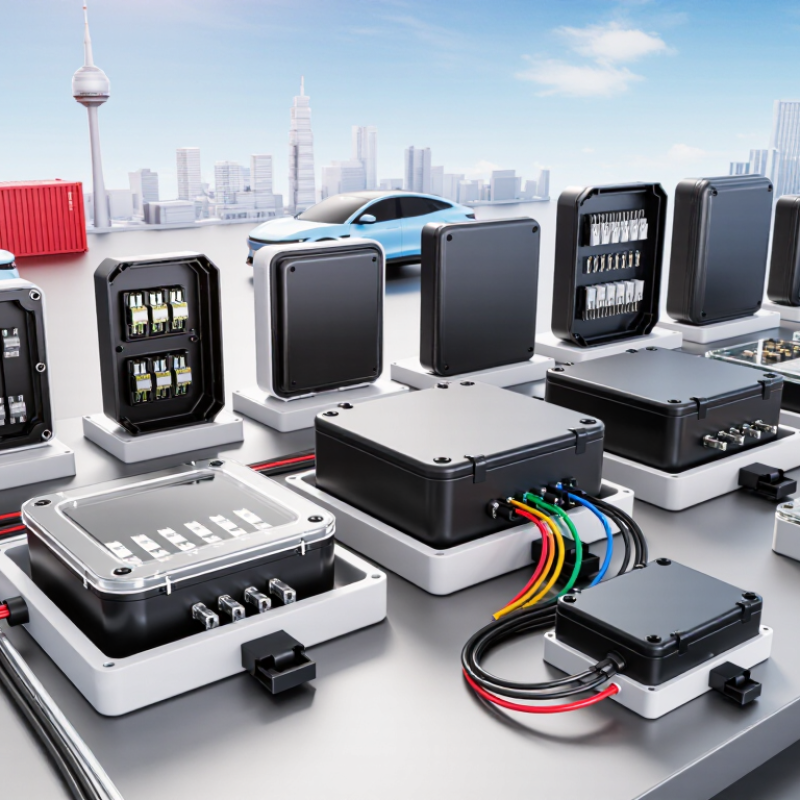
Who Are the Top Underhood Fuse Box Manufacturers in China?

What Is an Underhood Fuse Box and What Does It Do?

An underhood fuse box is an electrical distribution unit mounted in the engine compartment. It holds fuses and, in many vehicles, relays that manage power to selected systems. Depending on the vehicle, those circuits may serve the cooling fan, headlights, horn, or engine controls. The box helps protect wiring: when current exceeds a circuit’s designed limit, a fuse can break the connection before heat damages the wire. It is a small component with a demanding job.

The housing also shields electrical connections from water, dust, vibration, and engine-bay heat. Seals and a secured cover matter, though protection can weaken if the cover is cracked or fitted incorrectly. Inside, a diagram usually identifies fuse positions and ratings. Check it before replacing a fuse; using a higher-rated one can create a hazard rather than solve the fault. A replacement that blows again deserves investigation. Don’t just swap it repeatedly. The cause may be a damaged wire or failing component, and the box itself is not a repair. Layouts differ between vehicles, so a familiar-looking fuse position should never be assumed to serve the same function.

How Are Underhood Fuse Boxes Designed and Manufactured?

Underhood fuse boxes begin with the vehicle’s electrical load map. Engineers identify each circuit’s current demand, likely fault conditions, and connection points before laying out the enclosure. They position high-current terminals and fuses to keep cable paths short and reduce heat buildup. The layout must also leave room for inspection and service. Heat changes everything.

The housing is commonly molded from heat-resistant insulating plastic, while terminals and busbars use conductive metals selected for reliable contact. Seals, covers, and cable entry points help limit water, dust, and road-splash intrusion. Engineers assess vibration, temperature cycling, and mechanical stress, then refine the design through testing. Small gaps matter. A design can look settled too early; real vehicle routing may reveal awkward access or crowded wiring.

During production, molded parts are checked for dimensions and surface defects. Metal components are formed, plated where specified, and assembled with controlled contact pressure. Automated equipment can improve placement consistency, but visual checks still help catch bent terminals or incomplete seating. Each completed unit should undergo electrical continuity and insulation checks, with additional tests based on its intended environment. Clear circuit labeling and traceable inspection records make later maintenance more dependable.

Common Automotive Blade Fuse Ratings

Underhood fuse boxes distribute and protect vehicle electrical circuits. The chart shows common nominal blade-fuse ratings; the fuse selected for any circuit depends on the vehicle’s electrical design.

What Standards Shape China’s Underhood Fuse Box Industry?

China’s underhood fuse box industry is shaped by component standards and vehicle-level validation. GB/T 31465 covers road-vehicle fuse links, while the ISO 8820 series provides related international requirements. These standards address matters such as fuse-link performance and test methods. For the fuse box itself, engineers also consider ISO 16750, which describes environmental and electrical loads on vehicle equipment. Heat, vibration, moisture, and voltage changes are not abstract test conditions. They can affect terminals, seals, and plastic housings under the hood.

Quality systems matter, too. IATF 16949 guides automotive suppliers’ quality-management processes, but certification alone does not prove a fuse box suits every vehicle. Design reviews and validation tests still count. The China Association of Automobile Manufacturers reported 31.28 million vehicles produced in China in 2024, underscoring the scale of the supply chain. Yet volume does not replace careful testing. Small details matter. Engineers should verify current capacity, temperature rise, insulation, and resistance to vibration against the vehicle’s actual use conditions. One practical gap remains: standards set a baseline, but installation layout and service access can still vary widely.

Who Are the Top Underhood Fuse Box Manufacturers in China? — What Standards Shape China’s Underhood Fuse Box Industry?
Area Standard or evaluation dimension What it covers Practical evidence to request
Automotive environmental testing GB/T 28046 series / ISO 16750 series Environmental conditions and test methods for electrical and electronic equipment in road vehicles, including relevant climatic, mechanical, and electrical loads. The applicable parts and test severities depend on the component’s mounting location and vehicle requirements. Test plans and reports identifying the applicable parts, operating conditions, mounting location, and pass/fail criteria.
Fuse-link performance GB/T 31465 series / ISO 8820 series Requirements and test methods for automotive fuse-links. These standards address the fuse-links themselves; they do not, by themselves, qualify the complete fuse box or vehicle circuit design. Fuse-link ratings, time-current characteristics, voltage-drop or temperature-rise results, and evidence that the specified fuse type is compatible with the assembly.
Enclosure protection GB/T 4208 / IEC 60529 IP-code classification for protection provided by an enclosure against access, solid foreign objects, and water. An IP rating applies only to the tested configuration and conditions. Test report for the assembled enclosure, including covers, seals, connectors, and the test configuration used.
Automotive quality management IATF 16949:2016 Quality management system requirements for organizations supplying automotive production and relevant service parts. Certification is a management-system credential, not proof that a particular fuse box meets every vehicle specification. Valid certificate covering the relevant manufacturing site and scope, plus evidence of production controls and customer-specific requirements management.
Environmental management ISO 14001 Requirements for an environmental management system. It does not specify the electrical or environmental performance of an underhood fuse box. Valid site certificate, where required, and documented controls for relevant environmental aspects of manufacturing.
Functional safety considerations ISO 26262 Road-vehicle functional-safety framework for applicable electrical and electronic systems. It is relevant when the fuse-box design forms part of a safety-related function; it is not a blanket certification requirement for every fuse box. Where applicable, safety-related requirements, analysis, and evidence agreed with the vehicle manufacturer.
Electrical and thermal design Supplier evaluation dimension Current-carrying capacity, circuit separation, voltage drop, contact resistance, heat dissipation, and performance under the specified vehicle load profile. Design calculations and test results for the actual terminal, busbar, fuse, wiring, and enclosure configuration.
Materials and durability Supplier evaluation dimension Suitability of housing polymers, terminals, seals, and coatings for the specified temperature, vibration, moisture, chemical exposure, and service life. Material specifications, supplier declarations, and relevant thermal, mechanical, chemical, and ageing test reports.
Production capability Supplier evaluation dimension Process control for molding, stamping, plating, assembly, inspection, and change management. Capability should be assessed against the part’s drawings and customer requirements. Process flow, control plan, inspection records, traceability method, and change-notification process.
How to compare manufacturers Evidence-based shortlist There is no single public standard that ranks Chinese underhood fuse-box manufacturers. Requirements vary by vehicle program, installation location, and customer specification. Compare suppliers using matching test scope, production-site credentials, design capability, quality records, and documented compliance for the exact part configuration.

Who Are the Leading Underhood Fuse Box Manufacturers in China?

China’s leading underhood fuse box manufacturers are typically those with proven automotive production experience, stable quality controls, and the ability to support custom designs. Many serve vehicle makers and component suppliers, producing assemblies that combine molded housings, terminals, busbars, and fuse connections. The details matter. A box mounted near an engine must resist heat, vibration, dust, and moisture while keeping electrical connections secure. Ask suppliers for test records, material specifications, and traceability procedures—not just a polished sample.

A reliable manufacturer should explain how it checks terminal retention, sealing, temperature rise, and dimensional consistency. Look for documented validation across production batches, plus clear processes for handling design changes. Factory visits can help: inspect assembly stations, measurement tools, and how rejected parts are separated. Small clues count. Some suppliers may offer competitive pricing but provide limited evidence for long-term performance; that deserves a closer review. No single checklist guarantees a strong partnership, and supplier claims still need verification. Compare technical responses, sample results, communication, and after-sales support before choosing a production partner.

How Can Buyers Compare Chinese Underhood Fuse Box Suppliers?

When comparing Chinese underhood fuse box suppliers, start with the vehicle’s actual installation conditions, not a catalog image. Confirm voltage, current requirements, fuse layout, connector interfaces, and mounting dimensions. Ask for technical drawings, material specifications, and tolerance ranges. Small details matter. A box that fits a bench sample may interfere with a hose or bracket once installed.

Request test records for heat exposure, vibration, water and dust resistance, and terminal retention. Check that the supplier can explain its test setup and provide traceable sample or batch information. Compare samples using the same inspection points: cover fit, latch feel, terminal seating, and clearance around each connection. A polished sample is useful, but it does not prove consistent production. Ask how process changes and rejected parts are recorded.

Also compare engineering response times, minimum order quantities, lead times, and procedures for handling design revisions. Clear answers are more useful than broad promises. If possible, review the production and inspection process, either on site or through a detailed remote audit. One comparison can still miss a real-world issue; a pilot installation may reveal fit or service-access problems that drawings do not show.

123