
What Are the Top Types of Flexible Wire in 2026?
Flexible Wire is easy to overlook until a cable must bend repeatedly inside a robot arm, vehicle door, or compact control panel. In 2026, choosing the right type means balancing bend radius, conductor construction, insulation, temperature, and exposure to oil or abrasion. There is no universal “most flexible” wire. A finely stranded copper conductor may suit repeated movement, while a silicone-insulated lead may better handle heat. The details matter.
Demand is shaped by wider electrification trends. The International Energy Agency’s Global EV Outlook 2024 reports that nearly 14 million electric cars were sold worldwide in 2023, about 18% of total car sales. Its Renewables 2024 report forecasts almost 5,500 gigawatts of new renewable power capacity between 2024 and 2030. These figures do not measure flexible-wire sales, but they point to expanding applications in vehicles, charging equipment, and power systems. That distinction matters.
IEA Executive Director Fatih Birol has emphasized the importance of flexibility as electricity systems change; that is a paraphrase, not a direct quotation. For wire buyers, the practical lesson is clear: match construction to actual movement, not just a product label. A cable that survives a gentle installation may fail after thousands of tight bends. This guide compares the leading types of Flexible Wire, including finely stranded, silicone-insulated, PVC-insulated, and high-flex control wire. It also examines where each performs well, what to check on datasheets, and where trade-offs remain. One caution: published ratings cannot fully predict performance in every installation. Real bend tests still matter.
How Flexible Wire Construction Shapes Its Performance
What Are the Top Types of Flexible Wire in 2026?
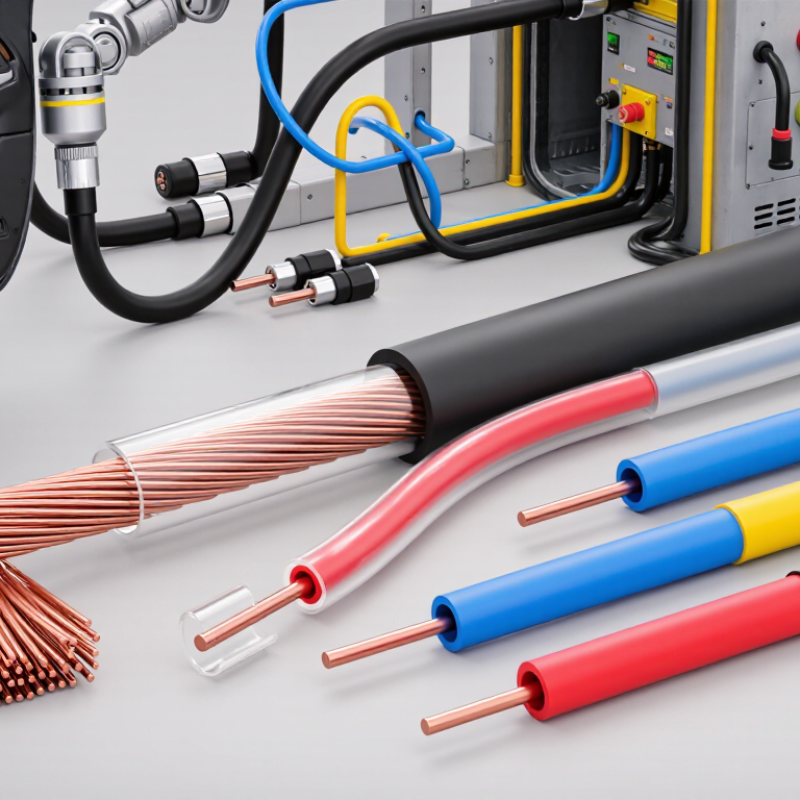
Fine-stranded copper wire, silicone-insulated leads, and shielded flexible cable each suit different movement and heat conditions. Construction matters. Strand count, insulation thickness, and shielding affect bendability, heat tolerance, and handling. A wire that feels supple may still fatigue when bent sharply or repeatedly.
IEC 60228:2023 classifies flexible copper conductors as Class 5 and Class 6. Its conductor tables specify at least 30 strands for a 1.5 mm² Class 5 conductor, compared with 84 for Class 6. More, finer strands can improve flexibility, but they do not guarantee longer service life. Terminations and bend radius matter too. PVC insulation suits many general wiring routes, while silicone insulation remains pliable at higher temperatures; check the specified rating, not just the feel. Braided shields can help reduce electrical noise, though they add bulk and stiffness. Sometimes unnecessary. For moving assemblies, compare conductor class, insulation rating, and published flex-test results. Test a sample along the actual route, especially near clamps and connectors. Real installations can expose weak points that a test report does not capture.

Stranded Copper Wire for General-Purpose Flexibility
Stranded copper wire is a dependable choice when a cable must bend during installation or routine use. Its many fine copper strands move together, reducing the risk of a single rigid conductor cracking under repeated movement. A flexible lead can route around a control-panel corner or fit inside a hand-held tool. More strands often improve bendability, but they do not automatically make a wire suitable for every load. Check conductor size, insulation temperature and voltage ratings, and the maker’s bend guidance before selecting it.
Tips: Match the wire gauge to the current and run length. Choose insulation suited to heat, oil, moisture, or abrasion exposure. Strip only the needed length. Use a terminal designed for stranded conductors, and avoid crushing loose strands beneath a screw. Inspect the finished connection.
For general-purpose applications, stranded copper can suit appliance cords, test leads, and flexible equipment wiring when properly rated. It is not a cure for poor routing. A sharp edge or tight cable tie can damage insulation, even if the conductor flexes easily. Small detail, big difference. Leave a modest service loop where movement is expected; excess slack can snag, while too little may strain terminals. The right choice depends on actual movement, not just a “flexible” label.
What Are the Top Types of Flexible Wire in 2026? - Stranded Copper Wire for General-Purpose Flexibility
| Wire Type | Typical Construction | Flexibility | Common Applications | Selection Considerations |
|---|---|---|---|---|
| General-purpose stranded copper wire | Multiple copper strands gathered into a conductor; insulation is commonly PVC or another application-appropriate material. | Good for routine routing and installation where the wire may need to bend during assembly. | Control panels, equipment wiring, vehicles, and general electrical connections. | Choose conductor area, insulation type, voltage rating, and temperature rating for the specific installation. Stranded construction is more bendable than solid wire of the same conductor size. |
| Fine-stranded flexible copper wire | Many smaller copper strands; flexible conductor constructions are commonly identified as Class 5 under IEC 60228. | Very good for repeated repositioning and routing through tight spaces. | Portable equipment, control wiring, and assemblies that need easier handling. | Use compatible terminals and ferrules where required; fine strands can be damaged by unsuitable stripping or termination methods. |
| Extra-fine-stranded copper wire | A conductor made from numerous very small strands; some flexible constructions are classified as Class 6 under IEC 60228. | Excellent for demanding bending and compact routing, subject to the cable’s design limits. | Robotics, moving equipment, and specialized flexible cable assemblies. | For continuous motion, check the cable’s stated bend radius and flex-life data. A flexible conductor alone does not make an entire cable suitable for continuous flexing. |
| Flexible cord conductors | Stranded copper conductors enclosed in a shared jacket; jacket and insulation materials vary by cord type. | Designed for handling and movement associated with portable equipment. | Appliance cords, extension cords, and portable tools where permitted by the applicable electrical code. | Match the cord type and rating to the environment and use. Do not substitute flexible cord for fixed building wiring unless regulations allow it. |
| Welding cable | Typically a fine-stranded copper conductor with a tough, flexible insulating jacket. | High flexibility for moving leads and equipment connections. | Welding circuits and other applications specifically allowed by the cable’s rating. | Verify conductor size, duty requirements, temperature rating, and suitability for the installation. Do not assume all welding cable is approved for every wiring use. |
| Silicone-insulated flexible wire | Usually stranded copper with silicone-rubber insulation. | Flexible across a broad temperature range for products designed for that service. | Appliances, lighting, and equipment where heat-resistant insulation is needed. | Temperature and voltage limits depend on the specific wire. Silicone insulation may have lower abrasion or cut resistance than some tougher jacket materials. |
| Flexible shielded wire or cable | Insulated conductors with a surrounding braided or foil shield; the conductors may be stranded copper. | Varies with conductor stranding, shield construction, and outer jacket. | Signal and control circuits where reducing electromagnetic interference is important. | Check shielding coverage, grounding approach, bend limits, and whether the cable is rated for movement or continuous flexing. |
Ratings and permitted uses vary by wire construction, installation method, and local electrical code. Confirm the product specifications and applicable requirements before selecting wire.
PVC- and Silicone-Insulated Wire for Everyday and High-Temperature Use
PVC-insulated flexible wire suits everyday wiring in appliances, control panels, and indoor equipment. It bends around tight corners and usually costs less than silicone-insulated options. IEC 60227 covers PVC-insulated cables rated up to 450/750 volts; actual temperature limits depend on the cable construction. Check the printed rating, not just the insulation’s appearance. A soft jacket can still become stiff near a warm motor. A practical choice.
Silicone-insulated wire is useful near ovens, heaters, and equipment exposed to repeated heat. Some constructions are rated for 150°C or higher, but the exact limit must come from the product’s verified specification. Fortune Business Insights valued the global wire and cable market at USD 202.5 billion in 2023, reflecting broad demand across electrical applications. That figure does not distinguish insulation types, so it cannot prove silicone is right for a specific job. Heat changes everything. In practice, also check abrasion, oil exposure, and bend radius; silicone can be less resistant to cuts than some PVC jackets. The neatest datasheet may still omit the installation detail that matters. Choose by operating conditions, not by material name alone.
What Are the Top Types of Flexible Wire in 2026? PVC- and Silicone-Insulated Wire for Everyday and High-Temperature Use
Representative continuous operating temperature ranges are shown for comparison: PVC-insulated wire is commonly rated around −20°C to 70°C, while silicone-insulated wire is commonly rated around −60°C to 180°C. Actual limits vary by wire construction, product rating, and applicable standard; always check the cable specification for the intended application.
High-Flex Cable for Robotics and Repeated Movement
Robots rarely move in a perfectly straight line. At a wrist joint, a cable may twist, bend, and rub against nearby parts during every cycle. High-flex cable is designed for this repeated movement, with fine-stranded conductors and insulation selected to withstand ongoing flexing. Small details matter.
The cable’s construction should match its path. A drag-chain run needs a cable rated for continuous motion and the chain’s bend radius. A cable routed through a moving robot arm may also need resistance to torsion. Shielding can help protect signal lines from electrical interference, but it does not fix poor routing. Keep power and data cables separated where the design allows, and avoid sharp edges or tight ties that pinch the jacket.
Check the manufacturer’s dynamic bend-radius guidance and test the cable in the actual assembly. Include the full travel of the joint, realistic speed, and expected temperature. A cable can feel supple by hand and still fail early under repeated twisting.
Not always.
The connector and strain relief matter too; a strong cable can be let down at its termination. In practice, the best choice depends on motion, load, installation space, and the maintenance interval you can support. A little slack may help, but too much can snag.
Braided Shielded Wire for Electrical Noise Protection
What Are the Top Types of Flexible Wire in 2026?
Braided Shielded Wire for Electrical Noise Protection
Braided shielded wire uses interwoven metal strands around insulated conductors to reduce electromagnetic interference. Its flexible construction suits moving equipment, control panels, and sensor cables where noise can disrupt readings. MarketsandMarkets’ 2024 EMI Shielding Market report estimated the global market at USD 7.9 billion in 2023 and forecast USD 10.8 billion by 2028. That growth signals broad demand for shielding, but it does not guarantee any cable’s performance. Still, a braid is not magic. Shielding effectiveness depends on braid coverage, frequency, cable routing, and sound connections at both ends.
Tips: Check the braid’s coverage and the manufacturer’s frequency data. Keep the shield termination short and secure. A loose connection can undermine the protection.
For example, in a motor-control cabinet, a shielded cable may help prevent switching noise from affecting nearby sensor signals. Choose a wire with suitable conductor flexibility and insulation for the equipment’s motion, temperature, and environment. Review test conditions before comparing published shielding figures; results can vary with setup. This detail is easy to overlook, even by experienced teams.