Top 10 Switch Tests Every Buyer Should Know?
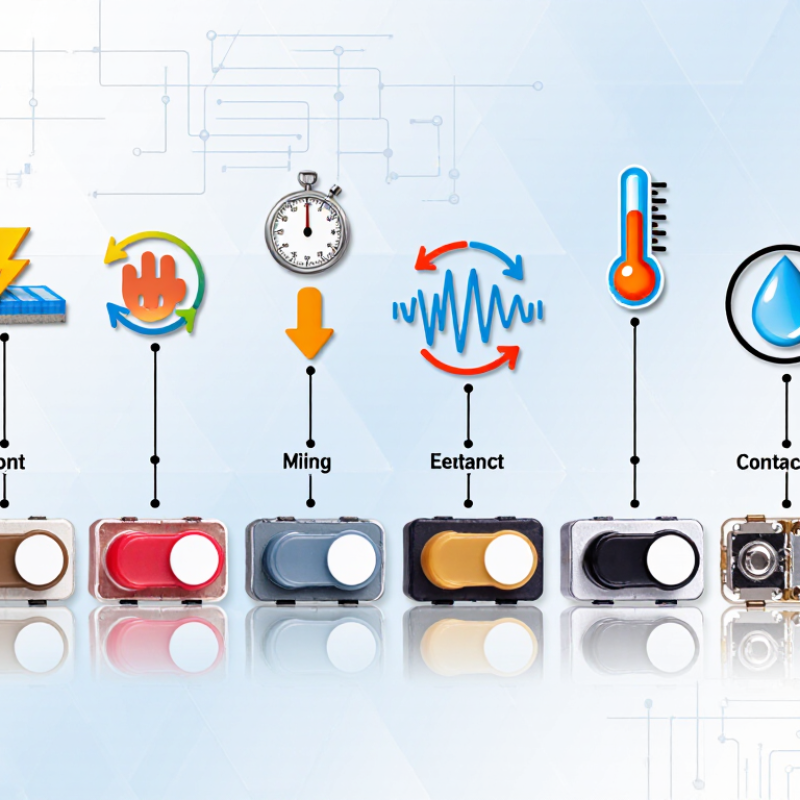
A switch can look sturdy on a product page and still disappoint after months of use. A meaningful Switch Test turns claims into measurements: contact resistance, insulation resistance, dielectric withstand, temperature rise, endurance, operating force, contact bounce, vibration response, ingress protection, and environmental aging. Not every test applies to every switch. The right choices depend on its design, load, location, and expected duty cycle. Small details matter. A loose terminal, inconsistent click, or rising contact temperature may reveal more than polished packaging ever could.
Quality-management expert W. Edwards Deming is often credited with the reminder, “In God we trust; all others must bring data.” For buyers, that means asking how results were measured, under what conditions, and against which requirements. A useful comparison looks beyond a single pass-or-fail label. It checks sample size, test duration, operating conditions, and whether the tested model matches the one being sold. This guide explores ten tests that can help buyers make that comparison with clearer evidence. Still, a clean lab result cannot promise perfect performance in every installation. That limitation deserves attention, too. A checklist can miss a real-world detail, so treat test results as evidence—not a guarantee.
What Switch Testing Covers and Why It Matters to Buyers
Switch testing helps buyers judge more than whether a switch clicks. A useful evaluation checks electrical continuity, contact resistance, insulation, and dielectric strength. These measurements can reveal intermittent contacts, heating risks, or unwanted current leakage. Mechanical tests measure operating force, travel, and return action. A switch may feel crisp on a bench but behave differently inside a tight panel. That difference matters.
Tips: Ask for test conditions, not just pass results. Check voltage, current, load type, sample size, and cycle rate. Match them to your circuit. A result without context is weak evidence.
Durability tests cycle switches repeatedly to assess wear and performance changes. Environmental tests may expose them to temperature shifts, vibration, or humidity relevant to their intended use. Buyers should compare results with their actual operating conditions and request records tied to the tested model and configuration. No test plan is perfect; a lab cannot reproduce every installation quirk. Reviewing field feedback alongside test data can help expose gaps.
How to Check Switch Materials, Dimensions, and Build Quality
Top 10 Switch Tests Every Buyer Should Know?
How to Check Switch Materials, Dimensions, and Build Quality
A switch can look precise and still feel rough in use. Check the housing for sink marks, sharp edges, and uneven seams. Use a digital caliper to measure the body, mounting points, and actuator. Measure several units, not just one. Small differences can complicate assembly.
ISO 2768-1:1989 gives general dimensional tolerances; for a 6–30 mm dimension, its medium class allows ±0.2 mm. Treat that as a reference, not a switch-specific pass limit. Ask the supplier for the drawing and tolerance class. For plastic parts, request material identification and test records. ISO 527 describes methods for measuring tensile properties, including strength and elongation. Compare results for the same material and test conditions. A certificate without those details tells you little.
Then test the feel. Press each sample slowly and listen for scraping, rattling, or inconsistent return. A small force gauge can reveal uneven actuation. Test multiple units. Record the sample count and method; informal hand checks vary more than buyers expect. If the switch carries an electrical load, request applicable safety and endurance test documentation, such as testing against IEC 61058-1. I still find visual inspection useful, but it cannot expose weak internal joints. Don’t skip the teardown.
Which Electrical Tests Measure Performance and Compatibility
Top 10 Switch Tests Every Buyer Should Know?
A switch can click cleanly and still perform poorly under load. Ask for contact-resistance, insulation-resistance, and dielectric-withstand results. These checks reveal weak connections, leakage paths, and insulation that may fail under electrical stress.
Endurance testing adds repeated on-off cycles; the test load should match the switch’s intended use. A fan, lamp, and motor create different switching demands.
Compatibility needs equally careful checks. IEC 60669-1 covers household switches within a scope reaching 440 V AC and 63 A; these are limits, not proof that every switch suits every circuit.
Ask whether temperature-rise and terminal-retention tests were run at the declared rating.
Small details matter. A loose screw terminal can heat up even when the switch passes a basic function check.
For damp locations, IEC 60529 defines IPX4 protection against splashing water from any direction. That rating does not establish compatibility with every installation.
Buyers should also confirm enclosure fit, conductor size, terminal type, and dimmer or LED-load compatibility.
Not always obvious.
Test reports are useful, but a single laboratory setup may not match real wiring, and I would treat vague “universal compatibility” claims cautiously. Compare the tested voltage, current, load type, and environmental conditions with the actual application.
How to Assess Switching Life, Safety, and Environmental Resistance
A switch’s rated life is meaningful only when the test matches its intended load. Cycle it under representative voltage and current, then check contact resistance, bounce, and signs of wear. A cycle count alone can hide failures. Note the operating speed and rest periods, too; both can change heating and contact behavior. For safety, measure insulation resistance and dielectric withstand, and monitor temperature rise during operation. Use the product’s specified limits and a qualified test setup. Don’t assume one result covers every installation.
Environmental checks should reflect where the switch will be used. Expose samples to relevant temperature changes, humidity, dust, or corrosive conditions, then repeat electrical and mechanical checks. Inspect seals, terminals, and moving parts for cracking, corrosion, or sticking. A chamber is not a real installation. It can miss vibration, poor wiring, or years of handling. That limitation matters.
Tips: Test several samples, not just one. Photograph defects and record test conditions, including load, duration, and recovery time. If results vary, investigate before accepting the average. Small inconsistencies are easy to dismiss, and I would not dismiss them too quickly.
Top 10 Switch Tests Every Buyer Should Know: How to Assess Switching Life, Safety, and Environmental Resistance
Use these tests to compare documented performance and suitability for the intended application. Test conditions and pass/fail limits depend on the switch type, rated load, applicable product standard, and manufacturer specification.
| No. | Test | What It Assesses | Typical Test Approach | What Buyers Should Review | Relevant Standard Family |
|---|---|---|---|---|---|
| 1 | Electrical endurance (switching life) | Whether the switch can repeatedly make and break its specified electrical load without unacceptable degradation. | Operate the switch for a specified number of cycles at defined voltage, current, load type, and operating rate. Inspect and measure performance during or after cycling. | Cycle count, load type (for example, resistive or motor), operating rate, failure criteria, and post-test contact performance. A cycle rating is meaningful only when its test load is stated. | IEC 61058-1 or IEC 60947-5-1, as applicable to the switch and end use. |
| 2 | Mechanical endurance | Wear or failure of the actuator, return mechanism, latch, and other moving parts independent of electrical load. | Perform repeated operations under the conditions specified for the switch type; inspect operation and mechanical damage at the end of the test. | Number of operations, actuation force or travel, operating rate, mounting orientation, and whether the switch still functions correctly afterward. | IEC 61058-1 or IEC 60947-5-1, as applicable. |
| 3 | Contact resistance | Electrical resistance across closed contacts, which can contribute to voltage drop and local heating. | Measure the closed-circuit resistance using the method and measurement current specified by the applicable product test procedure. Compare before and after endurance or environmental tests. | Initial value, post-test change, measurement method, and the product’s stated limit. Do not compare readings taken with different methods as if they were equivalent. | Applicable switch product standard and the declared product specification. |
| 4 | Insulation resistance and dielectric withstand | Electrical insulation between live parts and accessible parts, and between circuits that must remain isolated. | Measure insulation resistance and apply the specified withstand voltage between the relevant terminals or conductive parts, following the applicable test standard. | Test points, test voltage and duration, acceptance criteria, and whether the test is performed before or after conditioning. Requirements vary with rated voltage and construction. | IEC 61058-1, IEC 60947-5-1, and insulation-coordination guidance in IEC 60664-1, as applicable. |
| 5 | Temperature rise under load | Heating at terminals, contacts, and other relevant locations during operation at the specified load. | Operate the mounted switch at the defined current and conditions until temperatures stabilize, then record the specified measurement points. | Rated current, ambient conditions, terminal configuration, wire size, mounting, measurement locations, and permitted temperature limits from the applicable specification. | Applicable switch product standard, such as IEC 61058-1 or IEC 60947-5-1. |
| 6 | Vibration resistance | Whether vibration causes unintended switching, intermittent contact, loosening, or mechanical damage. | Apply the specified vibration profile along defined axes while monitoring or subsequently checking electrical continuity and mechanical condition. | Frequency range, acceleration or displacement, duration, axes, mounting method, and monitored failure criteria. | IEC 60068-2-6 (vibration, sinusoidal), with product-specific severity levels. |
| 7 | Mechanical shock resistance | Whether sudden impacts impair operation, damage the housing, or change the switch’s electrical state. | Apply specified shock pulses in defined directions and inspect or electrically monitor the switch as required by the test plan. | Pulse shape, peak acceleration, duration, number of shocks, directions, mounting, and post-test function. | IEC 60068-2-27 (shock), with product-specific severity levels. |
| 8 | Damp heat and humidity resistance | Effects of moisture and temperature on insulation, contacts, materials, and operation. | Expose the switch to the specified steady-state or cyclic damp-heat procedure, then assess electrical and mechanical performance. | Temperature, relative humidity, exposure duration, recovery conditions, and measurements taken before and after conditioning. | IEC 60068-2-78 (damp heat, steady state) or IEC 60068-2-30 (damp heat, cyclic), as appropriate. |
| 9 | Corrosion or salt-mist resistance | Resistance of exposed metal parts, coatings, and connections to corrosive atmospheres relevant to the installation environment. | For products intended for suitable environments, expose samples to the specified salt-mist procedure and assess corrosion and continued function. | Whether the test is relevant to the application, exposure duration, sample preparation, corrosion assessment method, and post-test electrical results. Salt mist does not represent every real-world corrosive environment. | IEC 60068-2-11 (salt mist), where specified by the product or application requirements. |
| 10 | Ingress protection (dust and water) | Protection provided by the complete switch enclosure against access to hazardous parts, solid objects, and water, when an IP rating is claimed. | Test the assembled product using the procedures associated with its declared IP code. The required dust or water tests depend on the specific code. | Exact IP code, tested configuration, cable entries and seals, installation conditions, and whether the rating applies to the switch alone or the assembled equipment. | IEC 60529. |

Buyer’s note: Ask for test reports that identify the exact switch model, sample configuration, rated load, test conditions, applicable standard and edition, measured results, and acceptance criteria. Standards are revised periodically; confirm the edition and certification requirements applicable to the destination market and end product.
How to Compare Test Results and Choose the Right Switch
Compare switch test results under identical conditions: rated voltage, current, load type, ambient temperature, and test cycles. Otherwise, two impressive-looking charts may describe very different stresses. Check contact resistance, temperature rise, insulation strength, and electrical endurance, then compare each result with its stated pass limit. IEC 61058-1:2016 covers appliance switches rated up to 480 V and 63 A; those figures define the standard’s scope, not a quality ranking. Confirm that the switch you are evaluating falls within it.
Look for sample size, test method, and failure criteria in the report. A low initial contact resistance is useful, but it means less if resistance rises sharply after endurance testing. Mechanical-cycle results also need context: a switch tested without electrical load has not faced the same wear as one repeatedly switching a live load. One test rarely tells the whole story. Reports can still leave gaps.
Tips: Put the results side by side, but compare only matching test conditions. Check the weakest relevant result against your use case, not just the best headline number. If a report omits test conditions, treat its conclusion cautiously.