
Who Are Top Steel Heat Exchanger Manufacturers in China?
Choosing a Steel Heat Exchanger manufacturer in China involves more than comparing prices or product pages. The right unit must match the process, operating pressure, temperature range, fluid chemistry, and maintenance plan. Small details matter. A shell-and-tube exchanger designed for clean water may not suit a corrosive stream or repeated thermal cycling. Experienced manufacturers should explain their material choices, fabrication controls, inspection records, and performance assumptions clearly. Buyers need information their engineering teams can check, not broad promises about efficiency or service life.
“Top” does not mean one universal ranking. The strongest supplier for a food-processing plant may not fit a chemical facility or a district heating project. This guide looks at manufacturers through practical criteria: product range, customization capability, documented quality procedures, delivery support, and access to replacement parts. Request technical datasheets, drawings, material records, and details of the tests included in the quotation. Ask for relevant installation references, too. A polished brochure helps, but it cannot confirm how a unit performs in real operating conditions. Even a careful shortlist can miss important differences; specifications deserve a second review before a purchase decision.
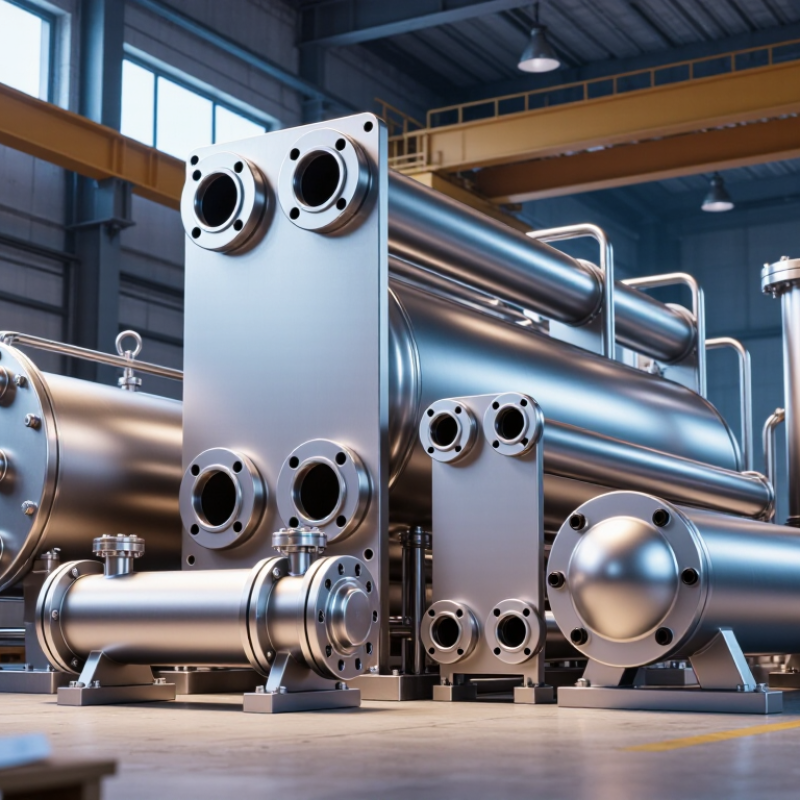
Steel Heat Exchangers in China: Types, Materials, and GB/T 151-2014
China’s steel heat exchangers commonly use shell-and-tube designs, including fixed-tubesheet, U-tube, and floating-head configurations. Each handles different cleaning needs, thermal expansion, and maintenance access. Fit matters. Carbon and low-alloy steels are common for shells; stainless steel may suit wetted parts exposed to corrosive fluids. Selection depends on temperature, pressure, fluid chemistry, and inspection requirements—not just material strength. A small caveat: higher alloy content is not automatically better if the service conditions do not require it.
GB/T 151-2014 sets technical requirements for the design, manufacture, inspection, and acceptance of shell-and-tube heat exchangers in China. It should be considered alongside applicable pressure-vessel requirements and project specifications. The standard is not a substitute for checking actual operating conditions. According to the World Steel Association’s World Steel in Figures 2024, China produced 1,019.1 million tonnes of crude steel in 2023, out of 1,890.2 million tonnes globally. This scale indicates a substantial steel supply base, but it does not by itself verify exchanger quality. Buyers should review material certificates, weld and inspection records, and documented pressure-test results. Details can be easy to overlook. One weak point is often a mismatch between the specified corrosion allowance and the real fluid chemistry.

China’s 2023 Crude-Steel Output: 1,019.1 Mt, According to Worldsteel
China produced 1,019.1 million tonnes of crude steel in 2023, according to Worldsteel’s World Steel in Figures 2024. Global output reached 1,892.2 million tonnes, placing China’s share at roughly 54%. China’s National Bureau of Statistics reported a closely matching figure of 1,019.08 million tonnes.
The scale is significant. But national output alone says little about the performance of an individual heat-exchanger manufacturer.
A large steelmaking base can support access to plate, tube, and fabrication capacity. For buyers, the details matter more: material grade, thickness tolerances, heat-treatment records, and weld inspection. A shell-and-tube exchanger, for example, may require traceable tube certificates and documented pressure testing.
High output does not guarantee consistent quality. That distinction is easy to miss.
When assessing a supplier, request material traceability records and review its inspection procedures.
Check whether weld maps, non-destructive testing results, and leak-test records match the project requirements. Ask how the factory controls dimensional variation across repeated batches. These checks are more useful than production scale alone.
And the data has limits: crude-steel statistics describe national production, not exchanger capacity, delivery reliability, or service life.
How to Compare Manufacturers by Capacity, Standards, and Installed Base
Compare Chinese steel heat-exchanger manufacturers by verified production capability, not headline capacity alone. Ask for annual exchanger output, maximum shell diameter, bundle length, and pressure-test limits. Request recent shop records and an example inspection dossier. A large tonnage figure may include unrelated fabricated products. That distinction matters.
The IEA’s Energy Efficiency 2023 report estimates that industry used about 37% of global final energy in 2022, highlighting the value of efficient, maintainable equipment. Check whether certificates and project documents match the specified standard, such as ASME BPVC Section VIII or EN 13445. Review material traceability, welding qualifications, non-destructive testing, and hydrotest records—not certificates alone. A reference list alone is imperfect evidence.
Tips: Ask for three operating references with similar fluids, temperatures, and pressures. Confirm commissioning dates, service duration, and maintenance history with the end user when possible. Short calls help. Compare actual operating conditions with the proposed design; a nameplate rating cannot tell the whole story.
Leading Chinese Manufacturers: Product Ranges, Industries, and Export Markets
Chinese steel heat-exchanger manufacturers serve a large industrial base. World Steel Association’s World Steel in Figures 2024 reports that China produced 1,019.1 million tonnes of crude steel in 2023, about 54% of global output. This scale supports demand from steelmaking, chemicals, power generation, food processing, and HVAC. It does not, by itself, establish a supplier’s quality.
Common product ranges include shell-and-tube units, plate exchangers, air coolers, condensers, and evaporators. Some manufacturers also engineer welded assemblies for high-pressure or corrosive service. Buyers should compare materials, design calculations, weld records, and inspection procedures. Check the details. A polished catalog can still leave gaps in maintenance access or spare-parts planning.
Export-market research needs care. UN Comtrade classifies heat-exchange units under HS 841950, which can help buyers review destination-country trade flows. Yet the code does not reveal a manufacturer’s product mix, project record, or after-sales capacity. Export requirements also vary by destination and application, so request technical files and service arrangements before comparing quotations. Trade data is useful, but it is not a factory audit.
| Manufacturer Category | Typical Product Range | Common Materials and Design Options | Industries Served | Typical Export Markets |
|---|---|---|---|---|
| Shell-and-Tube Heat Exchanger Producers | Fixed-tube-sheet, U-tube, and floating-head exchangers; condensers; evaporators; and reboilers. | Carbon steel and stainless steel are common choices. Titanium or nickel alloys may be specified for demanding corrosion conditions. Designs are selected according to pressure, temperature, fluid compatibility, and maintenance requirements. | Petrochemical, chemical processing, oil and gas, power generation, and industrial utilities. | Common destination regions for Chinese process equipment include Southeast Asia, the Middle East, South Asia, and parts of Africa and Latin America. Destinations vary by supplier and project. |
| Plate Heat Exchanger Producers | Gasketed plate-and-frame units, brazed plate units, and welded or semi-welded plate exchangers. | Stainless-steel plates are widely used; titanium plates are available for selected corrosive services. Gasket materials and plate patterns are chosen to suit the fluid, operating temperature, and cleaning needs. | Commercial HVAC, district heating, food and beverage, shipbuilding, chemical processing, and refrigeration. | Export activity commonly serves markets across Asia-Pacific, Europe, the Middle East, and the Americas, subject to local codes and project specifications. |
| Air-Cooled Heat Exchanger Producers | Forced-draft and induced-draft fin-fan units, air-cooled condensers, and modular cooler bundles. | Often built with finned tubes and carbon-steel or stainless-steel components. Fan arrangement, fin geometry, materials, and corrosion protection depend on climate and process conditions. | Oil and gas, refineries, petrochemical plants, power facilities, and water-scarce industrial sites. | Commonly considered for projects in the Middle East, Central Asia, Southeast Asia, and other regions where cooling-water availability is limited. |
| Finned-Tube and Waste-Heat Recovery Producers | Economizers, air preheaters, waste-heat recovery units, and finned-tube bundles for gas-to-liquid or gas-to-gas heat transfer. | Tube and fin materials vary with flue-gas chemistry, operating temperature, and corrosion risk. Carbon steel and stainless steel are frequent options; specialized alloys may be needed in more aggressive environments. | Boilers, cement, steelmaking, glass, power generation, and other energy-intensive industries. | Potential export destinations include industrial markets in Asia, the Middle East, Africa, and Latin America; project acceptance depends on technical and regulatory requirements. |
| Sanitary and Hygienic Heat Exchanger Producers | Sanitary plate-and-frame units, tubular exchangers, and product-cooling or heating systems designed for cleanability. | Product-contact surfaces are typically specified in stainless steel. Surface finish, seals, drainability, and cleaning-in-place compatibility are determined by the process and applicable hygiene requirements. | Dairy, beverage, food processing, pharmaceutical, and biotechnology production. | Suppliers may serve food and process-equipment buyers in Asia-Pacific, the Middle East, Europe, and other regions, depending on documentation and market-specific compliance. |
Buyer Checks: Design Pressure, Heat Duty, Corrosion Allowance, and Testing
When comparing steel heat exchanger manufacturers in China, check whether the design pressure matches your operating and upset conditions. Ask for the pressure and temperature limits on both sides, plus the assumptions behind them. A pressure rating alone is not enough. Confirm that drawings, material grades, and connection details agree with the stated design conditions.
Heat duty should be supported by clear process data, not just a headline capacity. Review inlet and outlet temperatures, flow rates, fluid properties, and the permitted pressure drop. Ask how fouling affects performance over time. Small changes in feed conditions can matter. A neat calculation sheet may still rely on assumptions your plant cannot meet, so have your process engineer review them.
Discuss corrosion allowance alongside the actual fluid chemistry, including contaminants and expected cleaning methods. Request material certificates and traceability for pressure-retaining parts. Then verify the inspection and test plan: dimensional checks, weld examinations, pressure testing, and acceptance records should be defined before production. Ask what happens if a test fails. Get the answer in writing. Testing matters. A factory visit can help, but it does not replace documented results for the specific unit being purchased.
Steel Heat Exchanger Buyer Checks: Design Pressure and Hydrotest Pressure
Illustrative pressure relationship for a simplified 1.3× hydrotest calculation. Values are examples, not manufacturer ratings or universal requirements; the applicable design code, stress ratio, static head, and project specification determine the actual test pressure.
Also verify: heat duty against the specified flow rates and inlet/outlet temperatures; corrosion allowance against the process medium and materials of construction; and documented pressure testing against the applicable code and approved inspection plan.