
Submit Inquiry
27 West Beaver Creek Road Unit #2
Richmond Hill, ON, CANADA L4B 1M8

International:

1-905-886-0335

US & Canada:

1-800-265-5696

Top Hydrocell Golf Cart Battery Manufacturers Worldwide

Golf carts work in quiet, demanding cycles: short trips, frequent stops, overnight charging, and long periods parked in heat. These conditions make battery choice more than a question of voltage or price. Buyers need to compare usable capacity, cycle life, charging behavior, warranty terms, and access to replacement support. The Hydrocell Golf Cart Battery belongs in that practical comparison, alongside other established battery options.

Industry data offers useful context, but not a perfect answer. BloombergNEF’s 2023 Battery Price Survey reported an average lithium-ion pack price of $139 per kilowatt-hour, down 14% from 2022. That figure covers broad battery markets, not golf-cart packs specifically. It should not be treated as a direct quote for a cart battery. Meanwhile, Battery Council International reports that more than 99% of lead batteries in the United States are recycled. Recycling infrastructure matters, especially for fleets managing many batteries. But responsible recycling does not tell buyers how long a specific battery will last.

This guide examines leading Hydrocell Golf Cart Battery manufacturers worldwide through product range, technical specifications, manufacturing capability, and customer support. It also considers the trade-offs between battery chemistries and real-world operating needs. A polished specification sheet can still leave questions unanswered. How does capacity hold up on a hilly course? Are replacement units easy to source? Manufacturer claims deserve careful checking against warranties and independent evidence. The comparison is not perfectly tidy, and that is worth acknowledging. A useful shortlist should help readers ask better questions, not promise one universal winner.
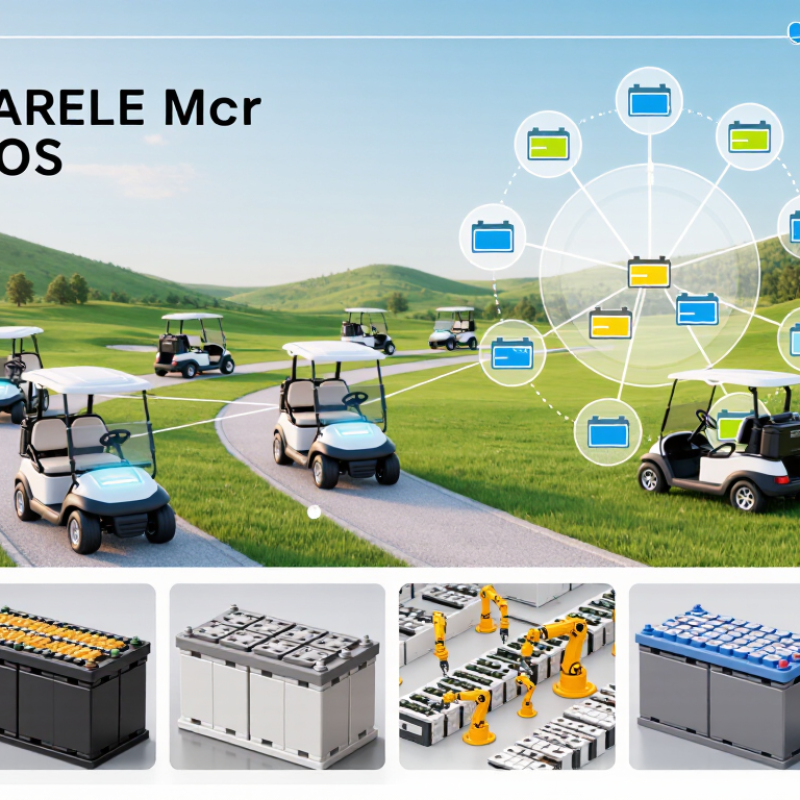
Top Hydrocell Golf Cart Battery Manufacturers Worldwide

Understanding Hydrocell Golf Cart Batteries and Their Main Types

In golf-cart discussions, “hydrocell” usually refers to a lead-acid battery that uses a liquid electrolyte. The term is not always applied consistently, so check the battery’s specification sheet before comparing models. A common type is the flooded deep-cycle battery. Its liquid electrolyte supports repeated charging and discharging, but water levels need regular inspection. Keep the cart level during charging. Spills are a real concern.

Absorbent glass mat batteries hold electrolyte in a fibrous mat, while gel batteries use a thickened electrolyte. Both are sealed designs and generally need less routine watering than flooded batteries. They can still be damaged by unsuitable chargers or excessive heat. For a golf cart, compare the battery’s voltage, capacity, dimensions, and recommended charge profile with the cart’s requirements. Capacity affects how far the cart may travel, but terrain, passenger load, and driving habits matter too. Numbers alone can mislead. A useful check is to inspect the charger label and battery manual together; I would not assume every “hydrocell” model uses the same chemistry or maintenance routine.

How Hydrocell Batteries Power Golf Carts

Top Hydrocell Golf Cart Battery Manufacturers Worldwide

How Hydrocell Batteries Power Golf Carts

Hydrocell batteries store chemical energy and release it as direct current for a cart’s motor controller. In many designs, a liquid electrolyte supports the electrochemical reaction inside each cell. The battery pack supplies power as the cart starts, climbs a slope, or carries passengers. That demand changes throughout a round. Deep-cycle construction helps batteries handle repeated use, but it does not make them immune to wear. Capacity, pack voltage, and charger compatibility all affect usable driving time.

Real-world performance is less tidy than a specification sheet suggests. A cold morning, steep paths, extra cargo, or low tire pressure can shorten a cart’s range. Track how far the cart travels between charges, and note changes over time. If the range drops suddenly, inspect the charger and connections before assuming the batteries have failed. That step is easy to skip. It can save time, though it may not explain every problem.

Criteria for Evaluating Hydrocell Battery Manufacturers

Selecting a hydrocell golf cart battery manufacturer starts with testable performance, not glossy range claims. Request capacity results at the stated discharge rate, usable amp-hours, cycle-life conditions, and temperature limits. Ask whether tests cover individual cells or complete packs. The difference matters on a cart climbing a wet ramp with two passengers. One peak figure cannot describe repeated course use.

Where the design uses lead chemistry, Battery Council International reports a U.S. lead-battery recycling rate of nearly 99%. Treat this as a lifecycle benchmark, not proof of a factory’s environmental performance. Ask for documented recycling routes, quality-control records, and traceable test reports. For lead-acid traction batteries, check whether technical documentation references IEC 60254-1. A certificate alone does not show how a pack performs after months of vibration and charging.

Compare warranty terms closely. Check exclusions for deep discharge, heat, and routine watering, if applicable. Ask how quickly replacement parts and technical support are available near your operating area. Inspect venting, terminal protection, and the enclosure before installation. No scorecard is perfect. A tidy spreadsheet can still miss a loose connection or an awkward service layout.

Leading Hydrocell Golf Cart Battery Manufacturers Worldwide

Leading Hydrocell golf cart battery manufacturers worldwide earn attention through consistent engineering, not polished catalogues alone. A capable producer should document cycle-life testing, capacity ratings, charging limits, and temperature conditions. These details help fleet operators compare batteries fairly. Ask for test records tied to the exact model, not a general factory certificate.

Fit matters. A battery must match the cart’s voltage, tray dimensions, cable layout, and daily route. Manufacturers serving international markets should provide clear installation guidance and stable replacement-part support. Look for durable case seams, well-protected terminals, and labels that remain readable after routine cleaning. Small details count.

Still, a long warranty proves little without clear coverage terms. I would compare the stated cycle life with real operating conditions, including hills, passenger loads, and charging habits. Not every plant excels. Some suppliers communicate quickly but offer limited technical documentation; others publish detailed specifications yet respond slowly. That trade-off deserves a direct question before purchase. A sample unit, verified dimensions, and written performance data can reveal more than a broad claim of worldwide leadership.

Top Hydrocell Golf Cart Battery Manufacturers Worldwide — Leading Hydrocell Golf Cart Battery Manufacturers Worldwide

This chart compares common nominal golf cart system voltages with the equivalent number of 12-volt modules. Module counts are calculated by dividing system voltage by 12 volts; actual battery pack designs vary. The figures are not manufacturer rankings or market-share data.

Manufacturer Comparisons, Product Support, and Industry Trends

Comparing hydrocell golf cart battery manufacturers requires more than checking voltage and price. Buyers should compare rated capacity, cycle-life test conditions, operating temperature, warranty coverage, and replacement availability. Ask whether a model is sealed or requires periodic inspection; maintenance needs can differ by design. Small details matter. A charger mismatch or poor ventilation can shorten service life, even when the battery itself meets its specifications.

Product support is a practical differentiator. Look for clear installation diagrams, serial-number tracking, troubleshooting steps, and access to trained technicians. Ask how warranty claims are handled and whether replacement units are stocked locally. A long warranty sounds reassuring, but exclusions for deep discharge or incorrect charging may narrow its value. Read the conditions. In fleet use, response time can matter as much as advertised cycle life.

Industry trends also affect comparisons. BloombergNEF’s 2024 Battery Price Survey reported an average lithium-ion pack price of $115 per kilowatt-hour, down 20% from 2023. That figure covers a broad battery market, not golf-cart packs, so it is not a direct price benchmark. Still, it signals continued pressure on battery costs and growing interest in alternatives. Hydrocell buyers should compare lifetime cost, usable capacity, and support—not assume newer chemistry is always the better fit. Some specifications remain hard to compare across manufacturers, and that deserves caution.

123