
Submit Inquiry
27 West Beaver Creek Road Unit #2
Richmond Hill, ON, CANADA L4B 1M8

International:

1-905-886-0335

US & Canada:

1-800-265-5696

China Top Chocolate Processing Plant Manufacturers?

Choosing among China’s top Chocolate Processing Plant manufacturers requires more than comparing prices or factory photographs. Buyers must examine engineering experience, production capacity, food safety controls, and after-sales support. A reliable manufacturer should understand the complete process, from cocoa bean cleaning and roasting to grinding, conching, tempering, molding, and packaging.

Harold McGee, an influential food science writer, describes chocolate as “a suspension of cocoa particles and sugar in cocoa butter.” This simple explanation highlights a difficult manufacturing reality. Particle size, temperature, viscosity, and residence time can change the final taste and texture. A professional Chocolate Processing Plant supplier should explain these variables clearly, not hide behind impressive equipment lists.

Look for manufacturers with documented installations, trained technicians, and practical commissioning records. Ask for production samples. Inspect stainless-steel welds, control panels, cooling systems, and cleaning access. Details matter. A plant may appear advanced but still create maintenance problems if its layout is poorly designed. Energy consumption also deserves attention, especially for continuous tempering and cooling equipment.

The strongest Chinese manufacturers usually offer customized lines for dark, milk, white, compound, or filled chocolate products. Their value depends on more than machinery. It depends on process stability, operator training, spare-parts availability, and honest communication.

There is no perfect ranking. My own evaluation may overlook smaller factories with valuable regional experience. That limitation deserves attention. Buyers should verify certifications, visit facilities when possible, and test equipment under realistic production conditions before signing a contract. A dependable partner proves performance through evidence, not promises.
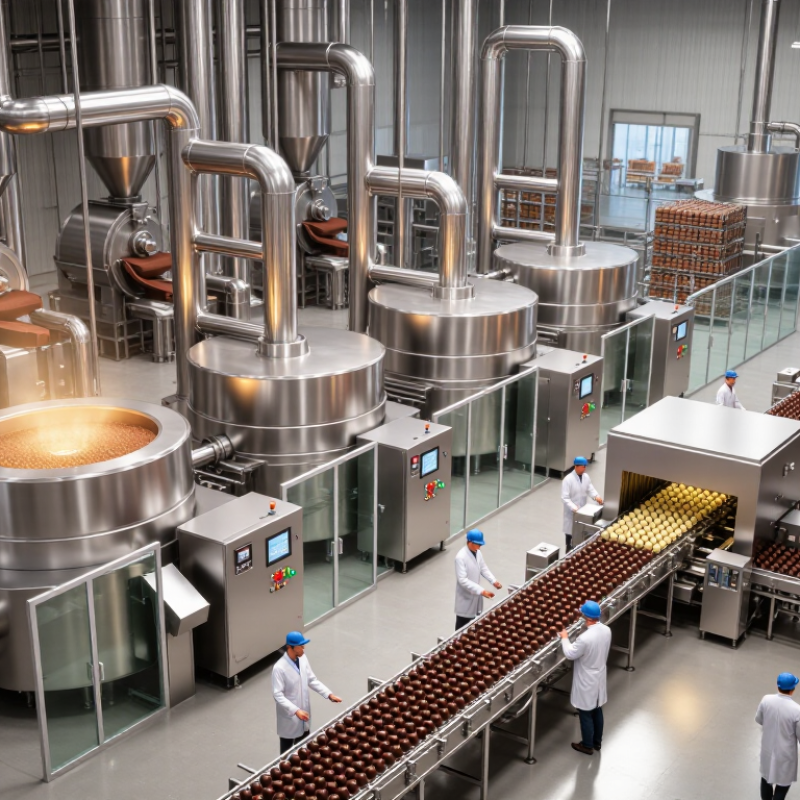
China Top Chocolate Processing Plant Manufacturers?

China’s Chocolate Processing Industry and Manufacturing Landscape

China Top Chocolate Processing Plant Manufacturers?

China’s chocolate processing industry is becoming more technical and regionally diverse. Large plants often operate near ports, food ingredient suppliers, and packaging clusters. China Customs data shows steady cocoa product imports, reflecting strong demand for imported cocoa beans, cocoa butter, and cocoa powder. The ICCO’s 2023/24 market reports also show continued global grinding growth, although China’s figures are not always reported with complete consistency.

The manufacturing landscape includes bean cleaning, roasting, grinding, conching, tempering, moulding, and automated packaging. Modern facilities increasingly use inline viscosity checks and digital temperature controls. A typical tempering line may monitor chocolate within a narrow temperature range, helping produce a clean snap and glossy surface. However, equipment capacity alone does not prove processing quality. Plant hygiene, traceability, operator training, and stable raw-material storage matter just as much. Reports from Euromonitor and USDA Foreign Agricultural Service indicate that Chinese consumers are showing stronger interest in premium, lower-sugar, and filled chocolate products. This is encouraging, but market forecasts can differ sharply.

Tips: Evaluate manufacturers through factory audits, trial batches, HACCP or ISO 22000 records, and maintenance response times. Ask for actual energy use per tonne, not only rated capacity. Check whether the supplier can manage seasonal cocoa variation. A perfect brochure is not enough. Some production claims still need closer verification.

Key Capabilities of Leading Chinese Chocolate Processing Plants

China Top Chocolate Processing Plant Manufacturers?

Leading Chinese chocolate processing plants now combine large-scale production with tighter process control. Their capabilities often include roasting, grinding, conching, tempering, molding, cooling, and packaging. Each stage affects texture, gloss, flavor, and shelf stability.

During a factory evaluation, buyers should inspect equipment hygiene, temperature records, and batch traceability. Modern plants commonly use automated dosing systems and stainless-steel contact surfaces. Many also maintain HACCP-based controls and internationally recognized quality systems. These practices support more consistent output, but certification alone proves little. A clean production line still needs skilled operators and reliable maintenance. That part is sometimes underestimated.

Flexible production is another important capability. Leading facilities may handle dark, milk, compound, filled, and customized chocolate products. They can often adjust recipes, mold shapes, packing formats, and minimum order quantities. Technical teams should also provide pilot trials, sample testing, and clear ingredient documentation. Communication can be uneven, especially when specifications are vague.

Tips: Request a live production video or factory visit. Check allergen separation, cleaning schedules, and metal detection records. Ask how rejected batches are isolated. Confirm whether the plant can reproduce your sample after several production runs. A small trial order may reveal more than a polished presentation.

Chocolate Processing Equipment, Technologies, and Production Lines

China Top Chocolate Processing Plant Manufacturers?

Selecting a chocolate processing manufacturer requires more than comparing machine prices. A reliable supplier should explain the complete production line, from cocoa mass melting to refining, conching, tempering, moulding, cooling, and packaging. Each stage affects texture, gloss, flavour, and shelf stability.

Experienced manufacturers usually design equipment around capacity, recipe viscosity, energy use, and factory space. Food-contact parts should use suitable stainless steel, with accessible surfaces for cleaning and inspection. A stable tempering unit controls chocolate crystals precisely. Cooling tunnels need even airflow and dependable temperature control. Automated systems can record production data, reduce manual errors, and support traceability. Still, automation cannot correct poor ingredients or careless sanitation.

Factory visits or live testing can reveal practical details. Watch how quickly the line changes between recipes. Check noise, heat loss, cleaning access, spare-part planning, and operator training. Ask for performance records using chocolate similar to yours, not only laboratory samples. A line may look impressive but perform poorly with high-nut chocolate or filled products. This is where many evaluations become too optimistic. Even experienced buyers sometimes underestimate installation time, ventilation, and water treatment needs. Clear technical drawings, acceptance tests, warranty terms, and documented safety procedures improve reliability. A thoughtful manufacturer will also admit operating limits instead of promising perfect results.

Quality Standards, Certifications, and Food Safety Practices

Choosing a China-based chocolate processing plant requires more than checking equipment photos or production capacity. Quality begins with documented food safety systems, trained workers, and consistent ingredient controls. Reliable manufacturers commonly follow HACCP principles and may hold certifications such as ISO 22000, FSSC 22000, or BRCGS. However, certificates should be verified with the issuing body. A certificate alone proves little.

During a factory visit, inspect real practices. Workers should wear clean protective clothing and follow handwashing procedures. Production rooms should control temperature and humidity. Raw materials need clear batch labels, allergen separation, and approved supplier records. Chocolate should pass checks for moisture, microbiological safety, foreign materials, and chemical contaminants. Metal detectors and calibrated weighing equipment provide useful protection. Traceability matters. A plant should identify the source of every cocoa batch within hours, not days.

Tips: Request recent audit reports, sanitation records, product specifications, and sample laboratory results. Ask how rejected materials are isolated. Check whether corrective actions are recorded and completed. Do not rely only on a polished tour. Sometimes, small gaps appear after the visitor leaves. That is worth discussing honestly. A strong manufacturer welcomes questions, explains limitations, and improves procedures when evidence shows a weakness.

How to Select a Reliable Chocolate Processing Plant in China

How to Select a Reliable Chocolate Processing Plant in China

A reliable chocolate processing plant should prove its performance, not only display polished equipment. The International Cocoa Organization projected a 439,000-tonne cocoa deficit for 2023/24. This pressure makes stable refining, conching, and tempering especially important. Request test records using your recipe, cocoa butter content, and target viscosity. Check whether the plant can maintain temperature within approximately ±1°C during tempering. Small deviations can create dull surfaces, streaks, or unstable snap. Ask for batch samples, cleaning records, and failure reports. Honest factories share weaknesses.

Review the plant’s food-safety system before discussing price. ISO 22000 requires documented hazard controls, traceability, and continual improvement. Confirm stainless-steel contact surfaces, hygienic welds, sealed bearings, and accessible cleaning points. Walk through the production area. Look for chocolate residue around pumps and poorly labeled pipelines. Those details matter more than showroom appearance.

The U.S. Department of Agriculture’s 2024 food-processing outlook emphasizes automation, efficiency, and traceability in modern manufacturing. Therefore, inspect PLC controls, alarm histories, energy monitoring, and spare-parts availability. Ask for the last three years of commissioning references, but verify them independently. A lower quotation may hide weaker insulation, limited after-sales support, or expensive custom parts. This is where buyers often become too optimistic. Request a factory acceptance test before shipment, including throughput, power consumption, noise, and sanitation checks.

123