Top 10 Fuel Pump And Commutator Manufacturers Worldwide?
Choosing a reliable Fuel Pump And Commutator manufacturer requires more than comparing catalog prices. These components work inside demanding automotive environments, where heat, vibration, fuel exposure, and electrical load test every production decision. A weak commutator can create uneven current transfer, while an inconsistent pump assembly may affect pressure stability and vehicle performance. This guide examines ten notable manufacturers worldwide through practical indicators, including engineering capability, material control, production scale, testing depth, and supply reliability. We consider manufacturers serving original equipment, aftermarket, and specialized mobility applications. Real evidence matters. Public certifications, factory information, technical documentation, and customer-facing support help separate durable expertise from polished marketing. Yet, not every company publishes the same data. That creates uncertainty.
The companies featured here are not ranked as universal winners. Their strengths may differ across passenger vehicles, commercial fleets, motorcycles, and electric fuel systems. We look at how each manufacturer manages copper alloys, molding accuracy, balancing, sealing, noise control, and end-of-line inspection. Small details matter, such as stable brush contact after repeated thermal cycles or clean terminals that resist corrosion. Where information is limited, that limitation is acknowledged rather than hidden. Readers should verify current certifications, regional availability, warranty terms, and technical compatibility before making a purchasing decision. Supplier performance can also change with ownership, tooling updates, or capacity expansion. This overview offers a careful starting point, not a substitute for plant audits or sample testing. The best choice depends on application, risk tolerance, and long-term service expectations.
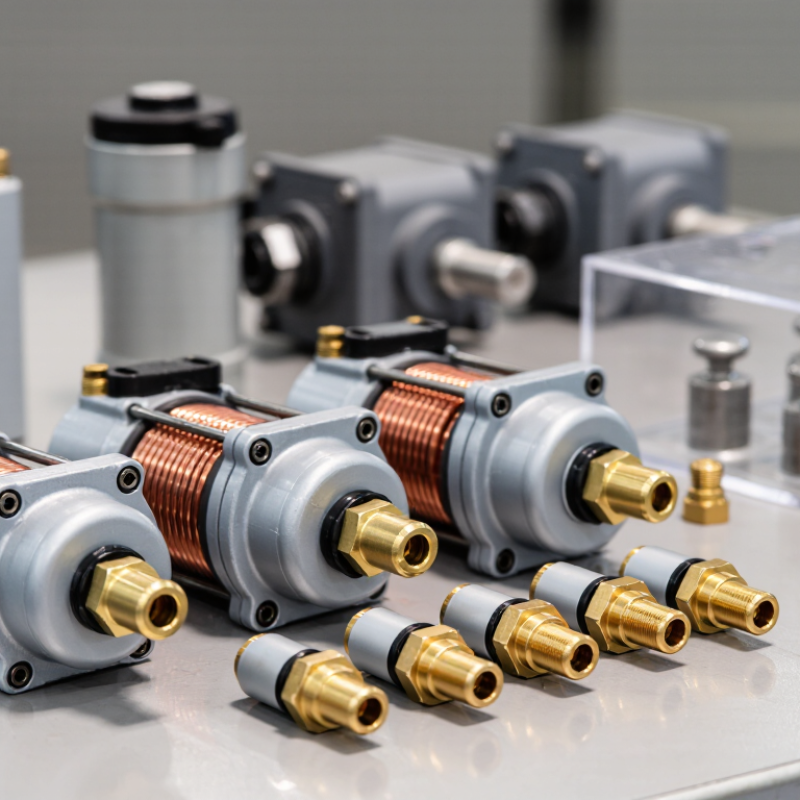
Fuel Pump and Commutator Manufacturing: Roles, Technologies, and Market Scope
Fuel pump and commutator manufacturing supports dependable fuel delivery in vehicles, generators, and industrial equipment. A practical top-ten list should examine engineering depth, production consistency, testing systems, and after-sales capability. Fuel pump makers manage flow, pressure, noise, and thermal stability. Commutator manufacturers produce precise copper segments that transfer electrical current through rotating motors. Small errors matter.
Modern factories combine automated winding, precision molding, laser inspection, dynamic balancing, and end-of-line performance tests. Materials must resist heat, vibration, fuel exposure, and electrical wear. Experienced manufacturers also track batch data, supplier quality, and failure patterns. The market is broad, but performance requirements differ sharply between passenger vehicles, commercial fleets, agricultural machines, and replacement parts. Regional demand is growing with vehicle electrification, yet auxiliary fuel systems and compact motors remain important. A ranking can become outdated quickly. That is an uncomfortable reality.
Tips: Compare pressure curves, brush life, commutator runout, and noise readings. Request traceable test records, not only catalog claims. Visit the production site when possible. Ask how defects are isolated and corrected. One overlooked detail can become a costly field failure. Suppliers may also provide impressive samples while lacking stable mass production. Independent validation is wise, although it adds time and expense.
Key Criteria for Evaluating Global Fuel Pump and Commutator Manufacturers
Evaluating global fuel pump and commutator manufacturers requires more than comparing unit prices. OICA reported 93.5 million motor vehicles produced worldwide in 2023. That scale increases pressure on stable supply, repeatable quality, and regional production support. The IEA also recorded nearly 14 million electric car sales in 2023. However, internal-combustion and hybrid vehicles still require reliable fuel delivery systems.
Technical evidence should lead the assessment. For fuel pumps, request measured flow, pressure, current draw, noise, cavitation resistance, and endurance results. Testing should cover temperature cycles and fuel blends used in target markets. For commutators, inspect copper-bar consistency, mica undercut depth, insulation strength, dynamic balance, and brush wear. Small dimensional drift can create heat, vibration, or early motor failure. It is easy to overlook this.
A credible supplier should operate under IATF 16949 and ISO 9001, with documented APQP, PPAP, change control, and full material traceability. The 2024 Automotive Industry Action Group quality guidance reinforces disciplined production planning and defect prevention. Audit the factory, not only the certificate. Review process-capability data, warranty returns, corrective-action speed, and independent validation reports. Environmental controls also matter; ISO 14001 certification can support responsible resource management, but it does not prove product durability. Supplier rankings remain imperfect when disclosure is limited. A polished sample cannot replace twelve-month field evidence.
Top 10 Fuel Pump and Commutator Manufacturers Worldwide
Key criteria for evaluating global fuel pump and commutator manufacturers
This weighted evaluation framework reflects common automotive sourcing priorities. Product quality, OE/OES experience, validation capability, and global delivery performance receive the highest weighting because they directly influence safety, reliability, and supply continuity.
Regional Overview of the Worldwide Fuel Pump and Commutator Industry
The worldwide fuel pump and commutator industry is shaped by regional engineering strengths, not one universal ranking. A practical top-ten view includes manufacturers from East Asia, Europe, North America, India, and Southeast Asia. These producers compete through flow accuracy, electrical durability, noise control, and stable production.
East Asian manufacturers often lead high-volume fuel pump assembly and compact commutator production. Their facilities commonly use automated winding, balancing, and end-of-line testing. European suppliers focus more on thermal performance, emissions control, and strict traceability. North American producers usually emphasize modular vehicle integration, aftermarket reliability, and harsh-environment testing. Regional priorities differ.
India is expanding its role through cost-efficient motor components and growing machining expertise. Southeast Asian plants support global supply chains with flexible assembly and export capacity. However, lower cost does not always mean equal consistency. Commutator quality depends on copper purity, insulation accuracy, brush contact, and surface finish. Small defects can create vibration, current spikes, or early pump failure.
Field experience shows that supplier evaluation should include more than annual output. Buyers should examine test records, material controls, failure analysis, and production-change procedures. The ranking is not fixed. A manufacturer may excel in passenger vehicles but struggle with commercial-duty cycles. That matters. Regional disruptions, stricter vehicle standards, and changing electrification trends are also reshaping investment decisions. Even experienced analysts can misjudge capacity when public data remains incomplete.
Quality, Innovation, and Future Trends in Component Manufacturing
Top ten fuel pump and commutator manufacturers worldwide are increasingly judged by more than production volume. Quality begins with stable materials, accurate winding, clean assembly, and strict dimensional control. In fuel pump production, engineers examine pressure consistency, noise, heat resistance, and corrosion performance. Commutator suppliers must also control copper balance, insulation strength, and brush contact quality.
Independent testing adds credibility. Reliable manufacturers use thermal cycling, vibration trials, endurance benches, and electrical load simulations. These tests recreate demanding conditions, including a hot engine bay, repeated starts, and contaminated fuel environments. Traceable production records help engineers identify defects before shipment. However, no factory is flawless. A polished certificate cannot replace transparent failure analysis or corrective action.
Innovation is changing the competitive landscape. Brushless pump designs can reduce wear and support quieter operation. Automated vision systems inspect commutator surfaces in real time. Data platforms can connect assembly records with field performance. Some manufacturers are also studying lower-impact materials and energy-efficient processes. These improvements matter, but they require measurable results. A clever prototype may still fail after months of thermal stress. Future leaders will combine laboratory discipline with practical service feedback, while remaining honest about unresolved weaknesses.