
Submit Inquiry
27 West Beaver Creek Road Unit #2
Richmond Hill, ON, CANADA L4B 1M8

International:

1-905-886-0335

US & Canada:

1-800-265-5696

Top 10 Cans Filling Machine Manufacturers Worldwide

Choosing the right Cans Filling Machine manufacturer can shape production speed, product quality, and long-term operating costs. This guide examines ten leading manufacturers worldwide through practical, measurable criteria. These include filling accuracy, hygienic design, line flexibility, technical support, and documented customer experience. A reliable machine should handle real factory pressure, not only perform well in a showroom. Stainless steel frames, stable valves, clean changeovers, and accessible control panels matter during daily production. So does consistent performance when can sizes or beverage formulas change.

The manufacturers featured here serve different production scales and market needs. Some specialize in high-speed lines for major beverage plants. Others provide compact systems for growing producers. Their equipment may support water, soft drinks, energy beverages, beer, or other regulated products, depending on configuration and certification. We consider engineering capabilities, installation support, spare-parts access, and maintenance response. Evidence from technical documentation and user feedback strengthens the comparison. However, no ranking is permanently perfect. Market data changes. Regional service quality can also differ. A machine that suits one factory may create unnecessary complexity in another. Buyers should verify output claims, sanitation procedures, safety features, and total ownership costs before signing contracts. Small details count. A delayed replacement valve can stop an entire line. This overview offers a careful starting point, while independent testing and site-specific evaluation remain essential.
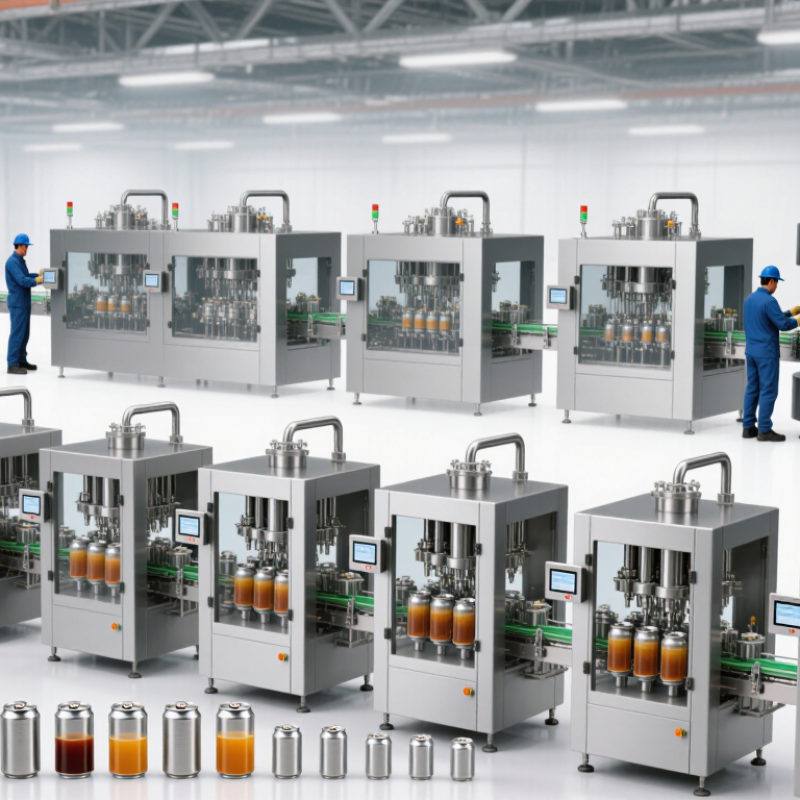
Top 10 Cans Filling Machine Manufacturers Worldwide

Definition and Scope of Can Filling Machines

A can filling machine is industrial equipment designed to dose liquid products into metal or composite cans. It controls filling volume, product flow, and container movement. That sounds simple. In real production, accuracy also depends on temperature, viscosity, foaming, pressure, and can stability.

The scope includes volumetric, gravimetric, and level-based filling systems. Volumetric machines deliver a measured quantity through calibrated valves or pistons. Gravimetric machines use load cells to measure product weight directly. Level-based systems maintain a consistent visible fill height, which is useful for transparent or appearance-sensitive packaging. Engineers usually assess speed, accuracy, sanitation, changeover time, and compatibility with different can sizes. Carbonated products require pressure control. Thick products may need wider valves or controlled pumping.

When comparing the top 10 can filling machine manufacturers worldwide, buyers should examine the complete production system, not only the advertised output. From practical commissioning experience, reliable lines require stable conveyors, accurate sensors, accessible valves, and repeatable cleaning procedures. Small errors matter. Operators should verify fill accuracy with routine samples and record deviations before they become waste. Stainless steel contact surfaces and hygienic welds support safer maintenance. However, specifications can mislead when tested under ideal conditions. A machine rated for high speed may perform differently with foamy products or frequent format changes. Not every line needs maximum output. A balanced design may reduce downtime, product loss, and operator strain.

How Can Filling Machines Work in Industrial Production

Industrial can filling machines convert empty containers into measured, sealed products through controlled, repeatable stages. The line first indexes cans into position. A dosing valve then releases a measured volume. Sensors check height, pressure, and container presence before sealing begins. Modern systems may use volumetric, gravimetric, or flow-based control. Each method suits different liquids and production targets.

A 2024 Grand View Research report estimated the global filling machine market at approximately USD 7.3 billion in 2023. It also projected steady growth through 2030. This expansion reflects demand for faster changeovers, cleaner processing, and reduced product waste. In a working plant, operators adjust fill timing, valve speed, and conveyor spacing. Small changes matter. A two-millisecond error can create foam, splashing, or underfilled cans.

A 2024 Grand View Research report estimated the global filling machine market at approximately USD 7.3 billion in 2023.

Industrial reliability depends on more than speed. The machine must support hygienic cleaning, accurate calibration, and traceable inspection data. Deloitte’s 2024 Smart Manufacturing survey found that 86% of manufacturing leaders expect smart operations to strengthen competitiveness. Connected filling equipment supports that goal through live alarms and performance records. Yet digital control is not magic. Dust, temperature shifts, worn seals, and inconsistent can dimensions still cause failures. Experienced technicians verify sensors manually and review rejected cans instead of trusting dashboards completely. The process looks simple, but production rarely behaves perfectly.

Criteria for Ranking Global Can Filling Machine Manufacturers

A credible ranking of global can filling machine manufacturers should begin with measurable evidence, not advertising claims. PMMI’s 2024 State of the Industry report places the U.S. packaging machinery market above 10 billion dollars annually, showing the sector’s scale and competitive pressure. Our criteria therefore examine filling accuracy, line speed, changeover time, hygienic design, energy use, and verified uptime.

Performance must be tested in real production conditions. A strong manufacturer should provide factory acceptance testing, site acceptance testing, and traceable quality records. We would compare stated output with results from different can sizes, liquid viscosities, and production shifts. The European Hygienic Engineering and Design Group emphasizes cleanable equipment and hygienic construction, so access points, drainage, seals, and washdown compatibility deserve measurable scores. Small details matter.

Service reliability also affects the ranking. PMMI research consistently identifies labor availability, automation, and supply-chain resilience as major packaging concerns. Therefore, spare-parts coverage, remote diagnostics, technician response times, training, and software support should receive equal attention. Total cost of ownership matters more than the purchase price. Energy consumption per thousand cans should be recorded, not guessed. No ranking is perfect. Supplier references can be selective, and factory demonstrations may be unusually favorable. Independent audits and multi-year operating data reduce that weakness, although they cannot remove it completely.

Top 10 Can Filling Machine Manufacturers Worldwide

Criteria for Ranking Global Can Filling Machine Manufacturers

This weighted evaluation framework reflects the main procurement criteria used when comparing can filling machine manufacturers worldwide. Filling accuracy, production speed, container compatibility, hygienic design, changeover efficiency, after-sales service, and resource efficiency are assessed together to support a balanced ranking.

Profiles of the Top 10 Can Filling Machine Manufacturers Worldwide

Profiles of the Top 10 Can Filling Machine Manufacturers Worldwide

The ten profiled manufacturers represent distinct engineering strengths. Two focus on high-speed rotary fillers for beverage plants. Three specialize in compact systems for regional canners. Others develop food-grade piston, gravity, or volumetric technologies. One supplier leads in servo controls, while another emphasizes hygienic washdown design. The remaining manufacturers combine filling, seaming, inspection, and coding in one production line. These differences matter more than reputation alone. A machine running 600 cans per minute may still waste product during changeovers.

Industry reports support this shift toward measurable efficiency. PMMI’s 2024 beverage manufacturing research identifies labor shortages, automation, and equipment flexibility as major investment drivers. Grand View Research also reports steady growth in the global filling machine market, supported by packaged beverages, prepared foods, and stricter quality expectations. However, published rankings are not perfectly consistent. Some reports measure revenue, while others measure installed capacity or regional presence. That weakness deserves attention. A manufacturer with fewer public sales may still deliver stronger local service and spare-parts support.

Tips: Compare verified output, fill accuracy, changeover time, and cleaning procedures. Request a factory trial using your actual can size and product viscosity. Check service response times, operator training, and five-year maintenance costs. Do not trust speed claims alone. Observe the first hour.

Top 10 Cans Filling Machine Manufacturers Worldwide - Profiles of the Top 10 Can Filling Machine Manufacturers Worldwide
Rank Anonymous Manufacturer Profile Primary Market Region Main Filling Technology Typical Can Formats Suitable Product Categories Machine Configuration Key Engineering Strength Common Compliance Requirements Service and Integration Scope
1 Manufacturer Profile 01 Western Europe Volumetric filling Counter-pressure filling Standard metal beverage cans; slim, sleek and regular formats Carbonated soft drinks, beer, energy drinks and flavored beverages High-speed rotary monoblock or integrated filling line High-throughput beverage lines with controlled oxygen pickup and repeatable fill levels Food-contact material controls, hygienic design, machine guarding and electrical safety requirements Line layout, seaming integration, rinsing, pasteurization, inspection, conveying and commissioning
2 Manufacturer Profile 02 Central Europe Isobaric filling CIP-compatible filling Aluminum and tinplate beverage cans across multiple diameters Beer, sparkling water, carbonated beverages and low-alcohol drinks Rotary filler with separate or integrated seamer Sanitary product handling, clean-in-place design and stable pressure management Hygienic equipment principles, pressure-system controls and regional electrical conformity Process engineering, filler-seamer matching, control-system integration and after-sales maintenance
3 Manufacturer Profile 03 North America Volumetric filling Electronic flow control Standard beverage cans, specialty cans and multi-size production formats Craft beer, soft drinks, ready-to-drink beverages and functional drinks Compact rotary systems and modular canning lines Flexible changeovers for producers operating several recipes or package sizes Sanitary construction, food-contact compliance, guarding and plant safety standards Container handling, seaming, date coding, label application, conveyors and operator training
4 Manufacturer Profile 04 Italy and Southern Europe Counter-pressure filling Foam-control filling Standard, slim and sleek cans for carbonated products Beer, sparkling beverages, soft drinks and premium mixers Rotary filling and seaming equipment for medium- to high-speed lines Product-quality protection, reduced foaming and accurate fill-height control Hygienic fabrication, food-contact requirements, safety guarding and CE-oriented conformity Complete packaging-line integration, change-part supply, installation and technical support
5 Manufacturer Profile 05 East Asia Volumetric filling Gravity-assisted filling Aluminum beverage cans and selected specialty metal containers Tea drinks, juices, soft drinks, beer and other liquid refreshments Automatic rotary lines and integrated washing-filling-seaming systems Broad format adaptability and production-line automation for large beverage plants Food-contact materials, hygienic construction, machine safety and export-market certification Rinsing, filling, seaming, capping where applicable, inspection, conveying and packaging integration
6 Manufacturer Profile 06 China and wider Asia-Pacific Isobaric filling Electronic level control Regular, slim and sleek beverage cans Carbonated drinks, beer, energy drinks, sparkling water and juice-based beverages Automatic monoblock and turnkey canning-line systems Scalable automation with equipment options for different plant capacities Food-processing hygiene, electrical safety, pressure control and destination-market requirements Line design, filling and seaming, conveyor systems, coding, inspection and remote support
7 Manufacturer Profile 07 Japan and Northeast Asia Precision volumetric filling Low-foam filling Standard and slim cans with controlled dimensional tolerances Soft drinks, tea beverages, coffee drinks, functional beverages and beer Servo-controlled rotary equipment with automated monitoring Accurate dosing, dependable operation and process repeatability Food-contact controls, sanitary design, electrical safety and factory quality procedures Automation, sensors, quality inspection, production data collection and preventive maintenance
8 Manufacturer Profile 08 United Kingdom and Northern Europe Counter-pressure filling CIP-ready design Standard beverage cans and smaller specialty can formats Craft beer, cider, sparkling beverages, soft drinks and ready-to-drink products Compact automatic lines for craft, contract and regional beverage producers Space-efficient layouts, recipe flexibility and relatively fast product changeovers Hygienic design, food-contact compliance, pressure safety and applicable machinery standards Container rinsing, filling, seaming, coding, conveyors, commissioning and operator instruction
9 Manufacturer Profile 09 India and South Asia Volumetric filling Counter-pressure filling Regular aluminum cans and selected slim-can formats Carbonated soft drinks, energy drinks, beer, juice drinks and packaged beverages Automatic and semi-automatic systems for small to large production capacities Cost-effective line configuration with emphasis on maintainability and local support Food-contact materials, hygienic fabrication, electrical protection and customer-country standards Turnkey line supply, utilities coordination, installation, spare parts and technical training
10 Manufacturer Profile 10 Latin America and emerging markets Volumetric filling Gravity and pressure-assisted filling Standard beverage cans and selected regional package formats Beer, soft drinks, flavored water, juices and non-carbonated beverages Modular filling lines adaptable to medium-scale production Practical configuration, straightforward operation and accessible maintenance Hygienic equipment design, food-contact requirements, machine guarding and local safety rules Filling and seaming, conveyors, coding, basic inspection, installation and spare-parts support

Key Factors for Selecting a Suitable Can Filling Machine Manufacturer

Top 10 Cans Filling Machine Manufacturers Worldwide

Selecting a can filling machine manufacturer requires more than comparing listed speeds. Begin with the product, can diameter, fill volume, and daily production target. A suitable supplier should explain how its equipment handles carbonation, foam, temperature changes, and viscosity. Ask for performance data from similar installations. Numbers without operating conditions can mislead.

Engineering support matters during layout and commissioning. Check whether the manufacturer provides filling valves, rinsing systems, seaming integration, controls, and changeover guidance. The machine should maintain consistent fill levels without excessive product loss. Hygienic construction, accessible contact parts, and practical cleaning procedures deserve close inspection. Watch the details. Small design choices affect downtime.

A dependable manufacturer also offers operator training, spare-part planning, remote support, and documented maintenance intervals. Request a factory acceptance test using your actual cans and product, when possible. Review references from facilities with comparable speed and packaging requirements. Total cost includes utilities, labor, maintenance, and rejected cans, not only the purchase price. A polished brochure is not proof. One common mistake is choosing maximum speed over stable performance. No machine is perfect. Even experienced teams may underestimate changeover time or cleaning access. Leave room for honest questions, trial results, and future production changes. Reliability is demonstrated through clear specifications, responsive service, and evidence that the equipment performs beyond the sales discussion.

123