Submit Inquiry
27 West Beaver Creek Road Unit #2
Richmond Hill, ON, CANADA L4B 1M8

International:

1-905-886-0335

US & Canada:

1-800-265-5696

What Is a Restringing Rackets Machine and How Does It Work?

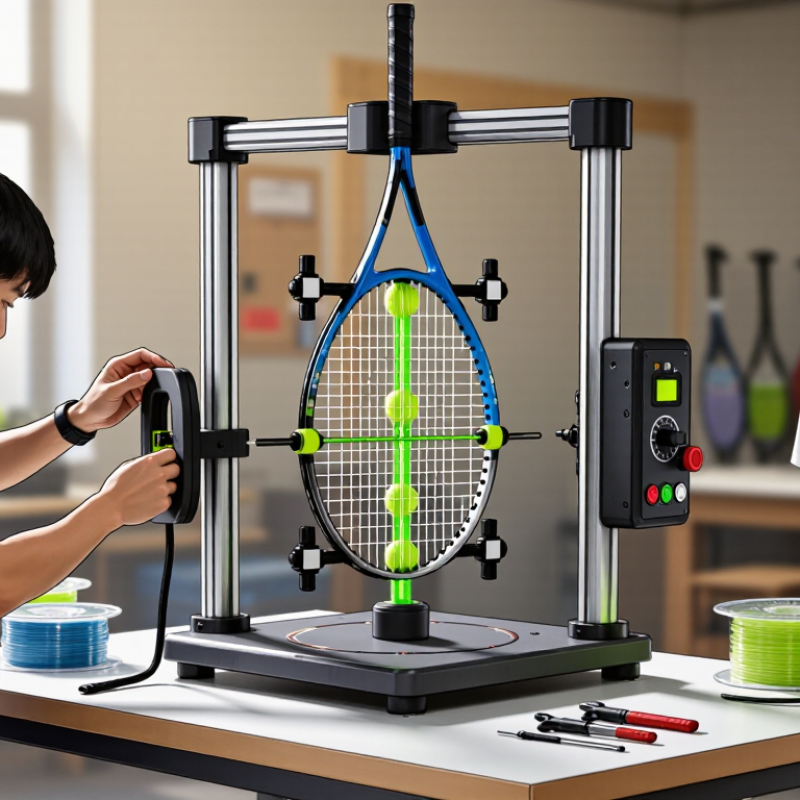
A Restringing Rackets Machine is a specialized tool for replacing and tensioning strings in tennis, badminton, and squash rackets. It combines a mounting system, string clamps, a tension head, and adjustment controls. Together, these parts hold the frame securely and pull each string to a selected tension.

The process begins with careful frame mounting. A technician places the racket on a central support and checks its alignment. The machine then guides the string through the racket’s grommets. Its tension head pulls the string, while clamps hold each section in place. This pattern continues across the main and cross strings. Small details matter. Uneven tension can change power, control, comfort, and durability.

Accuracy depends on more than the machine itself. Experienced stringers inspect the frame, identify its recommended tension range, and select suitable string materials. They also check clamp pressure and calibrate the tension system regularly. Digital models can improve consistency, but they cannot replace judgment. A machine may display exact numbers while a worn clamp creates hidden tension loss.

That limitation deserves attention. Restringing is partly technical and partly practical. Two rackets can receive identical settings yet feel different during play. String type, player technique, temperature, and frame condition all influence the result. This guide explains how a Restringing Rackets Machine works, what each component does, and which handling choices affect the finished racket. The aim is reliable understanding, not exaggerated precision.

What Is a Restringing Rackets Machine and How Does It Work?

What Is a Racket Restringing Machine?

A racket restringing machine is a specialized tool for replacing worn strings in tennis, badminton, or squash rackets. It holds the frame securely while applying controlled tension to each string. Most machines include a turntable, frame supports, string clamps, and a tension head. Together, these parts help create an even string bed and protect the racket from unnecessary stress.

The restringing process begins by mounting the racket at several support points. The technician then removes the old strings and checks the frame for cracks or deformation. New string is fed through the main holes and pulled to a selected tension. Clamps hold each section in place before the next pull. Cross strings are installed afterward, forming the familiar grid pattern. From practical experience, consistent tension matters more than speed. A rushed clamp can leave a loose section, even when the final reading looks correct. Small differences can affect control, comfort, and power.

Tips: Clean the clamps before use. Check the supports carefully. Use a reliable tension reference, but do not treat it as perfect. String materials stretch differently, and machine calibration can change over time. Record the racket type, string, and tension after each job. This simple note helps identify patterns. I still recheck unusual results, because equipment and technique both have limits.

The Main Parts and Functions of the Machine

What Is a Restringing Rackets Machine and How Does It Work?

The Main Parts and Functions of the Machine

A restringing racket machine replaces worn strings with controlled tension. Its main frame supports the racket during installation. A six-point or two-point mounting system holds the frame firmly. This reduces twisting while the strings are pulled. The turntable rotates the racket for easier access.

The tension head is the working core. It pulls each string to a selected value, such as 24 kilograms. Electronic models usually provide finer adjustments than manual crank systems. Clamps grip the string after tension is applied. Fixed clamps offer stable positioning, while floating clamps require more operator control. The base, clamps, gripper, and tension head must move smoothly. Small resistance can change the final result.

The International Tennis Federation’s Global Tennis Report 2024 recorded about 106 million tennis players worldwide. That scale increases demand for consistent restringing skills. Still, machine accuracy does not replace practical experience. I always check clamp pressure and inspect the frame before starting. A perfect number can still produce a poor job.

Tips: Clean the clamps regularly. Mark the starting knot position. Pull slowly near shared holes. Recheck tension after finishing. Calibration should be tested with a certified tension tool, not guessed. The report gives participation data, not a universal tension standard, so player comfort and racket specifications still matter.

How to Prepare a Racket for Restringing

A restringing racket machine replaces worn strings under controlled tension. Good results begin before the racket reaches the machine. The SFIA 2024 Topline Participation Report recorded 23.8 million U.S. tennis participants in 2023. That scale makes careful preparation more important, especially in busy stringing workshops.

Start by recording the racket’s current tension, string type, pattern, and visible damage. Remove overgrips, vibration dampeners, and loose accessories. Clean the frame with a dry cloth. Inspect the grommets, bumper guard, handle, and shaft for cracks or distortion. The ITF Rules of Tennis 2024 limit racket length to 29 inches and width to 12.5 inches. These measurements help identify serious frame damage, but they do not prescribe one universal string tension. Choose tension from the player’s needs, the frame’s specifications, and the previous setup. A higher tension may improve control, yet it can reduce comfort. This is where judgment remains imperfect.

Tips: Photograph the string bed before cutting. Mark shared holes with a pencil. Cut strings gradually, from the center outward, to reduce sudden frame stress. Keep the racket supported at its mounting points. Do not force a blocked grommet. Replace it if its edge is sharp or split. Check the tension head with a calibrated tool; small machine errors can become obvious during play. Clean work matters. I still recheck the mounting arms before pulling the first string.

What Is a Restringing Racket Machine and How Does It Work?

Typical preparation and restringing workflow for a tennis or badminton racket

A restringing machine holds the racket securely, applies controlled tension to each string, and helps create a consistent string bed. The times shown are typical estimates for a standard restringing job and can vary according to the racket condition, string pattern, and technician experience.

How the Restringing Process Works Step by Step

A restringing racket machine replaces worn strings with controlled tension and consistent spacing. The process begins by removing the old strings with steady cuts, not by pulling them aggressively. This protects the frame from sudden stress. The stringer then checks the frame, grommets, and shared holes for cracks or damage. A small defect can affect the final result.

The racket is secured on the machine’s mounting supports. It must sit firmly, but excessive pressure can distort the frame. The stringer measures the selected tension and prepares the string length. Main strings usually pass from the racket’s throat toward the head.

Each string is pulled through the tension head, tightened, and held with a clamp. Cross strings are woven over and under the mains. The pattern must remain accurate.

At the end, the stringer ties secure knots, trims loose ends, and removes the racket carefully. A final inspection checks alignment, tension consistency, and frame movement. Even skilled work is not perfectly repeatable. I still recheck uneven gaps.

Tips:

Match tension to your playing style, racket condition, and comfort needs. Higher tension can feel sharper but may reduce forgiveness. Lower tension often adds comfort and power. Replace damaged grommets before restringing. Keep the racket dry during storage, because moisture and heat can change string performance. If the result feels unusual, record the tension and playing conditions before changing everything again.

How Tension Settings Affect Racket Performance

A restringing racket machine holds the frame while pulling each string to a selected tension. Modern machines use a constant-pull or lockout system. Constant-pull models keep pulling as the string relaxes. Lockout models stop near the target value. The difference can reach several pounds during installation. Professional testing from the International Tennis Federation shows that stringbed stiffness strongly affects ball response, control, and comfort.

Tension settings change how the racket feels at impact. Higher tension usually creates a firmer stringbed, sharper directional control, and less trampoline effect. Lower tension can increase power and pocketing, but may feel less precise. The United States Racquet Stringers Association reports that many strings lose roughly 10–20% of their initial tension soon after installation. That loss depends on string material, gauge, temperature, and playing frequency. A laboratory number is useful, but it cannot replace your actual hitting feedback. I have seen players blame tension when poor technique caused the problem. That mistake is easy to make.

Tips: Start near the racket manufacturer’s recommended range. Change tension in small steps, usually 1–2 pounds. Record tension, string type, weather, and playing hours. Check the stringbed after several sessions. If your arm feels sore, reduce tension cautiously and seek advice from a qualified stringer. Comfort matters. Rescue the numbers, not your ego.

What Is a Restringing Rackets Machine and How Does It Work? — How Tension Settings Affect Racket Performance

Data Dimension Typical Setting or Component How It Works Effect on Racket Performance Practical Consideration
Machine Purpose Racket stringing machine Secures the racket frame, guides the strings through the string pattern, and applies a selected pulling force before the strings are clamped. Produces a more consistent string bed than manual pulling and helps maintain the intended playing characteristics of the racket. The final result depends on machine calibration, string type, installation technique, and the racket manufacturer's recommended range.
Main Machine Types Drop-weight, spring-tension, and electronic machines Drop-weight machines use gravity and a lever; spring-tension machines use a calibrated spring; electronic machines use a motor and tension sensor or control system. All can produce playable results, but electronic systems generally make repeated tension settings faster and easier to reproduce. Accuracy depends on calibration and correct operating technique rather than machine type alone.
Frame Support Usually six-point or two-point support Mounting supports hold the racket in position while the strings are tensioned and reduce unwanted frame movement. Stable mounting helps protect the frame and improves consistency across the string bed. Supports should be snug but not over-tightened, because excessive pressure may stress the frame.
Tension Measurement Commonly kilograms-force (kgf) or pounds-force (lb) The machine pulls each string toward the selected reference tension before the string is secured with a clamp. A higher reference tension normally creates a firmer string bed; a lower reference tension normally creates a softer string bed. Reference tension is not the same as the exact tension felt after installation, because strings lose tension during and after stringing.
Typical Recreational Range Approximately 18–30 kgf (40–66 lbf) This broad range covers many recreational and competitive setups, although individual rackets may specify narrower limits. Lower settings generally emphasize comfort and power; higher settings generally emphasize a firmer response and directional control. Always stay within the racket frame's recommended tension range.
Low Tension Approximately 18–22 kgf (40–49 lbf) The strings deflect more easily when the ball or shuttle contacts the string bed. Usually provides easier depth, greater comfort, and a larger margin for slower swings. It may feel less precise during very fast impacts. Often suitable for players who prefer comfort, use a softer string, or need additional power from the string bed.
Medium Tension Approximately 23–26 kgf (51–57 lbf) Balances string-bed movement, energy return, comfort, and directional response. Offers an all-around feel for many players and playing styles. A practical starting point should be selected according to the racket specification, string construction, and player preference.
High Tension Approximately 27–30 kgf (60–66 lbf) The string bed becomes firmer and generally deflects less during impact. May improve a skilled player's sense of precision and trajectory control, but can reduce comfort and demand more accurate contact. Higher tension increases stress on the strings, grommets, and frame and is less forgiving of off-center hits.
Power Response Most noticeable at lower to medium tension A softer string bed can store and return energy while allowing more string movement during impact. Can help generate depth with less swing effort, although excessive movement may make shots feel less predictable. Power also depends on racket head speed, string elasticity, gauge, and impact location.
Control Response Often associated with medium to higher tension A firmer bed usually produces less deflection and a more direct response to the player's swing. May make placement and trajectory changes feel more immediate for experienced players. Higher tension does not automatically create better control; technique and consistent contact remain important.
Comfort and Shock Generally better at lower tension A softer string bed can reduce the firmness of impact transmitted through the racket. May feel more comfortable for players sensitive to vibration or repeated impact. String material, gauge, racket stiffness, grip size, and playing technique also affect comfort.
String Durability Influenced by tension, gauge, material, and string movement Higher tension can increase loading on the string, while lower tension can allow more movement and friction between strings. Either setting may shorten string life depending on the string construction and the player's impact pattern. Frequent string breakage may require a thicker or more durable string rather than simply changing tension.
String Gauge Commonly about 0.65–0.70 mm for many performance setups Thinner strings can provide a lively response, while thicker strings generally resist wear better. Thinner gauges often feel more responsive; thicker gauges often provide greater durability and a firmer feel. Available gauges vary by string construction and sport, so gauge should be considered together with tension.
Cross-String Tension Sometimes set 0–2 kgf lower than the main-string tension Different main and cross tensions can alter the shape and stiffness distribution of the string bed. May influence feel, launch angle, and overall response, but the result varies by racket pattern and string type. Use the racket maker's guidance or a qualified stringer's established setup rather than changing both values randomly.
Tension Loss Begins after stringing and continues during use Strings relax through elastic creep, impact, friction, temperature changes, and time. The racket may feel softer and produce a different launch response than it did immediately after installation. Consistent measurement conditions are necessary when comparing different stringing settings.
Basic Stringing Sequence Mount → thread → tension → clamp → repeat → inspect The racket is mounted, strings are woven through the grommets, each section is tensioned and clamped, and the finished bed is inspected. Correct sequencing reduces uneven tension and helps maintain frame geometry. Blocked holes, missed weaves, loose clamps, and incorrect tie-offs can affect performance and safety.
Recommended Adjustment Method Change tension in small steps of about 1–2 kgf (2–4 lbf) Small changes make it easier to identify how tension affects feel and performance. Allows the player to find a personal balance between power, control, comfort, and durability. Record racket model, string, gauge, tension, date, and playing impression after every change.

Note: The tension ranges shown are general reference values, not universal recommendations. The racket frame's stated tension limits, string manufacturer's guidance, player ability, and physical comfort should always take priority.

123