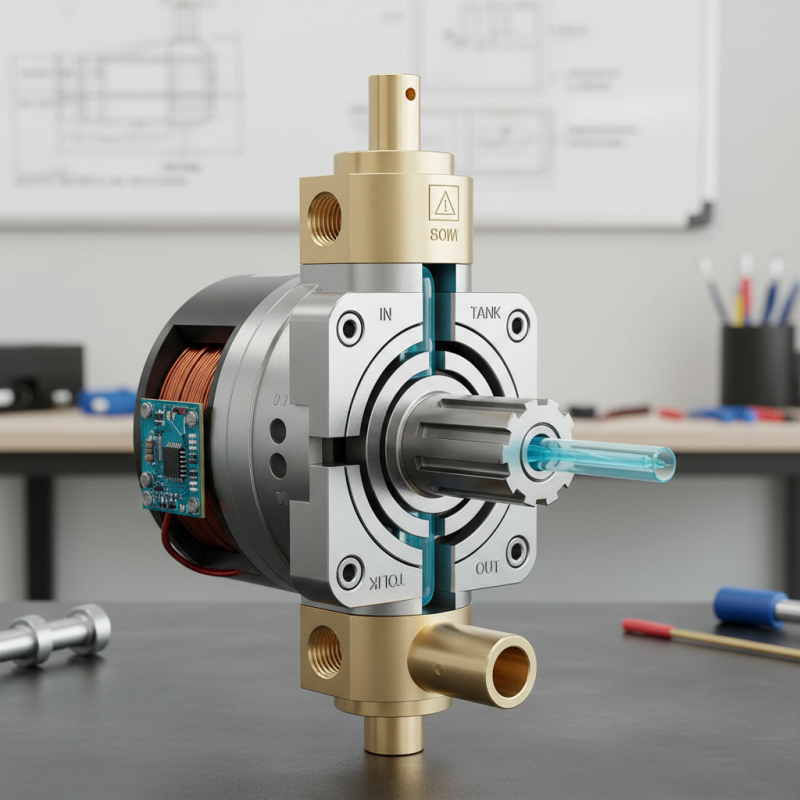
What is a Hydraulic Proportional Valve and How Does It Work?
The Hydraulic Proportional Valve is an essential component in fluid power systems. It controls the flow and pressure of hydraulic fluids precisely. By adjusting the opening of the valve, operators can achieve desired movements in machinery. This means smoother operations and better energy efficiency.
Understanding how a Hydraulic Proportional Valve works is crucial. The valve uses electrical signals to regulate fluid flow. This mechanism allows for responsive adjustments based on changing conditions. However, it is not always flawless. Sometimes, users may experience inconsistency in performance, requiring careful monitoring and calibration.
The hydraulic system's design impacts the efficiency of the valve. If components are mismatched, performance can suffer. Users must consider specific operational needs to avoid unnecessary complications. Investing in quality components can enhance overall functionality.
What is a Hydraulic Proportional Valve?
A hydraulic proportional valve plays a crucial role in fluid systems. It controls the flow and pressure of hydraulic fluid, ensuring precision in various applications. Unlike traditional valves, proportional valves adjust their output dynamically. This feature allows for better control and accuracy in hydraulic systems.
Industry data shows that the hydraulic valve market is projected to reach $25 billion by 2026. The growth reflects an increasing demand for automation in sectors such as construction and manufacturing. Proportional valves, in particular, are sought after for their ability to provide smoother transitions and less wear on components.
However, reliance on hydraulic proportional valves also presents challenges. Calibration errors can lead to inefficient operation. Additionally, improper installation can cause significant performance issues. The valve's response time is pivotal; lagging can negatively impact overall system performance. Users must consider these factors when integrating proportional valves into existing systems.
Key Components of Hydraulic Proportional Valves
Hydraulic proportional valves are crucial in fluid control systems. They regulate flow and pressure by adjusting the valve opening based on electrical signals. The core components include the valve body, actuator, and electronic control unit. The actuator, often a solenoid, converts electrical signals into mechanical movement. This precise control allows for smoother operation in various applications.
Recent industry reports highlight that hydraulic proportional valves improve efficiency significantly. A study revealed that systems employing these valves can enhance performance by up to 30%. However, they can introduce complexity. Installation and calibration require skilled technicians. Misalignment or incorrect settings result in suboptimal performance.
The electronic control unit interprets data from sensors to adjust the valve position. This feedback loop is vital for maintaining system stability. Yet, it raises questions about reliability. Electrical components can fail, leading to costly downtime. Balancing precision with reliability is a challenge that the industry continues to address.
Proportional Valve Flow Characteristics
This chart illustrates the flow rate characteristics of a hydraulic proportional valve at different settings (Low to Very High). The values represent the flow rate in liters per minute (L/min), showcasing the valve's ability to control fluid flow effectively at varying levels of demand.
Principle of Operation for Hydraulic Proportional Valves
Hydraulic proportional valves play a crucial role in controlling fluid flow in hydraulic systems. They adjust the flow rate and pressure based on electrical signals. This allows for precise control over machinery and equipment. The principle of operation hinges on the feedback mechanism integrated within the valve. When an electric current is sent to the valve, it positions a spool or poppet. This action modulates the fluid's path.
The flow rate varies directly with the input signal. Higher voltage results in increased flow, enabling smooth movement of actuators. Conversely, lower voltage reduces flow, allowing for fine adjustments. This precision is vital in applications like robotics and industrial automation. However, achieving perfect control can be challenging. Sometimes, the feedback loop may not respond quickly enough. This can lead to delays in operation, requiring adjustments to the control system.
Valve selection must consider factors like fluid type and operating conditions. An incompatible valve may not perform as intended, leading to inefficiencies. Additionally, dirt and contamination can hinder performance. Regular maintenance is essential to ensure reliability. Just one dirty component can disrupt the flow, causing issues that need addressing. Understanding these factors is key to optimizing hydraulic systems and achieving desired outcomes.
What is a Hydraulic Proportional Valve and How Does It Work?
| Feature | Description | Application |
| Flow Control | Regulates the flow rate based on input signal. | Used in hydraulic systems for precise control. |
| Pressure Range | Operates within specific pressure limits to ensure functionality. | Applicable in heavy machinery and vehicles. |
| Type of Signal | Can be controlled by electrical (analog/digital) or hydraulic signals. | Used in automation and robotic applications. |
| Actuation Mechanism | Utilizes servomotor or piezoelectric elements for actuation. | Ideal for high-speed applications. |
| Feedback System | Incorporates sensors for position and pressure feedback. | Enhances accuracy in robotic tools and CNC machines. |
Applications of Hydraulic Proportional Valves in Industries
Hydraulic proportional valves play a crucial role in various industries. They enable precise control of fluid flow and pressure. This precision is vital in applications from manufacturing to agriculture. According to a recent industry report, approximately 45% of hydraulic systems in manufacturing use proportional valves for optimal performance.
In construction machinery, hydraulic proportional valves enhance the efficiency of equipment like excavators and loaders. These valves allow for smooth operation, which is essential during complex tasks. Research indicates that using proportional valves can improve operational speed by up to 30%. This efficiency can lead to faster project completion, impacting overall productivity.
Despite their advantages, not all systems effectively utilize hydraulic proportional valves. Often, maintenance issues arise when operators neglect regular checks. A survey found that nearly 25% of hydraulic failures stem from poor maintenance. Such statistics highlight the need for training and awareness among personnel. It's clear that while technology provides significant benefits, human factors can undermine performance.
Advantages of Using Hydraulic Proportional Valves in Systems
Hydraulic proportional valves play a vital role in modern hydraulic systems. Their ability to control fluid flow accurately offers significant advantages. For instance, they allow for precise positioning and speed control in machinery. This precision is critical in sectors like manufacturing and robotics, where even small errors can lead to costly downtimes. Research from industry reports suggests that systems utilizing these valves can enhance efficiency by up to 30%.
Another advantage is their adaptability. Hydraulic proportional valves can be integrated into various systems, from construction equipment to automotive applications. They provide flexibility in applications requiring different levels of force and movement. However, the initial setup and calibration can be challenging. Improper configuration might lead to suboptimal performance, and frequent recalibration can be time-consuming.
Furthermore, the operational lifespan of hydraulic proportional valves can be impacted by factors such as fluid cleanliness and environmental conditions. Regular maintenance and proper filtering can mitigate these issues. Industry studies indicate that proper maintenance can extend valve lifespans by over 40%. Operators must weigh the need for careful management against the benefits gained from using these advanced components.