
Submit Inquiry
27 West Beaver Creek Road Unit #2
Richmond Hill, ON, CANADA L4B 1M8

International:

1-905-886-0335

US & Canada:

1-800-265-5696

China Best Metering Equipment Manufacturers How to Choose?

Choosing China’s best Metering Equipment manufacturer requires more than comparing prices, logos, or catalog photographs. Accuracy, communication security, certification, and long-term service determine real value. A meter installed outdoors may face heat, dust, vibration, unstable networks, and rushed commissioning. Small weaknesses become expensive at scale.

Industry data shows why this decision matters. The International Energy Agency reported in Electricity Grids and Secure Energy Transitions that annual global grid investment must exceed USD 600 billion by 2030. Current investment remains around USD 400 billion annually. Smart metering supports this transition by improving consumption visibility, billing accuracy, and demand management. Berg Insight has also tracked continued growth in smart electricity meter deployments across Europe and North America, confirming stronger demand for connected measurement systems. Yet market growth does not guarantee dependable products.

A reliable sourcing process should examine factory testing, calibration records, firmware controls, cybersecurity practices, and after-sales response times. Buyers should request evidence of ISO 9001 quality management and relevant IEC 62052 and IEC 62053 testing. Depending on the destination market, additional requirements may include MID, CE, UL, or local utility approval. Certification alone is not enough. Test the communication module, terminal temperature, display readability, and enclosure sealing under realistic conditions. Ask for independent laboratory reports, not only supplier brochures. That distinction matters. Some manufacturers present impressive specifications but provide weak field support. This guide compares China-based manufacturers through technical capability, export experience, customization, production consistency, and total ownership cost. The final choice may still involve compromise, but it should be an informed one.
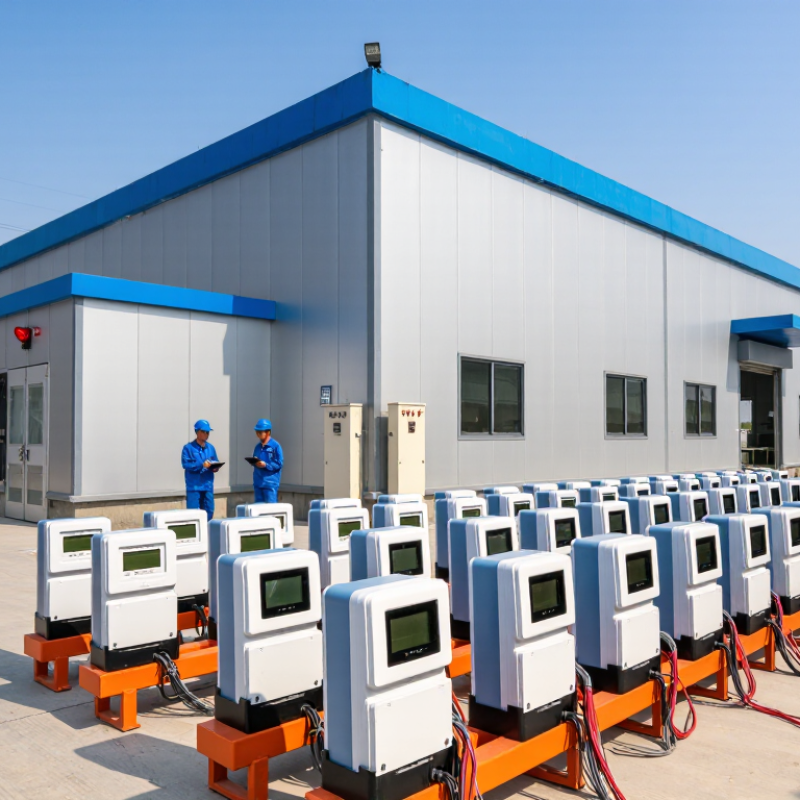
China Best Metering Equipment Manufacturers How to Choose?

Define Metering Equipment Types and Application Requirements

China Best Metering Equipment Manufacturers: How to Choose?

Define the medium before comparing manufacturers. Electricity meters measure consumption, demand, power quality, and sometimes distributed generation. Water meters may use mechanical, ultrasonic, or electromagnetic technology. Gas systems require suitable flow, pressure, temperature, and safety controls. Industrial plants often need mass flow, thermal, or Coriolis meters. Each type solves a different measurement problem.

Application conditions should guide every specification. A residential electricity meter may need remote reading and tamper detection. A water utility may prioritize low-flow accuracy, battery life, and leak alerts. Agriculture deserves special attention. UN-Water reports that farming represents roughly 70% of global freshwater withdrawals. Poor meter selection can therefore create expensive measurement losses. It is easy to over-specify. That also wastes money.

Energy demand makes reliable data more important. The International Energy Agency’s Electricity 2024 report projects global electricity demand growth of about 4% annually through 2026. Buyers should examine accuracy class, operating range, enclosure protection, calibration records, communication protocols, and cybersecurity controls. OIML recommendations and ISO measurement standards provide useful reference points. Ask for test reports, traceability documents, and field performance evidence. A low purchase price is not a complete evaluation. In real installations, network coverage, condensation, vibration, and maintenance access can change results. The specification may still be wrong. Review actual site conditions with the engineering team before selecting a Chinese manufacturer.

The chart compares commonly used electricity metering applications by their typical accuracy class. A lower percentage indicates tighter measurement tolerance and is generally required for higher-value industrial or grid energy transactions. Selection should also consider voltage level, current range, communication protocol, environmental conditions, and applicable IEC or national standards.

Set Technical, Accuracy, and Compliance Criteria

China Best Metering Equipment Manufacturers: How to Choose?

Set technical, accuracy, and compliance criteria before comparing prices. The IEA’s Electricity 2024 report forecasts global electricity demand to grow by an average of 3.4% annually from 2024 to 2026. This growth increases pressure on measurement stability. A suitable manufacturer should provide tested voltage ranges, current limits, communication protocols, operating temperatures, and overload performance. Ask for complete test records, not attractive specification sheets.

Accuracy needs evidence. OIML R 46 defines active-energy meter accuracy classes, including 0.2S, 0.5S, 1, and 2. Select the class according to the application, tariff structure, and risk of revenue loss. IEC 62052-11:2020 covers general requirements for electricity metering equipment, including environmental and electrical tests. Request calibration certificates with traceability, test points at low and high loads, and repeatability results. Field experience matters.

Compliance is not paperwork alone. Check whether the supplier can support type testing, production inspection, software control, sealing, and change management. Also review data protection and firmware update procedures. A factory audit should include the calibration room, aging racks, and rejected-unit records. These details reveal real process discipline. I would not trust one perfect sample. A spreadsheet can still miss temperature drift, wiring errors, or unstable communication. Ask for independent laboratory reports and recent batch data, even when the supplier seems experienced.

Evaluate Chinese Manufacturers’ Expertise and Production Capacity

Choosing a Chinese metering equipment manufacturer requires more than comparing quotations. Expertise appears in daily engineering practices, not polished brochures. Ask how the team handles flow accuracy, pressure changes, temperature compensation, and communication protocols. Request calibration records, test procedures, and examples of corrective actions.

A capable manufacturer should operate a controlled calibration laboratory with traceable instruments. Inspect its incoming material checks, assembly areas, and final inspection stations. Look for serial-number tracking from components to finished meters. Experienced engineers should explain tolerance limits in practical terms. Vague answers deserve caution.

Production capacity also needs physical evidence. Review the number of assembly lines, testing benches, trained operators, and backup equipment. Ask whether the factory can support pilot orders before scaling monthly volume. Check recent delivery records and production schedules. A crowded workshop may indicate strong demand, but it can also create delays.

Visit the facility if possible. Look closely. Observe workplace discipline, component storage, and inspection habits. Capacity is not only machine count. It includes planning, maintenance, supplier coordination, and quality control under pressure. A manufacturer may pass a sample test yet struggle with repeat production. That risk is easy to overlook.

No factory is perfect. The more reliable partner is one that admits weaknesses and documents improvement plans. Still, buyers should verify every claim through samples, audits, and independent testing. Practical evidence remains stronger than confident promises.

China Best Metering Equipment Manufacturers How to Choose? - Evaluate Chinese Manufacturers’ Expertise and Production Capacity

Evaluation Dimension Recommended Reference Benchmark Evidence to Request Why It Matters Suggested Weight
Product Expertise Demonstrated experience with the required meter type, including single-phase, three-phase, smart, prepaid, multifunction, or current-transformer-operated meters. Technical datasheets, circuit diagrams, sample test reports, application references, and product lifecycle records. A manufacturer familiar with the exact application is more likely to manage accuracy, communication, enclosure, and installation requirements correctly. 15%
Applicable Standards The product specification should identify applicable parts of the IEC 62052 and IEC 62053 series. Chinese GB/T 17215 series requirements may also apply to electricity meters supplied in China. Current certificates, laboratory reports, standard editions, and a clause-by-clause compliance matrix. Standards define accuracy, insulation, dielectric strength, electromagnetic compatibility, environmental, and safety requirements. 12%
Quality Management An active ISO 9001 quality management certification issued for the relevant manufacturing site, supported by documented incoming, in-process, and final inspection procedures. Certificate scope, issuing body, validity date, audit status, quality manual extracts, and sample inspection records. A quality system provides controlled procedures for design changes, nonconforming products, traceability, corrective action, and customer complaints. 10%
Production Capacity Capacity should be stated by product model and production line, with separate figures for normal monthly output, maximum monthly output, and available capacity during the requested delivery period. Capacity calculation, line layout, shift pattern, equipment list, recent production records, and planned loading for the next three months. A headline annual capacity can be misleading if the required model, components, testing stations, or production slots are unavailable. 15%
Testing and Calibration Every finished meter should pass documented accuracy and safety tests. Calibration equipment should have traceability to recognized national or international measurement standards; an ISO/IEC 17025-accredited laboratory is a strong additional indicator. Calibration certificates, equipment serial-number records, test-point procedures, uncertainty data, and sample final inspection reports. Reliable test controls reduce measurement errors and help ensure consistent performance across production batches. 12%
Accuracy and Electrical Performance The accuracy class, reference voltage, reference frequency, basic current, maximum current, starting current, power factor range, and applicable accuracy limits must be clearly specified. Type-test reports, accuracy curves, test conditions, meter constant data, and verification records for the requested configuration. Electrical performance depends on the complete configuration and cannot be judged from the accuracy class alone. 10%
Communication and Software For smart meters, the communication interface, protocol, data security functions, firmware version control, time synchronization, and integration method should be defined before ordering. Communication protocol documents, API or interface specifications, interoperability test results, cybersecurity procedures, and firmware change records. A compliant meter may still fail operationally if its protocol, data format, or management platform cannot integrate with the buyer’s system. 8%
Environmental and Safety Performance The datasheet should define operating temperature, storage temperature, humidity, altitude, enclosure protection, insulation, surge immunity, and electromagnetic compatibility requirements. Ingress protection claims should reference IEC 60529 where applicable. Environmental test reports, IP test reports, EMC reports, insulation test records, and installation instructions. Meters installed outdoors, in industrial environments, or in unstable power networks require verified environmental and safety margins. 7%
Supply Chain and Traceability Critical components should have approved suppliers, incoming inspection, lot traceability, and an alternative-source plan for components with long lead times. Approved supplier list, component specifications, incoming inspection records, batch coding method, and continuity plan. Stable component control helps prevent changes in accuracy, communication performance, enclosure quality, and delivery reliability. 6%
Lead Time and Delivery Control The supplier should provide separate lead times for engineering samples, pilot production, first mass-production order, repeat orders, and customized configurations. Production schedule, order milestone plan, delivery performance records, packaging specifications, and escalation procedure. A realistic schedule exposes bottlenecks in tooling, component procurement, testing, approvals, and export documentation. 3%
Export and Regulatory Readiness For overseas projects, the manufacturer should identify the destination-market requirements. CE marking, RoHS, or EU Measuring Instruments Directive requirements may apply depending on the product and application; they should not be treated as interchangeable certificates. Market-specific declarations, conformity assessment documents, packing lists, customs data, user manuals, and previous export documentation with confidential information removed. Correct regulatory documentation reduces customs, installation, tender, and market-entry risks. 4%
Customization and Technical Support The supplier should define which changes are standard configuration options and which require engineering validation, tooling, software changes, or a new compliance assessment. Engineering organization chart, change-control procedure, sample approval process, warranty terms, spare-parts policy, and service response targets. Clear change control prevents unapproved modifications from affecting certification, interoperability, safety, or accuracy. 3%
Total Evaluation Weight 100%

Note: The benchmarks above are procurement reference criteria rather than claims about any individual manufacturer. All certificates, capacities, test results, and delivery commitments should be independently verified for the specific factory and product configuration.

Compare Quality Control, Customization, Pricing, and Delivery

Choosing China’s metering equipment manufacturers requires more than comparing catalog prices. Quality control should begin with incoming component inspection and continue through calibration. Ask for traceable test records, sampling plans, and serial-number control. IEC 62052-11 and IEC 62053 provide useful technical baselines. ISO 9001 certification helps, but it does not replace factory evidence.

The International Energy Agency’s Electricity 2024 report forecasts global electricity demand growth of about 3.4% annually through 2026. This makes stable accuracy and repeatable production increasingly important.

Request samples from different production lots. One perfect sample proves little.

Customization affects more than the enclosure. Confirm communication protocols, display language, firmware functions, sealing design, and certification needs before signing. A practical quote should separate tooling, engineering, testing, packaging, and spare parts. Cheap is not always cheap.

Delivery terms should include production milestones, factory acceptance testing, shipping documents, and a recovery plan for delays. The World Bank’s 2023 Logistics Performance Index evaluates customs, infrastructure, shipment arrangements, logistics competence, tracking, and timeliness. Ask suppliers for evidence across these areas.

No factory is perfect. My concern would be an impressive presentation with weak records. Compare total landed cost, not only the unit price. Allow time for pilot testing, because rushed approval can create expensive field problems.

Verify Certifications, Support Services, and Long-Term Reliability

Choosing metering equipment requires more than comparing prices and measurement ranges. During field evaluations, engineers often inspect certification files before testing hardware. Ask for certificate numbers, issuing laboratories, test dates, and covered product models. Confirm that the certification matches your voltage, current, accuracy, and installation conditions. A printed logo proves little. Independent calibration reports and traceable test records offer stronger evidence. Standards can differ between markets, so local compliance must be checked carefully.

Support services reveal a manufacturer’s practical reliability. Request response times, spare-part availability, firmware policies, and technician training details. A dependable supplier should explain installation, communication settings, and troubleshooting procedures clearly. Ask whether remote assistance and on-site service are available after the warranty ends. In one assessment, the equipment performed well, but unclear documentation delayed commissioning. That weakness changed the final evaluation. Long-term reliability also depends on enclosure quality, temperature tolerance, data security, and stable software updates. No supplier is perfect; review failure records and maintenance feedback honestly.

Tips: Ask for a sample inspection report. Speak with users who have operated the meters for several years. Check whether support staff understand your industry, not only the product manual. Compare promised service levels with written contracts. Leave room for uncertainty, because laboratory performance may not match dusty sites, unstable power, or rushed installations.

123