How to Choose a Single Pole Transformer in 2026?
Choosing a Single Pole Transformer in 2026 requires more than matching voltage and kVA. The pole, feeder, climate, and customer load must work together. A unit that looks correct on paper may overheat beside a dusty roadside cabinet.
Dr. Juan C. Olivares-Galván, a recognized transformer researcher, offers a practical principle: “A transformer must be selected for the system, not merely for its load.” That idea should guide every decision. Check the primary voltage, secondary voltage, frequency, impedance, insulation level, and available fault current. Confirm the expected demand, motor-starting current, and future load growth. A small margin is useful. An oversized unit can also create unnecessary cost and poor operating efficiency.
Site conditions matter.
Review ambient temperature, altitude, salt exposure, rainfall, wildlife risk, and grounding quality. Confirm the enclosure and bushing arrangement before ordering. In 2026, buyers should also request verified efficiency data, digital test records, traceable materials, and clear maintenance instructions. These details support reliability and supplier accountability.
My own assessment would not treat a catalog sheet as final evidence. Manufacturer claims still need comparison against applicable utility specifications and recognized standards. A neat calculation can hide an incorrect demand profile. That is where careful review matters. The best Single Pole Transformer is not simply the cheapest or largest option. It is the unit that safely fits the network today, tolerates realistic growth, and remains serviceable years after installation.
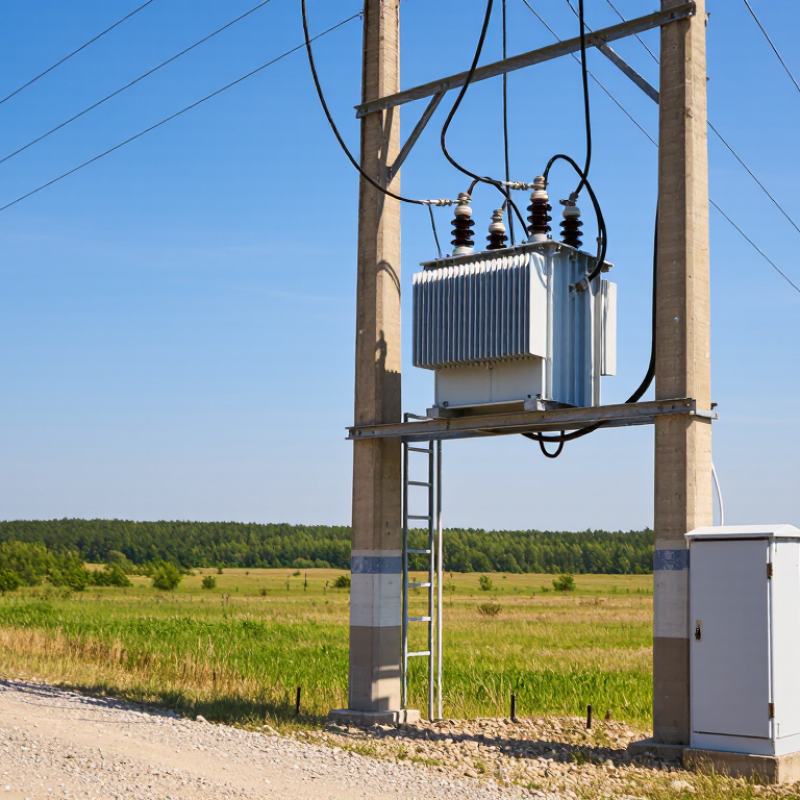
Classify Single-Pole Transformers Under IEC 60076 and IEEE C57.12
How to Choose a Single Pole Transformer in 2026?
A single-pole transformer usually means a single-phase, pole-mounted distribution transformer. However, the term is not a complete technical classification. Confirm the phase arrangement, mounting position, insulation system, and service conditions before comparing models.
IEC 60076 classifies transformers through a series of standards, rather than one single-pole category. Check the applicable part for power transformers, liquid-immersed units, dry-type construction, temperature rise, insulation levels, and routine tests. Record the rated power, primary and secondary voltage, frequency, vector relationship, tap range, and cooling method. Outdoor exposure also requires careful review of enclosure protection, oil containment, and bushing clearances.
IEEE C57.12 provides complementary requirements for North American distribution practice. C57.12.00 covers general requirements for liquid-immersed transformers, while related standards address dry-type units, accessories, and specific distribution designs. Compare impedance, lightning impulse withstand, sound level, short-circuit strength, and grounding arrangements. These details affect both protection coordination and installation space.
Do not select by voltage alone. A 25 kVA unit may suit a small rural load but fail under motor starting current. I have seen specifications overlook altitude correction and unbalanced loading. That mistake becomes expensive. Ask the supplier to state the exact IEC 60076 part or IEEE C57.12 document used, test conditions, tolerances, and acceptance criteria. Some specifications remain unclear, even after technical review.
Calculate Demand in kVA and Select 5–167 kVA Standard Ratings
How to Choose a Single Pole Transformer in 2026?
Choosing a single pole transformer starts with a realistic demand calculation. List every load, including lighting, motors, heaters, controls, and future equipment. Record each load in watts or volt-amperes, then convert watts to kVA when power factor matters. The basic formula is kVA = volts × amps ÷ 1,000. Do not simply add every nameplate rating. Apply suitable demand factors and consider motor starting current. Real sites are rarely tidy. In field reviews, measured demand often differs from the original schedule.
After calculating demand, select the next standard rating above the expected peak. Common ratings include 5, 10, 15, 25, 37.5, 50, 75, 100, and 167 kVA. For example, a calculated demand of 42 kVA usually points toward a 50 kVA transformer. A 5 kVA unit may suit a small control or lighting load, while 167 kVA can support larger distributed demand. Check primary voltage, secondary voltage, frequency, phase arrangement, impedance, temperature rise, and available fault current. Local utility requirements and electrical codes still control the final choice.
Tips: Leave practical capacity for measured growth, but avoid excessive oversizing. Large unused capacity can increase cost and reduce operating efficiency. Verify voltage with qualified personnel and review conductor size, protection, grounding, and installation clearance. A 25% margin may be reasonable, but it is not universal. I would recheck unusual loads, especially welders, pumps, and compressors, before approving the rating.
Match 2.4–34.5 kV Primary Voltage, Secondary Voltage, and Taps
How to Choose a Single Pole Transformer in 2026?
Choosing a single pole transformer starts with the primary voltage, not the catalog image. Confirm whether the system operates at 2.4, 4.16, 7.2, 12.47, 13.8, 24.9, or 34.5 kV. The transformer’s rated primary voltage must match the actual line configuration and insulation requirements. Check phase-to-ground voltage carefully. A small misunderstanding here can damage equipment or create unsafe operating conditions.
Then define the secondary voltage needed by the load. Common options include 120/240 V, 240/480 V, and other site-specific values. Measure expected demand, motor starting current, and future load growth. A transformer that looks adequate today may run hot after one new pump is added. It happens. Select the kVA rating with realistic load data, not guesswork. Also verify frequency, connection type, grounding method, and required temperature rise.
Taps help correct moderate primary-voltage variation. They do not replace proper system design. Compare the available tap range, such as ±2.5% or ±5%, with measured voltage conditions. Tap positions must suit the utility’s operating practice and the transformer’s no-load adjustment method. I once saw a selection based only on the nominal 12.47 kV value; field measurements later showed persistent overvoltage. That choice needed revision. Review the nameplate, technical drawings, short-circuit duty, and applicable electrical standards with a qualified engineer before ordering.
How to Choose a Single Pole Transformer in 2026?
Match the primary voltage, secondary voltage, and available tap range before selecting a single-phase pole-mounted transformer.
The chart compares common primary distribution voltages from 2.4 to 34.5 kV with typical low-voltage secondary systems and representative off-circuit tap ranges. Actual voltage, grounding, phase configuration, and tap requirements must be confirmed with the local utility and applicable electrical standards.
Compare Oil-Filled Safety, Environmental, and Installation Requirements
Choosing a single pole transformer in 2026 requires more than checking voltage and kVA. Oil-filled units often provide strong cooling and compact installation. Yet leaked oil can contaminate soil and drainage systems. The U.S. Environmental Protection Agency identifies 50 ppm PCB concentration as a key compliance threshold under its transformer guidance. Specify PCB-free insulating fluid and request laboratory test records. Do not rely on a verbal supplier statement.
Efficiency also affects long-term safety and cost. The U.S. Department of Energy’s 2024 transformer rule estimates 3.6 quadrillion Btu in energy savings over thirty years. That figure shows why no-load losses deserve attention, even on lightly loaded rural poles. Review core-loss data, load-loss data, and guaranteed test tolerances. A cheaper purchase can become an expensive mistake.
Installation conditions need equal discipline. IEEE C57.12.00 and IEC 60076-1 provide useful performance frameworks, but local electrical codes control final placement. Confirm pole loading, climbing space, grounding, conductor clearance, and public-access risks. NFPA 70 requirements can change with site voltage and equipment arrangement. Ask for a site-specific drawing. Small details matter. I would also inspect oil temperature indicators and pressure-relief provisions before energizing; assuming every standard arrangement fits every pole is an avoidable weakness.