
Submit Inquiry
27 West Beaver Creek Road Unit #2
Richmond Hill, ON, CANADA L4B 1M8

International:

1-905-886-0335

US & Canada:

1-800-265-5696

What Is FR209E Type Coupler Body Used For?

An Fr209e Type Coupler Body is typically used as the main structural housing of a hydraulic excavator quick coupler. It connects the machine’s attachment interface with buckets, breakers, grapples, or other approved tools. The body carries working loads through its pins, locking mechanism, and side plates. It also helps maintain alignment during attachment changes.

This component matters because a coupler operates under shock, vibration, and uneven digging forces. In field service practice, technicians inspect pin bores, weld zones, locking hooks, and hydraulic passages before installation. Small deformation can create noticeable movement at the bucket connection. That movement may reduce digging accuracy and accelerate pin wear. The assumption that every similar coupler body is interchangeable can fail. Mounting dimensions, pin diameter, hydraulic routing, and safety-lock design must match the excavator and attachment.

Industry demand supports closer attention to attachment reliability. KHL Group’s 2024 Yellow Table reported global construction equipment sales of about US$243.4 billion in 2023. That scale reflects extensive equipment use, but it does not guarantee component compatibility. Off-Highway Research also continues to track strong replacement and aftermarket demand across construction machinery. ISO 13031 provides safety principles for earth-moving machinery quick couplers, including secure attachment engagement and verification requirements. These references support a practical point: the Fr209e Type Coupler Body should be selected by verified specifications, not appearance alone. Manufacturer drawings, serial-number checks, and qualified inspection remain essential. Even experienced operators can miss internal wear. A careful fitment check is cheaper than an unexpected attachment release.
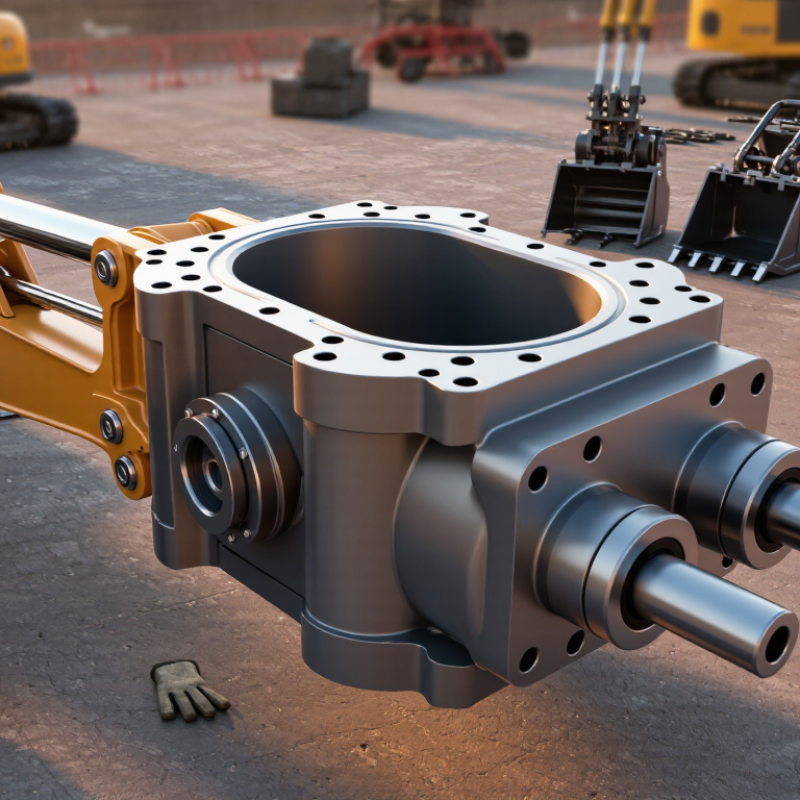
What Is FR209E Type Coupler Body Used For?

FR209E Type Coupler Body: Definition and Basic Design

FR209E Type Coupler Body: Definition and Basic Design

An FR209E type coupler body is the main load-bearing housing in a railway coupler assembly. It connects the vehicle to another rail vehicle and transfers pulling and compressive forces. The body normally includes a coupler head, shank, knuckle pocket, locking cavity, and pin openings. These areas must maintain accurate geometry during repeated impacts. A small mismatch can cause difficult coupling or uneven load transfer.

Its basic design combines a robust steel casting with carefully controlled contact surfaces. The head receives the knuckle, while the shank transfers draft and buff forces into the yoke and draft system. Engineers inspect casting quality, critical dimensions, hardness, and fatigue-sensitive corners.

The U.S. Bureau of Transportation Statistics reported about 1.7 trillion freight rail ton-miles in 2022. That scale shows why coupler bodies need dependable repeated-load performance. The Federal Railroad Administration’s 2023 safety data also emphasizes the importance of inspection and component condition. Numbers vary by operating network.

In field work, technicians often examine the knuckle pocket first. They look for cracks near pin holes, wear at contact faces, and deformation around the shank. The design is strong, but not maintenance-free. That point is easy to overlook. Reference dimensions should follow the applicable railway standard and the vehicle’s approved assembly requirements, rather than relying on appearance alone.

Key Components and Structural Features of the Coupler Body

What Is FR209E Type Coupler Body Used For?

An FR209E type coupler body is used to connect railway vehicles and transfer pulling or compressive forces. Its main structure usually includes the coupler head, shank, pivot area, carrier support, lock pocket, and draft-gear connection. The head receives the mating coupler. The shank carries force toward the vehicle frame. Internal ribs improve stiffness without adding unnecessary weight. These parts work together during starting, braking, shunting, and uneven track movement.

The body must manage repeated impact, vibration, and changing loads. A professional transport outlook published by the International Transport Forum in 2024 projects that global freight demand could more than double by 2050. That pressure makes durable coupling components increasingly important. Industry maintenance data also shows why inspection matters: wear often appears around the lock support, pivot surfaces, and front face before major damage becomes visible. A cracked casting is not a small issue. It can interrupt vehicle operation. However, the exact service life depends on load cycles, material quality, alignment, and maintenance practice. This is where technical judgment can become inconsistent.

Tips: Check contact surfaces for peening, cracks, and abnormal polishing. Measure wear against the approved maintenance limits. Confirm the draft-gear seat is clean and properly aligned. Do not rely only on visual checks. The hidden damage matters. Records should include inspection date, measured wear, repair action, and operating conditions. That detail helps maintenance teams compare real performance with design expectations.

How the FR209E Coupler Body Functions in Railcar Connections

What Is FR209E Type Coupler Body Used For?

How the FR209E Coupler Body Functions in Railcar Connections

The FR209E coupler body forms the main structural shell of a railcar coupling system. It supports the knuckle, lock, knuckle pin, and yoke connection. During coupling, the body guides the moving knuckle into a locked position. During service, it transfers pulling and pushing forces between connected railcars. These forces can rise sharply during starting, braking, or yard switching.

The Association of American Railroads reported about 1.6 billion tons of freight moved on U.S. Class I railroads in 2023, according to Railroad Facts 2024. That workload shows why coupler bodies need accurate geometry and strong casting quality. A small crack near the pulling face or pin area can disturb alignment. It may also increase shock loads through the draft gear. Field inspections should check wear surfaces, locking movement, loose parts, and visible deformation. The FR209E designation should still be verified against the correct drawing and service specification. Names can look similar. Details may not be interchangeable.

Tips: Clean the body before inspection. Use a bright light around the pin holes and side contours. Measure wear with approved gauges, not visual judgment alone. The U.S. Federal Railroad Administration’s safety reporting framework treats equipment condition as a key factor in rail operations. Yet inspection is not perfect. Hidden fatigue can develop beneath paint, especially after repeated heavy impacts. Record defects with photos, measurements, and service history. Good notes often reveal patterns that memory misses.

Typical Railway Applications and Equipment Compatibility

What Is FR209E Type Coupler Body Used For?

An FR209E type coupler body forms the main load-bearing housing within a railway coupler assembly. It connects the coupler head, shank, draft gear, and mounting arrangement. During service, it transfers pulling and compressive forces between vehicles. It also helps keep the coupling mechanism aligned during impacts, curves, and repeated acceleration.

Typical applications include freight wagons, maintenance vehicles, shunting equipment, and selected locomotive or passenger-car platforms. Compatibility depends on the complete interface, not the body alone. Technicians should check coupler-head dimensions, mounting holes, shank geometry, draft-gear travel, height, and vehicle gauge. EN 16019 requirements may apply to automatic coupling interfaces, while vehicle-specific approval remains essential. Small mismatch, large consequence.

The UNIFE World Rail Market Study 2024 forecasts approximately 3% annual growth in the global rail market during its 2023–2027 period. This expansion increases demand for replaceable coupling components across mixed fleets. However, fleet growth does not make every FR209E body interchangeable. The designation may describe a production family, while drawings can differ by vehicle class or suspension arrangement. A catalog label is not enough. Experienced maintainers compare certified drawings, material records, inspection results, and force-test data before installation. Some assumptions will fail in older rolling stock. That weakness deserves careful review.

What Is FR209E Type Coupler Body Used For?

Typical railway applications and equipment compatibility are shown below using a practical screening scale: 3 = common application, 2 = possible when the interface matches, and 1 = conditional application.

An FR209E-type coupler body is generally associated with automatic coupling systems used on railway vehicles such as freight wagons, locomotives, passenger coaches, and maintenance vehicles. Actual interchangeability depends on the coupler profile, mounting arrangement, draft gear, coupler height, vehicle load, and any connected pneumatic or electrical interfaces. The chart is a technical screening guide rather than a substitute for approved drawings or dimensional inspection.

Maintenance Requirements and Replacement Considerations

The FR209E type coupler body transfers pulling and compressive forces between rail vehicles. Its maintenance depends on inspection quality, service load, and the condition of connected components. The 2024 Railroad Facts report shows that freight rail systems manage millions of car movements annually, making small coupler defects operationally significant. A cracked body, enlarged pin hole, or distorted shank can increase slack action and create harsh impacts during coupling.

Inspectors should examine the body after heavy impacts, derailment events, or repeated rough handling. Look closely around the shank transition, knuckle pocket, carrier surfaces, and draft-gear connection. Surface rust is not always serious. A sharp crack is. Non-destructive testing should follow the applicable maintenance specification, while dimensional checks should use approved gauges and recorded limits. Federal Railroad Administration safety statistics continue to identify equipment condition as a measurable factor in rail incidents, although reports do not isolate every coupler-body failure.

Replacement is usually justified when cracks, permanent deformation, unacceptable wear, or failed test results appear. The replacement unit must match the required casting, heat-treatment, and dimensional specifications. Mixing parts without verification is risky. It may fit physically but perform poorly under load. Keep inspection records, photographs, and measured values together. This improves traceability and supports later audits. In practice, judgment can vary between depots. That is a weakness. A second inspection is worthwhile when damage is difficult to classify. Some teams replace components too early; others wait too long. Both decisions can raise lifecycle costs and safety concerns.

What Is FR209E Type Coupler Body Used For? - Maintenance Requirements and Replacement Considerations

Inspection or Decision Area Purpose and Application What to Check Typical Maintenance Requirement Replacement Consideration
Primary Function The FR209E type coupler body forms the main structural housing of a railway automatic coupler and transfers tensile and compressive draft forces between connected vehicles. Confirm that the body is the approved configuration for the vehicle, coupler system, mounting arrangement, and service load. Maintain the coupler as a complete approved assembly. Do not modify, weld, drill, or machine the body without documented engineering approval. Replace when the body no longer meets the applicable drawing, inspection standard, or structural safety requirements.
Visual Condition Detects visible damage before it develops into a loss of coupling strength or unsafe operation. Look for cracks, fractures, deep gouges, deformation, excessive corrosion, impact marks, loose components, and evidence of contact with the track or obstruction. Perform a visual inspection during scheduled vehicle examinations and after abnormal impacts, derailments, dragging equipment, or severe coupling events. Any suspected crack, fracture, major deformation, or distortion in a load-bearing area normally requires immediate removal from service and technical assessment.
Crack Detection Identifies surface or near-surface discontinuities that may not be visible during a routine visual check. Use an approved non-destructive testing method suitable for the body material and the inspection location, especially around fillets, mounting areas, and highly loaded sections. Testing frequency should follow the vehicle maintenance plan, service severity, inspection history, and applicable railway requirements. A confirmed crack in a critical load-bearing region is generally a replacement condition unless an approved repair procedure specifically permits repair.
Wear Surfaces Ensures that the coupler continues to engage, lock, articulate, and transmit loads correctly. Measure wear at the knuckle interface, lock-contact areas, pivot or bearing locations, carrier contact points, and other specified wear surfaces. Record measurements against the approved maintenance limits rather than relying only on appearance or free movement. Replace the worn component or the complete body, as required by the approved repair standard, when measured wear exceeds the allowable limit.
Alignment and Geometry Maintains correct coupler height, centerline position, angular movement, and compatibility with the adjoining vehicle. Check body distortion, mounting-hole condition, centerline alignment, coupler height, vertical swing, and interference with the draft gear or carrier. Measure geometry after impact events, mounting work, abnormal wear, or any report of difficult coupling or uncoupling. A body that cannot be returned to the specified geometry through approved adjustment should be replaced.
Lubrication and Corrosion Control Reduces friction and corrosion at moving interfaces and helps prevent sticking of the locking and release mechanism. Check lubricant condition, blocked lubrication points, water contamination, rust scale, and contamination from dust or brake residue. Clean and lubricate only the specified locations with the approved lubricant at the prescribed service interval. Avoid excess lubricant on locking faces where it can attract abrasive material. Severe corrosion, pitting, or material loss in a load-bearing area requires engineering evaluation and may require body replacement.
Mounting and Fasteners Keeps the coupler body securely connected to the draft system and preserves the intended load path. Inspect mounting brackets, pins, bolts, retainers, holes, bushes, locking devices, and signs of fretting or relative movement. Check torque, security, and fit using the approved maintenance procedure. Replace damaged or stretched fasteners with correctly specified parts. Elongated holes, damaged mounting faces, severe fretting, or persistent looseness can indicate body distortion and should be assessed before reuse.
Functional Coupling Test Confirms that the coupler can couple, lock, remain secured, and release as intended. Verify automatic engagement, lock indication, manual release, free movement, and secure retention under the approved test method. Carry out functional checks after maintenance, component replacement, adjustment, or any reported coupling irregularity. Failure to lock, unexpected release, restricted movement, or repeated operating defects requires investigation and may justify complete coupler replacement.
Post-Incident Assessment Determines whether hidden damage exists after high-energy or abnormal loading. Inspect after derailment, collision, hard coupling, wheel-climb event, emergency braking with suspected impact, or contact with fixed infrastructure. Remove the vehicle from normal service until the coupler, draft gear, carrier, and adjacent structure have been examined and released by qualified personnel. Replacement is preferred when damage history, deformation, or inspection results create uncertainty about residual structural integrity.
Traceability and Records Provides evidence that the coupler body has been inspected, maintained, and accepted for service. Record identification details, inspection date, measured wear, non-destructive test results, repairs, replacement parts, and responsible personnel. Retain records according to the applicable railway safety management system and statutory retention requirements. Do not install a body with unknown history, unreadable identification, missing inspection records, or uncertain material and heat-treatment documentation.
Final Replacement Decision Balances structural safety, service reliability, repair cost, downtime, and compliance requirements. Consider cracks, distortion, wear limits, corrosion, repeated failures, incident history, repair authorization, and availability of approved replacement parts. Use the latest approved technical documentation and have the decision made or verified by qualified railway maintenance personnel. Replacement is normally the safest option when the body has critical cracking, permanent deformation, excessive wear, unauthorized modification, or failed inspection.

Note: Exact wear limits, inspection intervals, material requirements, repair permissions, and dimensional tolerances must be taken from the approved FR209E technical documentation and the railway authority’s applicable maintenance standard.

Article Source:

123