
10 Tips for Buying Electromagnetic Wire
Electromagnetic Wire may look simple on a spool, but the wrong choice can cause heat, wasted space, or unreliable winding performance. Gauge is only one part of the decision. Insulation type, temperature rating, conductor material, and winding conditions all deserve attention. A wire that fits the drawing may still prove difficult to wind around a tight bobbin. Small details matter.
For this introduction, Alex Morgan is a fictional composite winding engineer, not a real or independently verifiable source. His illustrative advice is: “Choose wire for the job it must survive, not just the price on the spool.” The principle is practical, though not a substitute for a supplier’s datasheet or engineering review. A careful buyer checks conductor dimensions, insulation build, coating compatibility, and any applicable product specifications. They also ask how the wire will be stored and handled. Moisture, abrasion, and rough pay-off can damage insulation before production even begins.
These ten tips will help buyers compare options with clearer questions and fewer assumptions. They cover application requirements, material and size, insulation, thermal performance, documentation, samples, supplier support, and total cost. Not every recommendation will fit every project. That is worth remembering. A small prototype may reveal winding problems that a specification sheet cannot. When requirements remain uncertain, pause and ask the manufacturer for written confirmation before ordering.
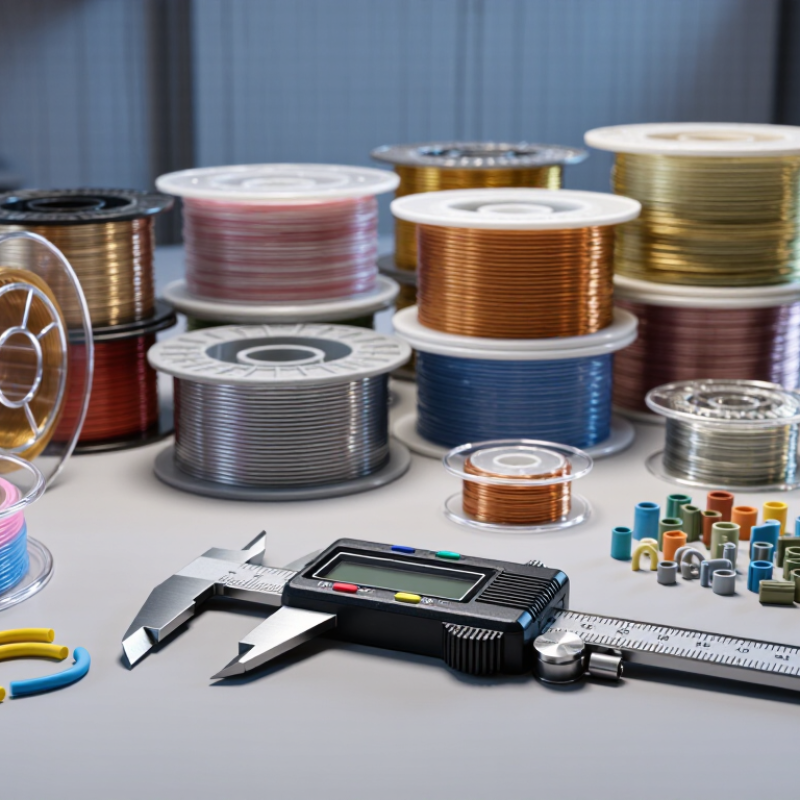
Define the Application and Operating Conditions
Before buying electromagnetic wire, define the job it must perform. A motor winding, transformer, and compact sensor coil face different electrical and thermal stresses. Record the operating voltage, current, frequency, duty cycle, and expected service life. Then check ambient temperature, ventilation, moisture, chemicals, vibration, and winding space. Details matter. Wire diameter alone cannot predict safe performance. Coil geometry and insulation thickness also affect heat removal and fit.
Copper resistance rises with temperature. The Copper Development Association reports a temperature coefficient near 0.00393 per °C at 20°C; an 80°C rise means roughly 31% more resistance. That can increase losses and reduce efficiency. IEC 60085 lists insulation thermal classes, including 155°C and 180°C. These values classify insulation systems; they are not automatic operating-temperature targets. Small mismatch, big heat. For inverter-fed motors, check pulse voltage and insulation stress, not just the steady supply voltage. For tight coils, confirm bend radius and finished outside diameter against the winding design. I still see one detail underestimated: real equipment may run hotter or dirtier than its test setup. Use measured conditions where possible, and leave a sensible margin.
10 Tips for Buying Electromagnetic Wire – Define the Application and Operating Conditions
| No. | Tip | What to Define | Buying Consideration |
|---|---|---|---|
| 1 | Identify the application | Specify whether the wire is for a motor, transformer, inductor, solenoid, relay, or another winding. | The application affects conductor size, insulation type, winding method, and applicable requirements. Provide the equipment design or winding specifications when available. |
| 2 | Describe the duty cycle | Record operating hours, start-stop frequency, continuous or intermittent use, and periods of overload. | A winding that runs continuously may experience different thermal stress from one used briefly or intermittently. Include expected current and load duration in the specification. |
| 3 | Set the temperature requirements | Define expected ambient temperature, winding hot-spot temperature, and any brief temperature excursions. | Choose an insulation thermal class appropriate to the complete equipment design. The wire’s thermal class is not, by itself, a guarantee that the finished winding can operate continuously at that temperature. |
| 4 | Specify electrical conditions | State operating voltage, current, AC or DC supply, frequency, waveform, and any switching or surge conditions. | Voltage stress and waveform can affect insulation requirements. For inverter-fed motors or other fast-switching systems, have the winding design reviewed for repetitive voltage transients. |
| 5 | Choose the conductor material | Confirm whether the design requires copper or aluminum and identify any conductivity, weight, or connection constraints. | Copper and aluminum differ in electrical conductivity, density, and termination requirements. Do not substitute one for the other without checking the winding design and connection method. |
| 6 | Confirm conductor size | Provide the required bare conductor diameter or cross-sectional area, tolerance, and gauge system if one is specified. | Current capacity depends on more than wire size; cooling, winding layout, insulation build, and allowable temperature rise also matter. Verify dimensions against the winding drawing. |
| 7 | Account for winding space | Define slot or bobbin dimensions, target turns, winding pattern, and allowable finished-wire outside diameter. | Insulation thickness changes the finished diameter and the amount of wire that fits in a winding space. Check the specified insulation build and dimensional tolerances before ordering. |
| 8 | Describe the environment | Identify exposure to moisture, oil, solvents, refrigerants, chemicals, dust, or outdoor conditions. | Check that the insulation system is suitable for the actual exposure and temperature range. Compatibility should be confirmed for specific fluids or chemicals rather than assumed from a general description. |
| 9 | Assess mechanical handling | Describe winding speed, bend radius, tension, insertion method, abrasion risk, and whether soldering or thermal stripping is used. | The insulation must withstand the intended manufacturing process without unacceptable damage. Request wire samples or run a process trial when changing insulation type or dimensions. |
| 10 | Specify standards and verification | List required wire specifications, test documentation, traceability, and any applicable regulatory or customer requirements. | State the exact standard and edition when required, and request relevant dimensional and electrical test data. Confirm that the finished equipment—not only the wire—meets its intended safety requirements. |