
Submit Inquiry
27 West Beaver Creek Road Unit #2
Richmond Hill, ON, CANADA L4B 1M8

International:

1-905-886-0335

US & Canada:

1-800-265-5696

Top 10 Tips for Concrete Batching Plant Maintenance to Save Costs

In the world of construction, maintaining a Concrete Batching Plant is crucial for efficiency and cost savings. According to John Smith, a leading expert in Concrete Batching Plant Maintenance, “Regular maintenance is not an expense; it's an investment in longevity.” His insight emphasizes the importance of keeping machinery in top condition.

Effective Concrete Batching Plant Maintenance can significantly reduce operational costs. Neglecting this aspect may lead to unexpected breakdowns and expensive repairs. By regularly servicing equipment, you minimize downtime and ensure consistent production. Moreover, routine checks help identify potential issues before they escalate.

Focusing on maintenance allows plants to operate smoothly. However, many operators overlook simple tasks. Cleaning mixers and calibrating equipment are often ignored. This negligence can lead to increased wear and tear. Thus, it's vital to adopt a proactive maintenance approach. It’s about being diligent and attentive to detail. Keeping your Concrete Batching Plant in optimal condition pays off in the long run.
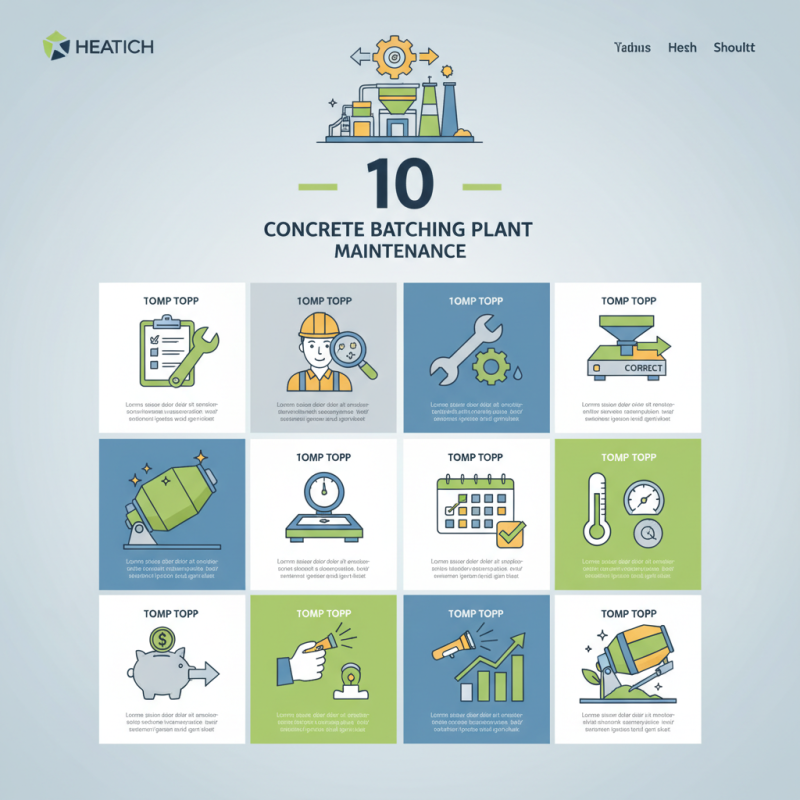
Top 10 Tips for Concrete Batching Plant Maintenance to Save Costs

Essential Routine Inspections to Ensure Optimal Plant Performance

Regular inspections are crucial for maintaining optimal performance in concrete batching plants. According to the National Ready Mixed Concrete Association, routine maintenance can decrease downtime by up to 20%, significantly reducing operational costs. One essential aspect is checking the calibration of your scales. Inaccurate measurements can lead to costly material waste. A simple scale check every two weeks can improve material efficiency.

Another critical inspection point is the mixer. Wear and tear on blades can affect mix quality. Studies have shown that a worn-out mixer can reduce the performance of a batch by 5 to 10%. It is advisable to conduct a visual inspection weekly. Look for cracks or signs of wear. Regular lubrication can also prevent premature wear and improve longevity.

Furthermore, the importance of regularly checking dust collection systems cannot be overlooked. Inefficient systems lead to material loss and safety concerns. According to industry reports, poor dust control can result in a 15% increase in operating costs. A monthly inspection can spot leaks early and save expenses in the long run. Every inspection provides a chance to reflect on current practices and identify areas for improvement.

Top 10 Tips for Concrete Batching Plant Maintenance

Key Maintenance Practices to Extend Equipment Lifespan

Regular maintenance is essential for extending the lifespan of concrete batching plants. Equipment degradation can occur without proper care. Issues like wear and tear can lead to costly repairs and downtime. Ignoring minor problems can escalate into major failures.

Conducting daily inspections can help catch problems early. Check for leaks, strange noises, or vibrations. Regularly cleaning parts reduces the build-up of dust and debris. This simple action can improve performance and reliability. Encourage operators to report any anomalies immediately. Open communication prevents extensive damage.

Moreover, investing in training for your staff is crucial. Knowledgeable employees can identify maintenance needs before they become serious. Consider implementing a structured maintenance schedule. This can include routine checks, part replacements, and lubrication. Keeping accurate records of maintenance activities can also highlight recurring issues. This helps refine your maintenance strategy over time.

Top 10 Tips for Concrete Batching Plant Maintenance to Save Costs - Key Maintenance Practices to Extend Equipment Lifespan

Tip Number Maintenance Tip Expected Cost Savings Frequency of Maintenance Impact on Equipment Lifespan
1 Regularly inspect and clean aggregate bins Up to 15% Monthly Increases lifespan by 2-3 years
2 Lubricate moving parts regularly 10% Weekly Enhances performance, extends by 1-2 years
3 Monitor and adjust calibration 15-20% Every 2 weeks Improves accuracy, increases lifespan by 1 year
4 Inspect and maintain the mixer 20% Monthly Lifespan extension by 2-4 years
5 Maintain proper water supply 5-10% Daily Prevents damage, extends lifespan by 1 year
6 Check for wear on belts and hoses 15% Weekly Extends equipment by 2 years with early replacement
7 Inspect electrical systems regularly 10-15% Monthly Increases equipment reliability, extends lifespan by 2 years
8 Keep the working area clean 5% Daily Prolongs equipment usage life by reducing risks
9 Conduct regular training for operators 20% Annually Improves operational efficiency, extends lifespan
10 Document maintenance procedures and history 10% Ongoing Improves tracking, extends equipment life by 1 year

Cost-effective Upgrades for Improved Batching Efficiency

When it comes to maintaining a concrete batching plant, cost-effective upgrades can significantly enhance batching efficiency. Investing in high-quality sensors can streamline operations. These sensors enable real-time monitoring of material flow and equipment performance. According to the Concrete Plant Manufacturers Bureau, timely upgrades can improve production efficiency by up to 30%.

Routine inspection of electrical components is essential. Faulty wiring or outdated systems can lead to unexpected downtimes. The National Ready Mixed Concrete Association suggests that electrical maintenance can reduce energy costs by as much as 15%. Regularly updating these systems not only enhances efficiency but also lowers long-term operational costs.

Additionally, operators should consider enhancing aggregate handling systems. Implementing better conveyors can increase material transportation speed and accuracy. Data indicates that improved aggregate handling can result in higher mix uniformity and reduced wastage. However, these upgrades require careful planning to avoid disruptions in existing workflows. Balancing efficiency with operational continuity is critical in these enhancements.

Common Issues in Concrete Batching Plants and Their Solutions

Concrete batching plants face common issues that can seriously impact productivity and costs. A frequent problem is equipment wear and tear. Over time, components such as mixers and conveyor belts can degrade. Regular inspection and timely replacement can help prevent costly downtimes. Operators should check for signs of wear to avoid surprises down the line.

Another common issue is inconsistent mixing. This can lead to product quality problems and project delays. Ensuring the correct calibration of scales and mixers is key. Operators should regularly review the mixing process to ensure materials are blended properly. Minor adjustments can often solve major problems.

Dust control is also essential. Excess dust can cause environmental issues and damage machinery. Implementing effective dust suppression techniques can reduce maintenance costs. Regular cleaning schedules are vital. Revisiting equipment maintenance strategies can reveal overlooked issues and enhance overall plant performance.

Training Staff for Better Equipment Handling and Maintenance

Training staff is crucial for effective equipment handling in a concrete batching plant. Well-trained employees can identify potential issues before they escalate, thus preventing costly downtime. According to the National Ready Mixed Concrete Association, maintaining high-quality training programs can reduce maintenance costs by up to 30%. However, many facilities overlook this aspect, emphasizing profits over training investment.

Employees must understand the machinery they operate. Hands-on workshops and simulations can enhance their skills. Reports show that plants with regular training sessions experience a 25% decrease in equipment malfunctions. The focus should not be solely on operational tasks but also on preventive measures. Ignoring this creates a cycle of repeated mistakes and increased costs. Each worker must be held accountable for their role in a safe and efficient work environment.

Moreover, embracing technology can support training efforts. Digital tools provide real-time data and analytics, allowing staff to react promptly to equipment needs. However, the effectiveness of these tools relies heavily on users’ ability to interpret data accurately. Inadequate training on data interpretation can lead to costly oversights. Continuous improvement in training programs is needed to maximize both staff capability and equipment lifespan. Investing in employee education ultimately pays off through reduced long-term maintenance costs and enhanced productivity.

123