China Best Stainless Steel Wire Mesh Filter Manufacturer?
Choosing China’s best Stainless Steel Wire Mesh Filter manufacturer requires more than comparing prices. A polished sample may look uniform, yet uneven apertures can change flow, particle retention, and cleaning time. Small details matter. Buyers should check material grade, wire diameter, mesh count, opening tolerance, weld quality, and batch-to-batch records. Ask for test certificates and sample measurements, then compare them with the operating conditions—not just a product page.
The market context is substantial, but it needs careful interpretation. Grand View Research valued the global industrial filtration market at USD 36.12 billion in 2022 and projected continued growth through 2030. That figure covers filtration broadly; it does not measure stainless steel mesh filters alone. It signals demand, not proof that any supplier is qualified. Quality expert W. Edwards Deming is often associated with the statement, “Quality is everyone’s responsibility.” Applied here, that means manufacturers must control sourcing, weaving, inspection, and packaging—not merely final appearance. Still, a quotation cannot replace factory evidence. Not always. This guide examines how to assess Chinese manufacturers through traceable specifications, production capability, documented inspection, and practical communication. A supplier’s willingness to explain a failed sample may reveal as much as its strongest sales claim.
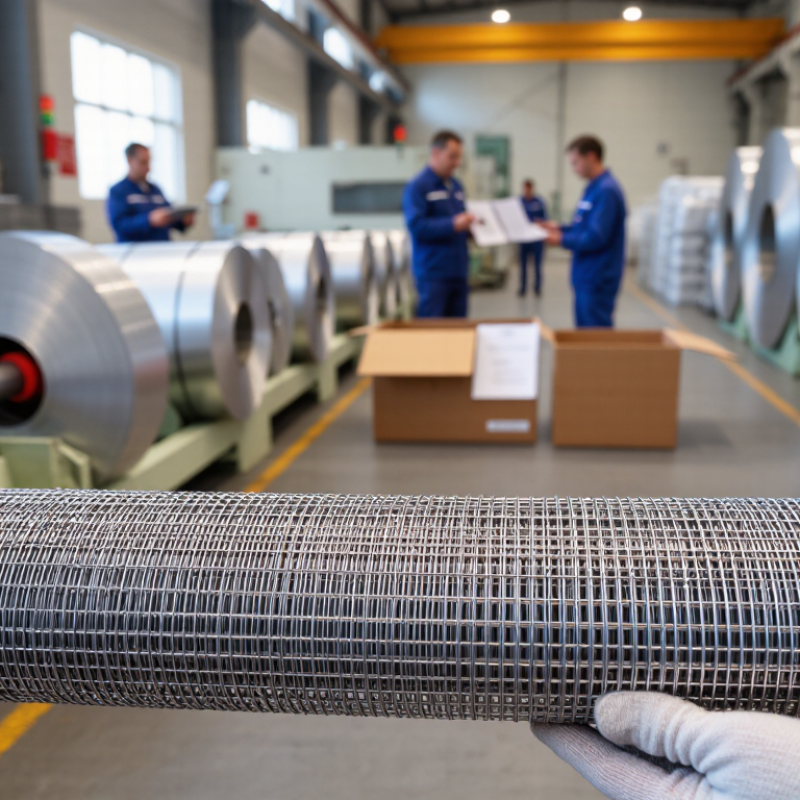
What Is a Stainless Steel Wire Mesh Filter?
A stainless steel wire mesh filter is a screen made from interlaced or welded metal wires. Its openings let liquids or gases pass while retaining particles larger than the selected aperture. Unlike a solid filter membrane, mesh has visible, measurable openings. The result depends on aperture size, wire diameter, weave, and flow conditions. Small details matter.
In woven mesh, each crossing forms a regular pattern of openings. A finer mesh can capture smaller particles, but it may also restrict flow and clog sooner. ISO 9044:2016 sets technical requirements and test methods for industrial woven wire cloth, including aperture and wire-diameter tolerances. It is easy to over-specify. A filter that looks finer is not automatically better for a process.
Material choice matters too. Stainless steel is valued for strength and corrosion resistance, though the right grade depends on the fluid, temperature, and cleaning method. The World Stainless association reported 58.4 million tonnes of global stainless crude steel production in 2023, indicating the material’s broad industrial use—not a guarantee of filter performance. Check mesh specifications against actual operating conditions. Even a careful selection can miss something.
How Are Stainless Steel Wire Mesh Filters Made?
China Best Stainless Steel Wire Mesh Filter Manufacturer?
How Are Stainless Steel Wire Mesh Filters Made?
A stainless steel wire mesh filter begins with metal wire drawn to a controlled diameter. The wire is cleaned and, when needed, annealed to improve flexibility. Weaving machines then interlace warp and weft wires into plain or twill patterns. The chosen weave affects opening size, strength, and flow. Small details matter.
After weaving, the cloth may be cut, formed, welded, or fitted into a filter frame. Edges need careful finishing; a sharp burr can complicate handling and installation. Manufacturers inspect wire diameter, aperture size, weave uniformity, and weld quality. ISO 9044:2016 provides technical delivery requirements and testing guidance for industrial woven wire cloth. It offers a useful reference for checking mesh specifications.
Material supply is not the same as product consistency. World Stainless reported global stainless steel melt-shop production of 58.4 million tonnes in 2023, but that figure does not measure filter-mesh quality. A clean-looking roll can still hide uneven openings. In practice, sampling across several points is more reliable than judging one section by eye. Even careful checks have limits. Verify the finished filter against the required dimensions and operating conditions.
Which Industries Use Stainless Steel Wire Mesh Filters?
China Best Stainless Steel Wire Mesh Filter Manufacturer?
Which Industries Use Stainless Steel Wire Mesh Filters?
Stainless steel wire mesh filters appear wherever process fluids carry visible solids. In food and beverage plants, they screen pulp, grain fragments, and wash-water debris before pumps or filling lines. Chemical facilities use them to catch scale and catalyst residue, while pharmaceutical production may use validated mesh elements in selected liquid-handling steps. Oil, gas, automotive, and general manufacturing also use mesh screens to protect valves and equipment. The exact alloy and opening size matter. A filter that works in a rinse line may fail in a hot, corrosive stream.
Water treatment is another major application. UNESCO’s 2024 World Water Development Report puts industry at roughly 20% of global freshwater withdrawals, underscoring the need to manage process water carefully. Mesh filters can remove larger suspended particles before finer treatment stages, but they do not remove dissolved salts or microbes. That distinction is easy to overlook. In operating plants, staff also monitor pressure drop, cleaning frequency, and particle behavior under flow.
Tips: Match the mesh opening to particle size and flow rate. Check material compatibility, temperature, and cleaning method before specifying a filter. Start with a sample test. Fine particles may still pass. A little trial and error is normal, and specifications should be reviewed when the process changes.
What Qualities Define a Leading Chinese Filter Manufacturer?
What Qualities Define a Leading Chinese Filter Manufacturer?
A dependable stainless steel wire mesh filter manufacturer proves consistency with measurable details. Ask for wire-diameter and aperture tolerances, weave specifications, and inspection records for each production batch. A clear sample should show even openings, firm edges, and no loose wires. Small defects matter. They can affect flow and filtration performance. The manufacturer should also explain material grades and provide traceable test documentation, rather than relying on broad claims.
Production experience matters, but capacity alone is not proof of quality. World Stainless reported global stainless steel crude production of 58.4 million tonnes in 2023, up 4.6% from 2022. This scale highlights the importance of stable material sourcing and process control. For buyers, useful evidence includes incoming-material checks, calibrated measuring tools, and repeatable inspection methods. Ask how rejected mesh is handled. The answer may reveal gaps.
Tips: Request a sample from the intended production process, then measure several openings across its surface. Compare the results with the stated tolerance. Also ask for a written inspection plan and delivery schedule. No factory is perfect; transparent records and prompt corrective action are more meaningful than promises. A slightly awkward but honest answer can be worth investigating.
China: What Defines a Leading Stainless Steel Wire Mesh Filter Manufacturer?
Consistent control of mesh opening is one practical measure of manufacturing capability.
How to read this: These example openings are calculated as 25.4 mm divided by mesh count, minus wire diameter. Actual opening sizes depend on the specified wire diameter and manufacturing tolerances, so confirm the required specifications with the manufacturer.
How Can Buyers Compare Manufacturers and Verify Product Quality?
A reliable stainless steel wire mesh filter manufacturer should explain how its specifications match your operating conditions. Compare alloy grade, weave type, wire diameter, aperture tolerance, and surface finish—not just the quoted mesh count. Ask for a sample from a current production batch, plus material certificates and inspection records. Small differences matter. A slightly uneven opening can affect filtration performance.
Verify the sample with measurable checks. Use a calibrated microscope or image system to inspect several areas, and a micrometer to check wire diameter. For critical applications, consider independent testing of material composition and tensile properties. Compare results with the purchase specification and ask how the manufacturer handles out-of-tolerance rolls. A polished sample is not enough. Batch consistency deserves attention too. No single test proves long-term performance, so relate checks to temperature, pressure, cleaning, and the fluid being filtered.
Tips: Keep a written checklist and record sample results. Ask whether production samples are taken from finished rolls. If test methods are unclear, request the procedure in writing. One point is easy to miss: a low price may reflect a different specification, not better efficiency. Recheck your assumptions before ordering.