
Submit Inquiry
27 West Beaver Creek Road Unit #2
Richmond Hill, ON, CANADA L4B 1M8

International:

1-905-886-0335

US & Canada:

1-800-265-5696

China Best Pneumatic Actuator Parts Manufacturer?

Choosing the China best Pneumatic Actuator Parts manufacturer requires more than comparing prices or browsing polished product catalogs. Real performance appears inside valve rooms, packaging lines, and dusty factory floors. A reliable supplier should understand torque requirements, air pressure, temperature changes, sealing materials, and repeated cycling. Small errors can cause noticeable problems.

Pneumatic systems researcher and author Dr. Peter Beater offers a practical view: “Good pneumatic design depends on matching components, air quality, and control.” This principle applies directly to Pneumatic Actuator Parts. A capable manufacturer should provide compatible shafts, brackets, couplings, seals, springs, and position indicators. It should also explain material choices clearly. Stainless steel may suit corrosive environments. Anodized aluminum may reduce weight. Nitrile seals can work well, but unsuitable temperatures may shorten their service life.

Evidence matters more than confident claims. Look for dimensional inspection records, pressure testing, batch traceability, and documented quality procedures. Ask how the factory handles customized drawings. Ask how it manages replacement parts. Samples should be tested under realistic loads, not only displayed in a showroom.

No supplier is perfect. That is worth admitting. Even experienced teams can overlook packaging damage, tolerance changes, or delayed communication. The better manufacturer responds quickly and corrects the cause. A strong China-based partner combines engineering experience, stable production, transparent documentation, and practical after-sales support. This article examines those factors carefully, helping buyers compare manufacturers without relying on vague promises. The final choice should fit the application, not merely the quotation.
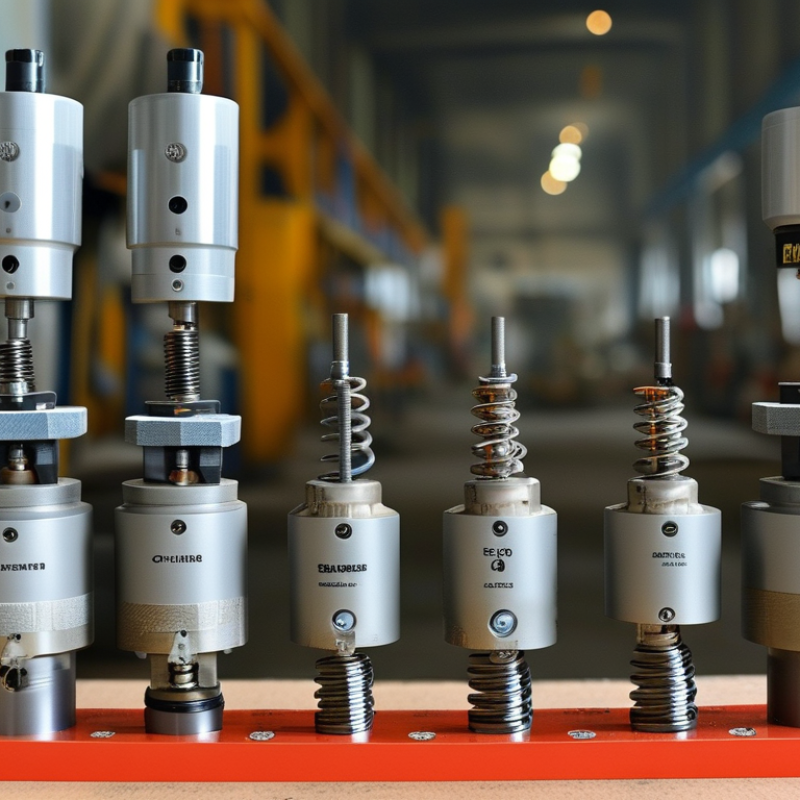
China Best Pneumatic Actuator Parts Manufacturer?

What Are Pneumatic Actuator Parts?

What Are Pneumatic Actuator Parts?

Pneumatic actuator parts convert compressed air into controlled rotary or linear motion. A typical quarter-turn actuator contains an aluminum or steel body, pistons, a rack, a pinion shaft, end covers, bearings, springs, and sealing elements. Linear versions usually use a cylinder tube, piston, rod, guide, and rod seal. The air enters through ports and moves the piston. The output shaft then operates a valve or mechanical linkage.

Small parts matter greatly. Seals control leakage, while bearings reduce shaft friction. Springs provide fail-safe movement when air pressure disappears. End covers protect internal components from dust and moisture. ISO 5211:2017 defines mounting interfaces for industrial valve actuators, helping users match output shafts and valve connections. ISO 15552 also specifies dimensions for many pneumatic cylinders, improving interchangeability.

Industry data supports this demand. The MarketsandMarkets Pneumatic Actuators Market report projects growth from about USD 2.6 billion in 2023 to USD 3.4 billion by 2028. That growth increases pressure on parts manufacturers to maintain dimensional accuracy and traceability. A good supplier should provide material records, seal specifications, pressure-test results, and batch identification.

The overlooked issue is compatibility. A replacement piston may fit visually but fail under heat, pressure, or repeated cycling. Sometimes the specification is incomplete. Engineers should verify bore size, stroke, torque, operating pressure, temperature, and mounting standard before ordering. Cheap parts can become expensive downtime.

Which Materials and Designs Define High-Quality Components?

China Best Pneumatic Actuator Parts Manufacturer?

High-quality pneumatic actuator parts begin with material discipline, not polished appearance. In workshop inspections, anodized aluminum bodies offer low weight and useful corrosion resistance. Stainless steel 316 suits humid, saline, or chemically exposed environments. However, stainless steel does not guarantee durability. Poor machining can still create leakage, friction, and uneven torque.

Seal selection requires equal care. NBR performs well with common compressed air systems and moderate temperatures. FKM handles higher heat and many industrial chemicals, while PTFE reduces friction in demanding applications. According to MarketsandMarkets’ 2024 pneumatic actuators report, the global market is expected to grow at roughly 6% annually through 2028. That growth increases pressure on suppliers to prove consistency, not merely capacity. Small details matter.

A reliable design normally uses accurately cut rack-and-pinion gears, guided piston movement, and an ISO 5211 mounting interface. Torque output should include a practical safety margin, often 20% to 30% above the valve requirement. This prevents unstable operation during pressure changes. ISO 9001 process control helps, but it cannot replace dimensional inspection. Test every batch. Measure air leakage, cycle life, surface finish, and spring performance. IP ratings also need verification under realistic installation conditions. I have seen attractive components fail because drainage paths were ignored. That mistake remains common. Independent testing and traceable material certificates make supplier claims more dependable.

How to Evaluate Chinese Pneumatic Actuator Parts Manufacturers

When evaluating Chinese pneumatic actuator parts manufacturers, start with evidence, not catalog claims. Fortune Business Insights estimated the global pneumatic actuator market at about USD 2.5 billion in 2023. Its forecast also indicates steady growth through 2030. Market estimates differ. That is worth remembering. A capable supplier should explain its role in this expanding market with test records, not broad promises.

Check material traceability, machining tolerance, seal compatibility, and pressure-cycle results. Request samples from the same production line used for regular orders. Review certificates against ISO 9001, ISO 4414, and relevant air-quality requirements under ISO 8573-1. Ask how the factory controls aluminum hardness, shaft surface finish, and thread accuracy. These details affect leakage and service life. They are easy to overlook.

Factory experience matters. Request anonymized inspection reports, corrective-action records, and a clear sampling plan. A serious manufacturer can show dimensional reports from calibrated equipment. It should also explain failure handling within a defined response period. The 2024 MarketsandMarkets analysis projects continued growth in industrial automation and pneumatic components, increasing pressure on quality consistency. Do not judge capability from one perfect sample. Run repeated cycles under realistic load, temperature, and air pressure. One weakness remains common: buyers often test performance but ignore packaging moisture and storage conditions. That mistake can damage seals before installation.

China Best Pneumatic Actuator Parts Manufacturer? - How to Evaluate Chinese Pneumatic Actuator Parts Manufacturers

Evaluation Dimension Recommended Weight What to Verify Practical Benchmark Required Evidence Suggested Score
Product Compatibility 15% Mounting pattern, shaft dimensions, air-port threads, torque range, rotation angle, and accessory compatibility. Dimensions and interfaces match the applicable ISO 5211, NAMUR, or project-specific requirements. Dimension drawings, interface specifications, sample inspection, and compatibility declaration. 0–10
Material and Manufacturing Quality 15% Aluminum alloy, stainless steel, sealing materials, surface treatment, machining accuracy, and corrosion resistance. Material grades are documented, critical dimensions are controlled, and the surface finish is suitable for the intended environment. Material certificates, inspection plans, coating specifications, and sample or batch inspection records. 0–10
Performance and Reliability 15% Output torque, operating pressure, cycle life, air leakage, operating temperature, and fail-safe behavior where applicable. Rated values are supported by repeatable test results and remain within the stated tolerances during endurance testing. Performance curves, endurance-test reports, leakage-test results, and operating-condition limits. 0–10
Quality Management System 12% Process control, traceability, nonconformance handling, calibration, corrective actions, and internal audits. A documented quality system is implemented and independently audited where required by the buyer or industry. Valid management-system certificate, audit summary, inspection records, and corrective-action examples. 0–10
Testing and Inspection Capability 10% Torque testing, dimensional inspection, pressure testing, leakage testing, material verification, and calibration control. Critical characteristics are inspected before shipment using calibrated equipment and defined acceptance criteria. Inspection and test plans, calibration certificates, final inspection reports, and sample test data. 0–10
Customization and Engineering Support 10% Ability to modify dimensions, materials, coatings, seals, spring configuration, packaging, and documentation. Technical changes are reviewed through drawings, revision control, prototypes, and documented approval procedures. Engineering drawings, change-control records, prototype reports, and technical response times. 0–10
Supply Capacity and Lead Time 10% Production capacity, component availability, production planning, minimum order quantity, and delivery consistency. Confirmed lead times are realistic, production capacity is documented, and delivery performance is monitored. Capacity statement, production schedule, order history, inventory policy, and on-time delivery data. 0–10
Total Cost of Ownership 8% Unit price, tooling, packaging, freight, maintenance parts, warranty terms, and expected service life. The quotation clearly separates product, tooling, logistics, documentation, and after-sales costs. Itemized quotation, warranty policy, spare-parts list, packaging specification, and landed-cost calculation. 0–10
Compliance and Documentation 3% Product labels, manuals, declarations, restricted-substance requirements, export documents, and application-specific standards. Documentation is accurate, traceable to the supplied configuration, and suitable for the destination market. Technical file, declaration documents, installation manual, packing list, and shipping paperwork. 0–10
Communication and After-Sales Service 2% Response speed, technical clarity, complaint handling, replacement policy, and availability of spare parts. Questions are answered consistently, responsibilities are defined, and corrective actions are tracked to closure. Communication records, service procedure, warranty terms, escalation contacts, and spare-parts availability. 0–10
Weighted Evaluation Result 100%
Scoring Guide: Rate each dimension from 0 to 10. Multiply the score by the recommended weight, then add all weighted results. A supplier should also pass all mandatory technical, safety, and application-specific requirements before commercial comparison.

What Certifications and Quality Controls Should Buyers Check?

When choosing a pneumatic actuator parts manufacturer, buyers should inspect certifications beyond a polished certificate wall. ISO 9001 indicates a documented quality management system, but it does not guarantee perfect parts. Check the certificate scope, issuing body, validity dates, and manufacturing location.

For metal components, request material certificates with heat numbers and traceable batch records. EN 10204 3.1 documentation can confirm composition and mechanical properties. Depending on the application, verify RoHS, REACH, or explosion-protection compliance. These requirements must match the destination market and operating environment. A supplier should explain each claim clearly.

Quality control should cover incoming materials, machining, surface treatment, assembly, and final testing. Ask for dimensional inspection reports, hardness results, seal checks, and pressure or leakage test records. Calibration certificates should come from competent laboratories, ideally following ISO/IEC 17025 practices. I also look for first-article inspection, statistical process control, and corrective-action records. Small bore errors can cause slow leaks later. Request sample reports, not only promises.

Traceability matters. Each batch should connect to operators, machines, inspection tools, and shipment records. Factory audits can reveal practical details, such as clean storage for seals and protected threads. No system is flawless. A reliable manufacturer admits occasional deviations and shows how they prevent recurrence. One weakness remains easy to miss: buyers often check paperwork carefully but neglect testing parts under real pressure, temperature, and cycling conditions.

How to Select the Best Manufacturer for Your Application?

China Best Pneumatic Actuator Parts Manufacturer?

How to Select the Best Manufacturer for Your Application?

Selecting a pneumatic actuator parts manufacturer starts with the application, not the catalogue. Define required torque, operating pressure, temperature, cycle frequency, and installation space. Check the working medium carefully. Moisture, dust, salt, or corrosive gases can quickly expose weak materials. Stainless steel, treated aluminum, and suitable sealing compounds may be necessary.

Ask for dimensional drawings, material specifications, and test records before placing an order. A reliable manufacturer should explain tolerances, surface treatment, and expected service life in clear technical language. Request sample parts when fit is critical. Measure thread accuracy, shaft alignment, and sealing performance. Small errors can create large maintenance problems. Factory audits, batch traceability, and documented inspections also reveal how consistently parts are produced.

Production experience matters, but it should be specific to your equipment. Ask whether the engineering team has handled similar pressure, temperature, and duty conditions. Review spare-part availability and realistic lead times. Low prices can hide unstable quality or expensive downtime. Still, no checklist is perfect. Early specifications are sometimes incomplete, and field conditions change. Leave room for testing and revision. A pilot order with performance feedback often provides more confidence than a polished sales presentation.

123