
Submit Inquiry
27 West Beaver Creek Road Unit #2
Richmond Hill, ON, CANADA L4B 1M8

International:

1-905-886-0335

US & Canada:

1-800-265-5696

Who Are the Best Plastic Tube Manufacturers in China?

Choosing a Plastic Tube manufacturer in China is not just a price comparison. Product consistency, material selection, tooling support, and communication can shape results long after a sample is approved. Small details matter. An uneven tube wall, rough cut, or loose cap can turn a promising quote into extra work. Buyers should look beyond polished catalogs. Useful evidence includes production photos, documented quality checks, clear material specifications, and samples made using the intended process. Ask how the supplier manages color variation, dimensional tolerances, repeat orders, and defects. Details reveal a lot.

Chinese manufacturers serve varied needs, from flexible packaging tubes to rigid industrial and cosmetic formats. The right partner depends on tube diameter, barrier performance, closure design, order volume, and destination requirements. Some factories offer deep customization but need longer setup periods. Others provide quicker standard options with fewer design choices. Neither is automatically better. Factory claims deserve careful checking. Request a recent sample, confirm who manages production, and learn whether key processes happen in-house or through subcontractors.

This guide compares manufacturers using practical criteria rather than treating any ranking as universal. Capabilities can change, and a strong supplier for one project may be a poor fit for another. That is worth remembering. Use the profiles to build a shortlist, then verify certifications, capacity, lead times, and service terms directly before committing. Public information rarely tells the whole story. Even a careful review has limits.
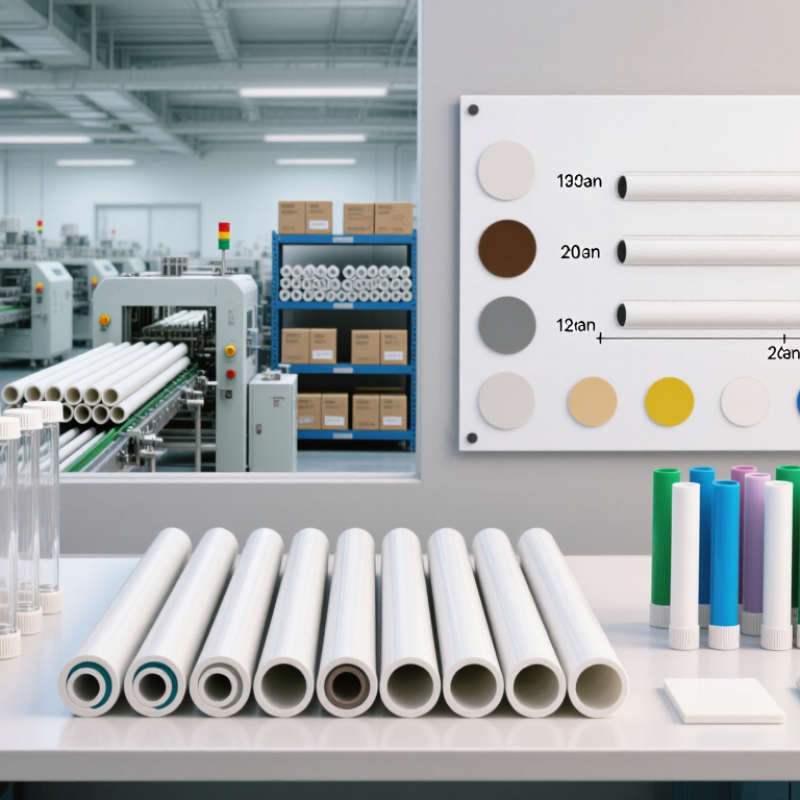
Who Are the Best Plastic Tube Manufacturers in China?

What Plastic Tube Manufacturers in China Produce

Plastic tube manufacturers in China produce squeeze packaging for personal care, cosmetics, household products, selected foods, and topical formulations. Typical products combine an extruded tube body with a molded shoulder, screw-on or flip-top cap, and printed decoration. Some manufacturers also offer laminated structures, barrier layers, custom diameters, and filling services. Small details matter: cap fit and shoulder design affect dispensing and leakage.

Material choices vary by application. Polyethylene is common for flexible tubes, while multilayer structures can help limit oxygen or moisture transfer. Buyers should ask for wall-thickness tolerances, seal-strength results, compatibility testing, and traceable material specifications. PlasticsEurope’s Plastics—the Fast Facts 2024 reported 413.8 million tonnes of global plastics production in 2023. This figure describes the wider plastics industry, not tube output, but it shows why clear material and quality requirements matter. A polished sample is not enough; production-line trials can still reveal weak seals or inconsistent dispensing.

Tips: Request samples in the intended formula, then test them under realistic filling, storage, and transport conditions. Confirm artwork, closure, and tube dimensions before approving a production run.

How China’s Plastic Tube Industry Is Organized

China’s plastic tube industry is organized around a broad manufacturing base, not a single production chain. The National Bureau of Statistics reported 74.885 million tonnes of plastic products output in 2023. This figure covers many product types, not tubes alone, so it shows industry scale rather than tube capacity.

Upstream, resin suppliers provide materials such as PVC, PE, and PP. Tube manufacturers then extrude them through heated barrels and calibrated dies. Cooling tanks, cutters, and dimensional checks shape the finished product.

Some factories also make fittings; others focus on tubes and rely on outside suppliers. Testing matters. Wall thickness, pressure resistance, and joint compatibility can differ by application.

The structure is varied. Large producers may serve infrastructure projects across several regions, while smaller plants often focus on local construction or agricultural demand. Regional clusters help reduce transport costs and support access to tooling and technical labor.

Yet a cluster does not guarantee consistent quality. Buyers should review test records, production capacity, and material specifications—not just quoted prices. That picture is useful, but incomplete: public statistics rarely separate plastic tubes from the wider plastics category.

Criteria for Evaluating Plastic Tube Manufacturers

Choosing a plastic tube manufacturer in China requires more than comparing unit prices. Ask for material specifications, dimensional tolerances, and batch-level inspection records. For a tube used in a dispenser, check wall thickness, inner diameter, cut length, and whether the end stays round after trimming. Small variations can cause leaks or assembly delays. Request samples from a normal production run, not only a polished sales sample. Ask how resin lots are identified and how rejected parts are recorded. Clear answers are useful; vague promises are not.

Production capability should match your order size and design needs. Review equipment, monthly output, tooling arrangements, and procedures for handling design changes. Ask which tests are suitable for your application, such as pressure, flexibility, or dimensional checks. Confirm that any quality certificates are current and cover the relevant factory and process; a certificate alone does not prove consistent output. Compare quoted lead times with actual production schedules, and request written details about minimum order quantities and packaging. A technical question about a drawing can reveal how carefully the team responds. No checklist is perfect. Some differences only appear after repeated use, so keep evaluating samples under realistic conditions.

Who Are the Best Plastic Tube Manufacturers in China?

Criteria for Evaluating Plastic Tube Manufacturers

Suggested buyer-assessment weights, not market statistics or a ranking of specific manufacturers. Evaluate quality systems, material compliance, production capability, testing and traceability, customization, and delivery performance against your product requirements and applicable regulations.

Leading Plastic Tube Manufacturers in China

Leading plastic tube manufacturers in China support packaging, personal-care, household, and industrial applications. Their strengths vary: some focus on high-volume extrusion, while others handle custom diameters, multilayer structures, or specialized closures. A reliable supplier should explain how resin choice, wall thickness, and tube diameter affect flexibility, product protection, and filling performance. Details matter.

Assess production controls, not just a glossy sample. Ask how the manufacturer checks dimensions, seal strength, print quality, and batch consistency. Request relevant test records and confirm that stated certifications apply to the specific facility and product. A sample may look excellent but behave differently on an automated filling line. That gap deserves attention. Clear answers about tooling, minimum order quantities, lead times, and defect handling can reveal how practical a supplier will be after production begins.

Tips: Send a written specification and a real filling-line requirement. Compare samples under the same conditions. Ask for a pilot run before scaling up. Keep room for revision; early assumptions are sometimes wrong.

Who Are the Best Plastic Tube Manufacturers in China? – Leading Plastic Tube Manufacturers in China

Manufacturer Capability Common Tube Type Typical Materials Relevant Applications What Buyers Should Verify
Extrusion and dimensional control Single-layer rigid or flexible tubing PE, PP, PVC, or PET, depending on the intended use General industrial, household, and equipment tubing Specified inside and outside diameters, wall thickness, cut length, material grade, and inspection records
Multi-layer co-extrusion Two-layer or multi-layer tubing Combinations of PE, PP, EVOH, and tie layers Packaging or fluid-transfer applications where a defined barrier or material combination is required Layer structure, adhesion between layers, dimensional consistency, and barrier-test results against the agreed specification
Flexible packaging-tube production Collapsible tubes with a shoulder and closure PE or laminated polymer structures Personal-care, cosmetic, and selected household products Closure fit, sealing performance, print and decoration quality, product compatibility, and leak-test method
Medical and laboratory tubing controls Flexible tubing made to a defined medical or laboratory specification Common options include medical-grade PVC, PE, PP, and silicone; selection depends on the application Medical devices, laboratory equipment, and fluid-handling systems Material traceability, cleanliness controls, biocompatibility evidence where applicable, and documented manufacturing controls
Quality-management systems Applicable across tube categories Not material-specific Manufacturing consistency and order-to-order process control Check the certificate’s scope and validity. ISO 9001 covers quality management; ISO 13485 applies to quality management systems for medical devices.
Product testing and inspection Applicable across tube categories Test method depends on polymer and end use Verification of agreed product requirements Request test methods and acceptance limits for dimensions, tensile or flexibility properties, leakage, pressure, and barrier performance as relevant.
Regulatory and export documentation Applicable to products sold in regulated markets Material- and market-dependent Packaging, consumer, industrial, or medical supply chains Confirm that declarations, test reports, and material documentation match the product, destination market, and intended use.

Selection note: There is no single best specification for every plastic tube. Compare manufacturers using the intended application, drawings, material requirements, samples, verified test records, and the scope of any relevant certifications. Dimensions and performance limits should be agreed in the product specification.

How to Choose a Manufacturer for Your Requirements

Choosing a Chinese plastic tube manufacturer starts with the product, not the quotation. Define the tube’s contents, fill temperature, dispensing style, and required shelf life. Then request written tolerances for diameter, wall thickness, length, and cap fit. The OECD’s Global Plastics Outlook (2022) estimates that packaging made up about 40% of plastic waste in 2019. PlasticsEurope’s Plastics—the Fast Facts 2023 reports global plastics production of 400.3 million tonnes in 2022. These figures make material choice and production controls worth discussing early. Ask whether recycled content, lighter walls, or alternative polymers suit your application, and request supporting test results.

Check the factory’s quality records, batch traceability, and equipment maintenance logs. Ask for test data on leakage, sealing, print adhesion, and compatibility with your actual formula. Then review a production-line sample, not only a hand-finished prototype. Small details matter. A cap that twists smoothly in a showroom may leak after transport. One limitation: a single test batch cannot prove consistent performance across every run. Agree on inspection criteria, sampling frequency, and how defects will be handled before placing an order. Compare total landed cost, lead time, and communication clarity alongside unit price; the cheapest quote can become expensive when specifications are vague.

Article Source:

123