2026 Top CIPP Pipe Repair Solutions for Global Buyers
Aging wastewater networks are creating urgent demand for reliable cipp pipe repair across municipal, industrial, and commercial projects. The U.S. Environmental Protection Agency’s 2023 Clean Watersheds Needs Survey identified approximately $630 billion in wastewater infrastructure needs over the next 20 years. That figure shows the scale of the problem. It also explains why global buyers are examining trenchless rehabilitation more carefully.
Grand View Research reports continued growth in the cured-in-place pipe market, driven by deteriorating underground assets and reduced tolerance for disruptive excavation. CIPP can install a resin-saturated liner inside an existing pipe, often with less traffic interruption and surface damage. However, it is not a universal answer. Pipe geometry, groundwater, resin chemistry, curing conditions, and service temperature can change the result. Small details matter.
Dr. Mohammad Najafi, a recognized trenchless infrastructure expert, has emphasized a practical principle: “Rehabilitation decisions must be based on reliable condition assessment.” That principle should guide every cipp pipe repair purchase. CCTV inspection, flow control, structural calculations, and independent quality testing deserve more attention than attractive brochures. ASCE’s 2025 Infrastructure Report Card also highlights continuing pressure on wastewater systems, reinforcing the need for durable investment.
Global buyers should compare liner design, installation records, curing technology, warranty limits, and local technical support. A low initial price may conceal preparation gaps or difficult future maintenance. Some specifications still look impressive but remain incomplete. That is uncomfortable, yet important. The best 2026 solution is not always the newest product. It is the system that matches verified site conditions, transparent data, and accountable workmanship.
CIPP Pipe Repair: Definition, Scope, and Core Technologies
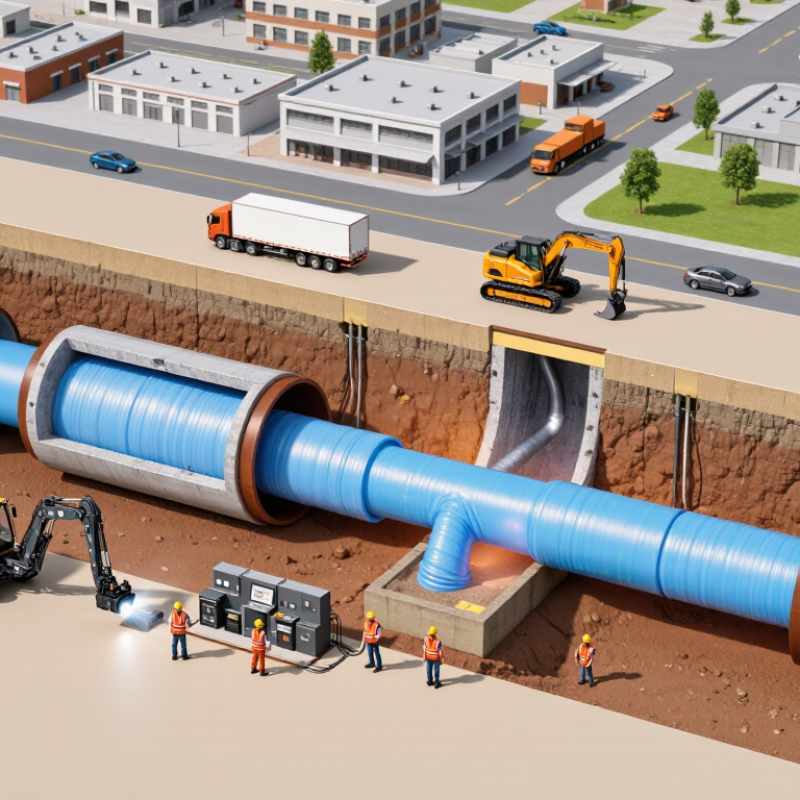
CIPP pipe repair is a trenchless method for renewing damaged pipelines without replacing the entire route. Technicians clean the host pipe, inspect its condition, and insert a resin-saturated liner. The liner is then pressed against the pipe wall and cured with hot water, steam, or ultraviolet light. After curing, it forms a tight, structural pipe within the old one.
Its scope covers municipal sewers, industrial drains, stormwater lines, and selected pressure applications. The correct solution depends on pipe diameter, flow conditions, groundwater pressure, access points, and damage severity.
A reliable assessment usually includes CCTV inspection, blockage removal, thickness calculations, and resin compatibility checks.
Small details matter. A poorly sealed lateral can still allow infiltration after installation.
Core technologies differ in speed, control, and site requirements. Water curing can provide uniform heat across long sections. Steam curing may reduce curing time but needs careful temperature monitoring. Ultraviolet curing offers controlled installation and limited water use, especially where access is restricted.
Felt liners remain practical for many irregular pipes, while fiberglass systems can provide greater stiffness.
However, no method fits every project. Field conditions often expose weaknesses in an otherwise sound design.
Experienced contractors therefore verify cure records, liner position, and reinstated connections before reopening the pipeline. Buyers should request test data, installation procedures, and evidence of trained supervision.
How to Compare CIPP Solutions for Different Pipe Conditions
2026 Top CIPP Pipe Repair Solutions for Global Buyers
How to Compare CIPP Solutions for Different Pipe Conditions
CIPP selection should begin with the host pipe, not the product brochure. CCTV inspection should record cracks, root intrusion, joint gaps, deformation, groundwater, and active flow. A sound circular pipe with corrosion or infiltration may suit standard felt or fiberglass reinforcement. A severely deformed pipe may need structural analysis before lining. A liner cannot replace missing soil support.
The financial context is substantial. The U.S. Environmental Protection Agency’s 2022 Clean Watersheds Needs Survey identified approximately $630.1 billion in national clean-water infrastructure needs over 20 years. ASCE’s 2021 Infrastructure Report Card rated wastewater infrastructure D+. These figures support rehabilitation, but they do not justify one solution for every defect. Buyers should compare design life, resin chemistry, installation temperature, curing method, wall thickness, and quality-control records. ASTM F1216 and ISO 11296-4 provide useful technical reference points.
Field conditions often decide the result. High groundwater requires reliable pre-lining control and careful end sealing. Sharp bends may demand flexible materials and experienced installation crews. Industrial discharge requires chemical-resistance testing, not assumptions. I would also question unusually thin designs, even when calculations appear acceptable. Records can be incomplete. That weakness matters. Independent post-installation CCTV, thickness checks, and documented cure temperatures make comparisons more reliable. A smooth finished liner can still hide wrinkles, lifts, or poor lateral connections.
Leading CIPP Materials, Liners, and Curing Methods in 2026
2026 Top CIPP Pipe Repair Solutions for Global Buyers
Leading CIPP materials, liners, and curing methods in 2026
Global buyers are demanding stronger CIPP systems as wastewater networks age. The U.S. Environmental Protection Agency’s 2022 Clean Watersheds Needs Survey reported about $630.1 billion in documented wastewater and stormwater infrastructure needs. That figure explains the growing focus on rehabilitation instead of open excavation. Glass-fiber reinforced liners offer high stiffness in deep or heavily trafficked areas. Polyester and vinyl ester resins remain common, but chemical resistance and temperature exposure must guide selection. A thicker liner is not automatically better.
Curing methods now shape project speed and quality. Hot-water and steam curing suit many municipal installations, while ultraviolet curing can reduce site time and water use. Ambient-cure systems may help in remote locations, but temperature control remains critical. ASTM F1216-based design checks should confirm loads, ovality, groundwater pressure, and resin properties. Field crews still need accurate wet-out, calibration, and post-cure inspection. Small installation errors can become expensive defects.
Tips: Request resin certificates, liner thickness calculations, and independent CCTV records. Compare cure logs, not only delivery prices. I have seen projects overvalue rapid installation and underestimate cleaning quality. That judgment needs rethinking. Moisture, poor host-pipe preparation, and rushed testing can weaken an otherwise advanced CIPP solution. Reliable buyers should require documented quality control before approving payment.
Global Standards, Installation Requirements, and Quality Controls
2026 Top CIPP Pipe Repair Solutions for Global Buyers
Global Standards, Installation Requirements, and Quality Controls
CIPP repair should begin with the existing pipe, not a product catalogue. Global buyers should confirm diameter, length, flow conditions, defects, groundwater, and service temperature. Field conditions vary. Applicable standards may include ASTM F1216, ASTM F1743, or ISO 11296-4, depending on the project location. These documents address design, installation, curing, and performance requirements. Local authorities may also require additional testing, permits, or acceptance procedures.
A reliable installation needs engineered wall thickness and verified resin compatibility. Cleaning and CCTV inspection should remove scale, standing water, and unexpected obstructions before lining. Bypass pumping must protect the liner from uncontrolled flow. During wet-out and insertion, teams should record resin batch numbers, liner dimensions, ambient temperature, pipe temperature, and installation time. Cure control is critical. Steam, hot water, or ambient curing must follow the approved design, with temperatures tracked throughout the liner.
Quality control continues after curing. Inspectors should review CCTV footage, check wrinkles and end seals, and compare installed thickness with specifications. Samples or field tests may confirm flexural strength, modulus, and degree of cure. Small details matter. A clean video does not prove structural performance, while a test report cannot replace visual inspection. Specifications often look complete on paper, yet access limits or uneven groundwater can expose weak assumptions. That uncertainty deserves documented review before acceptance.
Buyer Guide: Costs, Suppliers, Sustainability, and Project Selection
Choosing a CIPP pipe repair solution requires more than comparing quoted prices. Buyers should assess pipe diameter, access points, groundwater, flow conditions, and required service life. A detailed CCTV inspection can reveal cracks, roots, deformation, and hidden connections before installation. These findings directly affect liner thickness, resin volume, preparation work, and total cost.
Supplier evaluation should include installation records, technician training, quality-control procedures, and independent test documentation. Ask for project references in similar climates and pipe conditions. Sustainability also matters. CIPP can reduce excavation, traffic disruption, spoil removal, and replacement materials. However, curing energy, resin handling, transportation, and disposal still create environmental impacts. Request transparent environmental data instead of accepting broad green claims. This is where many buyers may overlook practical details.
Tips: Compare complete project costs, not liner prices alone. Confirm curing methods and expected downtime. Require sample testing and clear acceptance criteria. Check whether the supplier can manage bypass pumping safely. A rushed selection can create expensive defects later. I would also allow contingency funds, because older pipelines rarely match drawings perfectly. Recheck assumptions after inspection, especially when records are incomplete.
Related Posts
-
Revolutionizing Pipe in Pipe Repair Techniques with Advanced Leak Detection Data
-
2025 Top Solutions for Internal Pipe Repair: Innovations and Best Practices
-
How to Effectively Repair Internal Sewer Pipes: A Comprehensive Guide
-
How to Effectively Repair Sleeve Pipes: A Step-by-Step Guide
-
Top 10 Internal Sewer Pipe Repair Methods for Homeowners to Consider
-
2026 How to Effectively Repair Internal Sewer Pipes for Homeowners?